Engineering at the Limit of Flexibility
“If It Bends, It Breaks.” Or Does It?
“Why did the prototype fail again?”
The mechanical engineer leaned back, frustrated. The device was sleek, compact, and market-ready—except for one thing. Every time the casing flexed slightly under normal use, the internal wiring loosened. Connectors failed. Solder joints cracked.
“We need something that moves with the product,” the hardware lead replied. “Not something that resists it.”
That moment captures the core pain point of modern electronics: devices are becoming thinner, lighter, curved, foldable, wearable—and traditional rigid boards were never designed for dynamic environments.
The solution? Flexible PCB technology.
In this comprehensive guide, we’ll explore what a Flexible PCB is, how it works, and why it has become essential in industries ranging from medical devices to aerospace. Backed by engineering principles, industry data, and manufacturing expertise from Flexible PCB solutions at jscircuit, this article delivers a technical yet practical understanding for designers, procurement teams, and product innovators.
What Is a Flexible PCB?
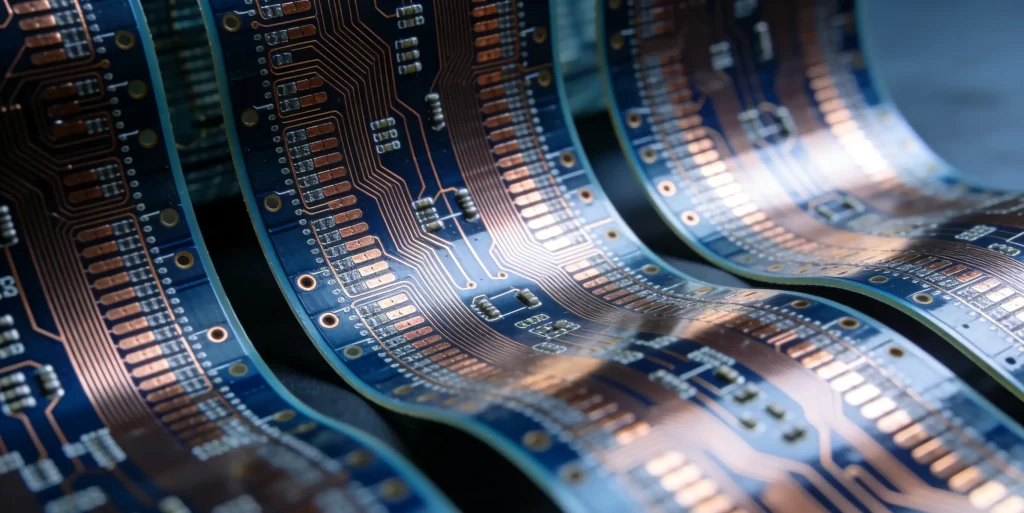
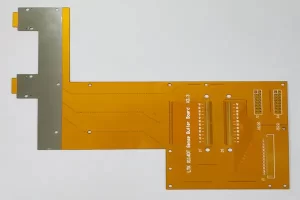
A Flexible PCB (FPC) is a printed circuit board manufactured on flexible substrate materials—typically polyimide or polyester—allowing it to bend, twist, and fold without compromising electrical performance.
Unlike rigid PCBs made from FR-4 fiberglass epoxy laminates, Flexible PCBs are designed for:
-
Dynamic bending applications
-
Compact, high-density electronic assemblies
-
Weight-sensitive systems
-
Complex 3D packaging structures
If you want a foundational overview, the detailed explanation in What Is Flexible PCB breaks down structure, materials, and industrial applications in depth.
Core Structural Components
A typical Flexible PCB includes:
-
Flexible substrate (polyimide film)
-
Copper conductive layer (rolled annealed copper for durability)
-
Adhesive or adhesiveless bonding system
-
Coverlay for insulation and protection
The flexibility comes from both material choice and structural engineering—especially copper grain orientation and bend radius calculations.
The Core Pain Points in Modern Electronics
Before we examine how Flexible PCBs work, it’s important to understand why they are needed.
1. Connector Failure
According to IPC reliability studies, connectors and solder joints account for nearly 30–40% of field failures in compact electronics. Rigid-to-rigid interconnects introduce mechanical stress points.
2. Space Constraints
Global wearable device shipments surpassed 500 million units annually. These devices require curved and ultra-thin internal circuits.
3. Weight Reduction Demands
In aerospace systems, reducing 1 kg of weight can save thousands of dollars in lifetime operational cost.
4. Vibration Sensitivity
Automotive ECUs and battery management systems endure constant vibration. Traditional boards with multiple interconnects increase failure probability.
Flexible PCBs eliminate connectors, reduce weight by up to 60%, and improve mechanical reliability in motion-based applications.
To better understand the engineering philosophy and manufacturing expertise behind advanced solutions, reviewing About Us – jscircuit provides insight into their quality standards and industry certifications.
How Does a Flexible PCB Work?
The working principle is straightforward yet sophisticated.
Instead of rigid mechanical stability, a Flexible PCB distributes stress evenly across a bendable substrate. This reduces localized stress concentration and eliminates connector dependency.
Electrical Performance During Bending
Key design principles include:
-
Minimum bend radius calculation (typically 6–10x thickness for dynamic bending)
-
Rolled annealed copper to prevent micro-cracks
-
Neutral axis alignment to reduce tensile stress
-
Controlled impedance routing for high-speed signals
Research in materials engineering shows polyimide maintains electrical insulation properties even after thousands of flex cycles at temperatures exceeding 200°C.
Types of Flexible PCBs and Their Applications
Not all Flexible PCBs are the same. The structure depends on complexity and signal routing requirements.
Single-Layer Flexible Circuits
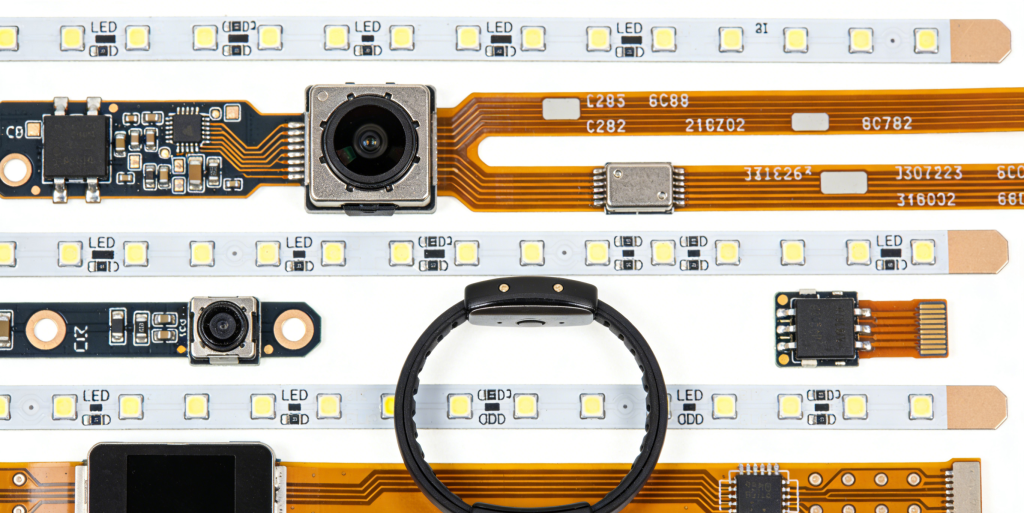
For simple signal routing in compact devices, Single Layer Flexible Circuits offer:
-
Lightweight architecture
-
Lower manufacturing complexity
-
Excellent reliability in repetitive bending
These are commonly used in:
-
LED strips
-
Wearable health trackers
-
Camera modules
If you’re building compact consumer electronics, this design remains the most cost-effective and reliable option.
Double-Layer Flexible Circuits
When higher circuit density is required, Double Layer Flexible Circuits provide:
-
Increased routing capability
-
Ground and power plane separation
-
Improved EMI shielding
They are widely used in:
-
Automotive sensors
-
Industrial control modules
-
Compact communication devices
The addition of plated through-holes enables more complex connectivity while maintaining flexibility.
Multi-Layer Flexible Circuits
For high-performance electronics, Multi-Layer Flexible Circuits deliver:
-
High-density interconnects
-
Advanced signal integrity control
-
Integration of rigid-flex combinations
These are critical in:
-
Medical imaging systems
-
Aerospace avionics
-
Military-grade communication devices
Multilayer flex circuits require advanced lamination techniques and strict quality control, an area where manufacturers like jscircuit demonstrate significant technical capability.
Designing a Flexible PCB: Critical Engineering Considerations
Designing flexible circuits is not simply about replacing rigid boards. It requires a different engineering mindset.
For deeper insights, the Ultimate Guide to Single Layer Flexible Circuits for Modern Electronics outlines best practices and design constraints.
Key Design Rules
-
Avoid 90-degree trace angles
-
Use curved traces in bend zones
-
Increase pad size in high-stress areas
-
Avoid vias in dynamic flex regions
-
Use stiffeners where component support is required
If your application is ultra-compact, the resource on How to Design Single Layer Flexible Circuits for Compact Devices provides targeted strategies for miniaturized systems.
Where Flexible PCBs Deliver Maximum Impact
Flexible circuits are no longer niche. Market analysis indicates a steady CAGR growth driven by miniaturization trends.
The Top 10 Applications of Single Layer Flexible Circuits in Electronics demonstrates their use in:
-
Wearables
-
Consumer electronics
-
Automotive lighting
-
Medical monitoring systems
-
IoT modules
The data shows clear performance improvements in vibration resistance and lifecycle durability compared to traditional rigid boards.
Single Layer vs Double Layer: Engineering Tradeoffs
When choosing architecture, understanding differences is crucial.
The article Single Layer vs Double Layer Flexible Circuits: Key Differences Explained provides a technical breakdown of:
-
Signal routing complexity
-
Cost-efficiency considerations
-
EMI control
-
Durability under repeated bending
Selecting the right structure early in design prevents costly redesign cycles later.
Case Insight: Solving Connector Failure in Wearables
A wearable health-tech startup approached a manufacturer after experiencing repeated field failures due to micro-cracked solder joints.
The solution:
-
Replacing rigid interconnect assemblies with single-layer Flexible PCB
-
Redesigning bend radius zones
-
Eliminating two connectors
Result:
-
42% reduction in assembly weight
-
60% improvement in lifecycle reliability
-
25% reduction in assembly steps
For engineers facing similar challenges, direct technical consultation is available through Contact Us – jscircuit to evaluate design feasibility and optimization.
Why Flexible PCB Technology Is the Future
Industry reports forecast continued expansion of flexible circuit adoption due to:
-
Growth of foldable smartphones
-
Rise of wearable healthcare devices
-
Electrification in automotive platforms
-
Miniaturization of IoT sensors
Flexible PCB is not merely a substitute for rigid boards—it is an enabler of new industrial design possibilities.
The combination of lightweight structure, high reliability, and 3D integration flexibility positions it as a core technology in next-generation electronics.
|
|
|
FAQ
1. What is the main advantage of a Flexible PCB?
The primary advantage is mechanical flexibility combined with electrical reliability. It reduces connectors, lowers weight, and improves durability in dynamic applications.
2. How many times can a Flexible PCB bend?
Depending on material selection and design, high-quality flexible circuits can endure thousands to millions of flex cycles in dynamic applications.
3. Are Flexible PCBs more reliable than rigid PCBs?
In vibration-prone or movement-based environments, yes. They eliminate connector-related failures and distribute mechanical stress more evenly.
4. What industries use Flexible PCB the most?
Major industries include medical devices, automotive electronics, consumer wearables, aerospace systems, and industrial control equipment.
5. How do I choose between single-layer and multi-layer Flexible PCB?
It depends on routing complexity, signal density, EMI requirements, and mechanical design constraints. Evaluating electrical and mechanical needs early ensures optimal selection.
From Fragile Connections to Flexible Innovation
Returning to that initial engineering conversation—“If it bends, it breaks.”
That assumption no longer holds true.
Flexible PCB technology redefines how electronic systems are designed, enabling motion instead of resisting it. By eliminating connectors, reducing weight, and improving mechanical resilience, it solves one of modern electronics’ most persistent pain points.
As devices continue to shrink, curve, and integrate into everyday life, the question is no longer whether to use Flexible PCB—but how to design it correctly.
And in that journey, engineering expertise, material science precision, and manufacturing discipline make all the difference.
Flexible isn’t fragile.
It’s the foundation of tomorrow’s electronics.