Rigid-Flex PCB for Medical Device
- Prevent electrical hazards: Rigid-flex PCBs ensure safe operation by minimizing accidental contact with electrical components in medical devices.
- Customizable for medical applications: Perfect for a range of medical equipment like patient monitors, ventilators, and wearable health devices.
- Efficient integration: Designed for easy installation and long-term performance in compact medical systems.
JS Circuit - Your Reliable Rigid-Flex PCB Manufacturer for Medical Devices
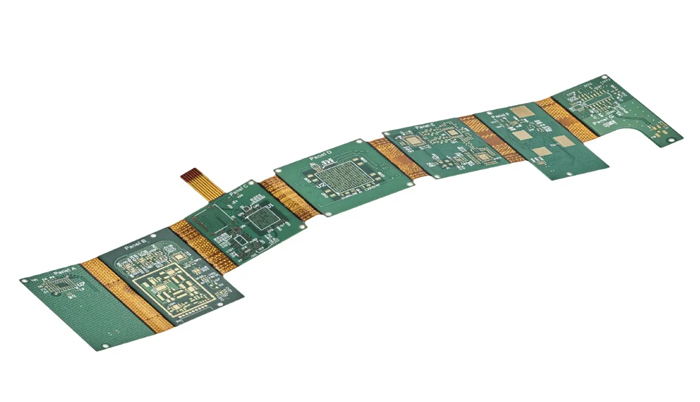
Rigid-Flex PCB (Rigid-Flexible Printed Circuit Board) is essential for medical applications, offering both flexibility and durability for a wide range of medical devices. These circuits are ideal for use in medical ventilators, patient monitoring systems, and other life-saving medical equipment that requires high-performance and reliability.
Our Rigid-Flex PCB solutions provide robust performance while minimizing size, enabling compact and reliable medical electronics. The materials we use, such as FR4 and Polyimide (PI), ensure long-lasting functionality under diverse conditions, including moisture, temperature fluctuations, and electrical stress. Additionally, we provide immersion gold (ENIG) surface treatment, precise V-cut and routing board cutting, and customized solder mask options to meet your specifications.
| Parameter | Specification |
|---|---|
| Layers | 6 |
| Surface Treatment | Immersion Gold |
| Special Process | 2R+2F+2R Stackup |
| Material | FR4 + PI |
| Line Width / Line Spacing | 5 / 5mil |
| Plate Thickness | 1.0mm |
| Copper Thickness | 1OZ |
| Min Aperture | 0.2mm |
Advanced Features of Rigid-Flex PCB for Medical Devices
Advanced Features of Rigid-Flex PCB for Medical Devices
JS Circuit’s Rigid-Flex PCB for Medical Devices offers excellent performance in challenging medical environments, providing reliable operation even under moisture, temperature fluctuations, and electrical stress. Made from FR4 and Polyimide materials, these circuits offer enhanced durability and long-lasting reliability, making them ideal for use in medical ventilators, patient monitoring systems, and other critical healthcare devices.
Our precise manufacturing process, including immersion gold (ENIG) surface treatment and tight tolerances, ensures excellent conductivity and optimal performance. The flexible design allows for compact, high-performance devices while reducing the risk of accidental contact with electrical components. Designed for efficient integration, these Rigid-Flex PCBs ensure smooth installation, wiring, and overall system integration in medical electronics.
Applications of Rigid-Flex PCBs for Medical Devices
Rigid-Flex PCBs play a crucial role in the medical industry by offering flexibility, reliability, and compactness for various medical systems. These circuits are used in medical ventilators, patient monitoring systems, and other critical healthcare devices that require durable and high-performance designs.
In medical electronics, Rigid-Flex PCBs provide compact solutions for life-saving devices, where space and reliability are essential. Their ability to integrate into various medical equipment while maintaining high performance makes them ideal for sensors, control systems, and power management modules in medical applications.
Answer Your Questions
FAQs
What is a Rigid-Flex PCB?
A Rigid-Flex PCB is a combination of rigid and flexible circuit boards. It integrates the reliability of rigid boards with the flexibility of flexible circuits, making it ideal for compact and durable applications like medical devices.
Why are Rigid-Flex PCBs used in medical devices?
Rigid-Flex PCBs are used in medical devices due to their compact design, durability, and ability to withstand harsh environments like temperature fluctuations, moisture, and electrical stress. They ensure reliable operation in critical medical applications such as patient monitors and ventilators.
What materials are used in Rigid-Flex PCBs for medical devices?
Our Rigid-Flex PCBs are typically made from FR4 (for rigidity) and Polyimide (PI) (for flexibility). These materials provide excellent performance under a wide range of environmental conditions, ensuring long-lasting reliability in medical equipment.
What are the typical applications of Rigid-Flex PCBs in the medical field?
Rigid-Flex PCBs are used in life-saving devices such as ventilators, diagnostic equipment, and wearable health monitoring devices. Their ability to handle complex, compact designs makes them essential for modern medical applications.
What are the key benefits of using Rigid-Flex PCBs in medical devices?
- Compact design for space-constrained medical devices.
- Enhanced durability to withstand temperature and environmental changes.
- Flexible integration into various medical equipment, providing reliability and performance.
Can JS Circuit provide customized Rigid-Flex PCBs for medical devices?
Yes, we offer OEM/ODM services, allowing us to tailor the Rigid-Flex PCBs to meet the specific requirements of your medical device. Whether for sensors, patient monitoring systems, or other equipment, we provide fully customized solutions.
How does JS Circuit ensure the quality of Rigid-Flex PCBs for medical devices?
We follow strict quality control standards, including ISO 9001 and ISO 13485 certifications, to ensure that our Rigid-Flex PCBs meet the highest standards for medical device applications. Our engineering team conducts thorough testing for performance and reliability.