Double-Layer flexible circuits
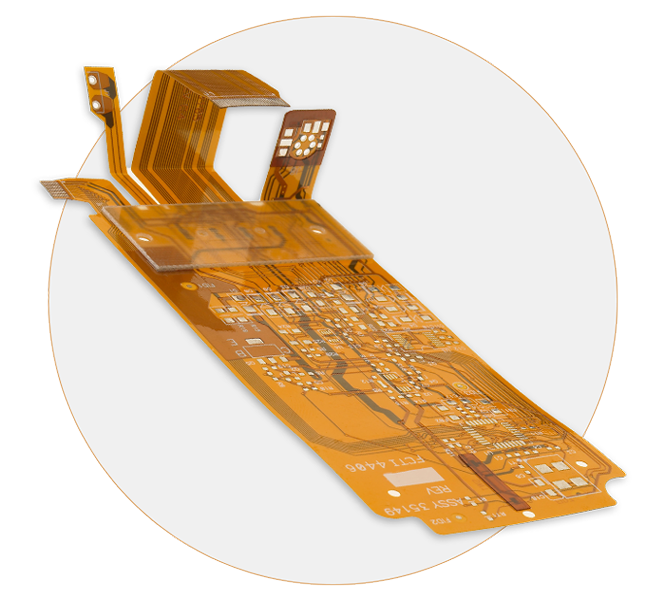
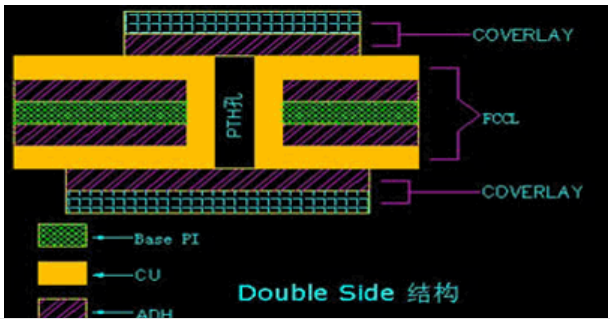
Consist of two copper layers encapsulated with dielectric, normally connected with a plated thru-hole . Double-sided circuits can be fabricated with or without cover-layers.
Double-Layer flexible circuits Manufacturer
Double-layer flexible circuits consist of two copper conductor layers encapsulated within a flexible dielectric film, usually interconnected by plated through-holes (PTH). They can be produced with or without cover-layers, depending on the required insulation, solder-mask, and environmental protection. Compared with single-layer designs, double-layer flex circuits support more complex routing, power and ground planes, and better EMI control, while still keeping a thin, lightweight, and bendable structure for compact electronic assemblies.
Detailed Specification
| Field | Value |
|---|---|
| Structure | Two copper layers on flexible PI/PET dielectric, PTH interconnection |
| Cover-Layer Option | Available with or without polyimide coverlay |
| Typical Copper Thick. | 12–35 μm per layer (customizable) |
| Typical Dielectric | Polyimide or PET, total thickness tailored to design |
| Electrical Benefit | Supports signal + ground/power routing, improved EMI control |
| Design Complexity | Suitable for more complex layouts than single-layer flex |
| Typical Uses | Compact modules, sensors, camera/fingerprint FPC, EV/auto harness, industrial control |
Different Types of Double-Layer flexible circuits
Double-Layer flexible circuits Design
Double-Layer Flexible Circuit Features
Double-layer flexible circuits consist of two copper conductor layers encapsulated with a flexible dielectric film such as polyimide (PI). The two layers are normally interconnected using plated thru-holes (PTH) to enable more complex routing and power/ground distribution. These circuits can also be fabricated with or without a coverlay, depending on insulation, solder-mask, and protection requirements for the end application.
With their dual-layer stack-up, these flex circuits support denser wiring, improved EMI control, and more stable current-carrying capability compared to single-layer FPC. They maintain a thin, lightweight structure while offering strong mechanical flexibility for dynamic bending areas. Copper thickness, trace width/spacing, stiffener materials, and pad designs can all be customized to meet your assembly needs. Double-layer FPCs are fully compatible with SMT reflow, manual soldering, and connector termination, providing a reliable interconnect solution for advanced electronic modules.
Wide Applications of Double-Layer Flexible Circuits
Double-layer flexible circuits are used when devices require more complex signal routing, enhanced grounding, or additional power layers within a compact space. In consumer electronics, they serve in camera modules, display interconnections, fingerprint sensors, speakers, and motherboard-to-sub-board links inside smartphones, tablets, and laptops. Their dual-layer structure allows stable performance even in high-density designs.
In automotive and EV systems, double-layer FPCs support sensors, lighting, ADAS modules, switches, and interior electronics that demand durability under vibration and temperature fluctuation. They are also widely applied in medical devices, industrial control systems, printers, scanners, and battery management systems (BMS) where multi-signal routing and thin-profile interconnects are essential.
With flexible design options and strong manufacturing capability in China, double-layer flexible circuits provide OEMs a dependable solution for compact, multilayer-capable electronic assemblies.