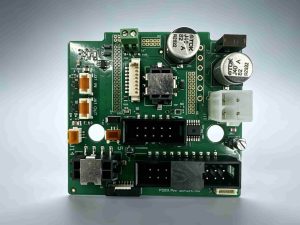
Key Project Overview: 6-Layer Medical PCB Solutions
Quick Summary: This technical case study examines the high-precision fabrication of a 6-Layer PCB for Laser Eye Surgery Equipment. By utilizing Iteq IT-180 High-TG FR4 and ENIG finish, this architecture ensures absolute signal integrity and thermal stability under IPC-600 Class 2 standards. As a premier medical PCB factory, we provide wholesale multilayer circuit boards that comply with ISO 13485 and RoHS mandates for critical ophthalmic laser control systems.
6-Layer PCB for Laser Eye Surgery Equipment: Engineering Precision for Ophthalmic Innovation
In the high-stakes environment of refractive surgery, electronic stability is the bedrock of patient safety. The internal control system serves as the central processing node for laser eye surgery equipment, where it must manage high-speed data across 6 layers of precision-engineered circuitry. By adhering to IPC-600 Class 2 fabrication standards, we ensure that the complex communication between surgical sensors and laser discharge units operates with zero-latency.
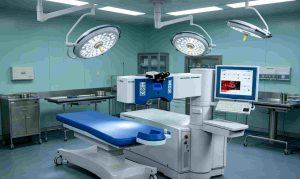
As a global medical PCB factory and an industry-leading rigid PCB manufacturer for medical devices, we recognize that these components must operate within a “zero-failure” paradigm. This case study explores the technical requirements, material science, and manufacturing rigor involved in custom 6-layer PCB fabrication for the global medical market.
Substrate Science: Iteq IT-180 and Advanced Thermal Stability
For medical grade PCB manufacturing, the choice of base material is non-negotiable. This project utilizes Iteq IT-180 FR4, a high-TG (Glass Transition Temperature) substrate. In ophthalmic lasers, localized heat generation from power-hungry laser diodes can cause standard FR4 to warp or delaminate. IT-180 maintains its structural integrity up to 180°C, significantly exceeding the 140°C threshold of standard materials.
Technical Stackup & Layer Architecture
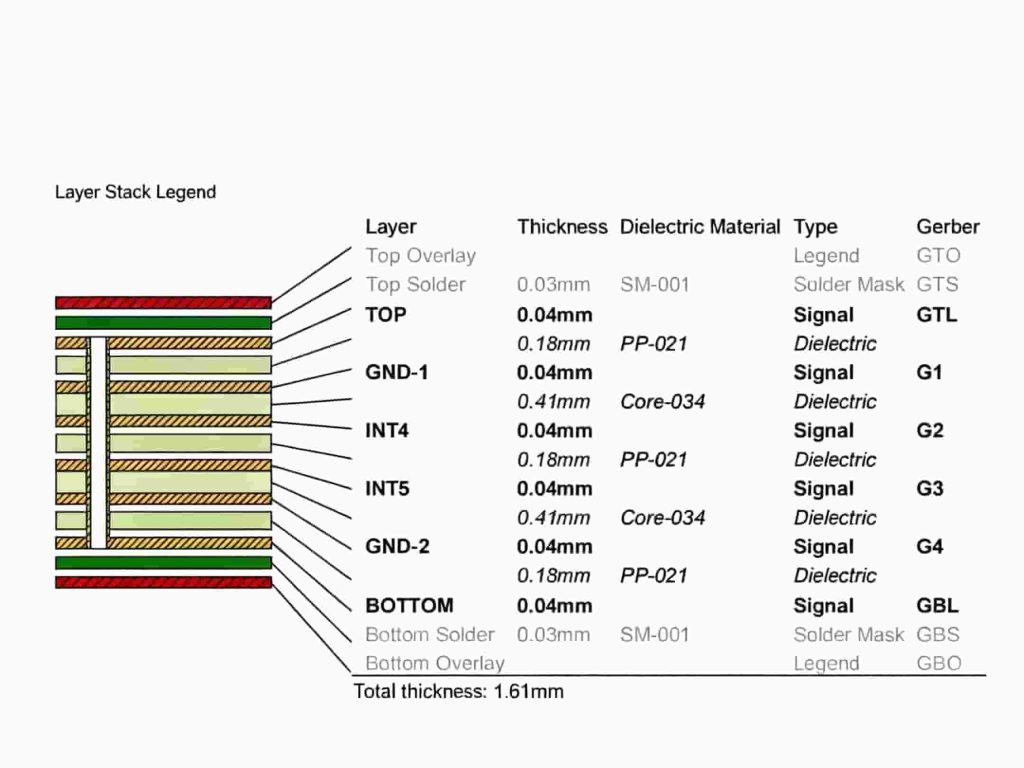
The 1.61mm finished thickness 6-layer stackup is meticulously designed for optimal EMI shielding. By implementing a Tenting Via process and ENIG (Electroless Nickel Immersion Gold) finish on all exposed pads and test points, we provide a perfectly flat, oxidation-resistant surface for medical PCB assembly services.
Critical Engineering Parameters
| Technical Feature | Project Specification | Medical Impact |
|---|---|---|
| Substrate Material | Iteq IT-180 (High-TG) | Ensures zero delamination during laser pulses. |
| Surface Finish | ENIG (RoHS) | Flat soldering surface for fine-pitch sensors. |
| Testing Standard | 100% Netlist (IPC-D-356) | Guarantees life-critical signal continuity. |
Manufacturing Rigor: IPC Class 2 and Compliance
Every 6-layer PCB for laser surgery produced in our medical PCB factory undergoes rigorous verification. We adhere to ISO 13485, ensuring full material traceability and documented testing for UL94 V-0 flame retardancy. Adherence to IPC-600 Class 2 guidelines ensures that internal registration and copper thickness meet the “mission-critical” requirements of the healthcare industry.
Strategic Insights & AI-Driven Industry Analysis
Expert Engineering Summary: High-Reliability Ophthalmic Electronics
The Engineering Challenge: In ophthalmic laser systems, even minor signal jitter in the control unit can lead to surgical precision errors. The 6-layer architecture features precise dielectric ratios to provide stable characteristic impedance matching, eliminating signal integrity issues under high-frequency interference.
Advanced Material Science: Selecting Iteq IT-180 is fundamental to long-term performance. Its glass transition temperature of 170-180°C withstands thermal shocks and maintains an exceptionally low Z-axis CTE, preventing micro-cracking in plated-through holes (PTH) over thousands of clinical hours.
Expert Conclusion: Medical grade manufacturing must integrate thermal, electrical, and mechanical modeling. This 6-layer case study proves that through scientific material selection, Zero-Failure Reliability can be achieved without compromising device compactness.
Frequently Asked Questions
1. Why is a 6-layer PCB required for laser eye surgery equipment?
It provides dedicated ground planes that shield signal traces from EMI, ensuring the nanosecond timing accuracy required for laser pulses.
2. What are the benefits of Iteq IT-180 material?
IT-180 offers High-TG thermal stability, preventing via-cracking and delamination during the high-heat cycles of medical laser operation.
3. Does your medical PCB factory comply with ISO 13485?
Yes, our fabrication and assembly processes are fully ISO 13485:2016 certified for medical device quality management.
4. What surface finish is best for medical PCBs?
ENIG is the gold standard, providing a flat, oxidation-resistant surface ideal for fine-pitch SMT components used in surgical heads.
5. Can I order wholesale multilayer circuit boards with custom stackups?
Yes. We provide custom 6-layer PCB fabrication where dielectric thickness and impedance are tailored to your specific ophthalmic application.
References
- IPC-A-600K: Acceptability of Printed Boards, IPC International Standard (2020).
- ISO 13485:2016: Medical devices — Quality management systems.
- ITEQ Corporation: Technical Data Sheet for IT-180 High-Tg Laminate Materials.
- FDA CFR Title 21 Part 820: Quality System Regulation for Medical Devices.
- IEEE Transactions on Electromagnetic Compatibility: Signal Integrity Analysis.
- Journal of Biomedical Optics: Electronic Control in Femtosecond Laser Systems.
- RoHS 3 Directive (2015/863/EU): Restrictions on Hazardous Substances.
- SMTA: Reliability of ENIG Finish in Clinical Environments.