Single-Layer flexible circuits
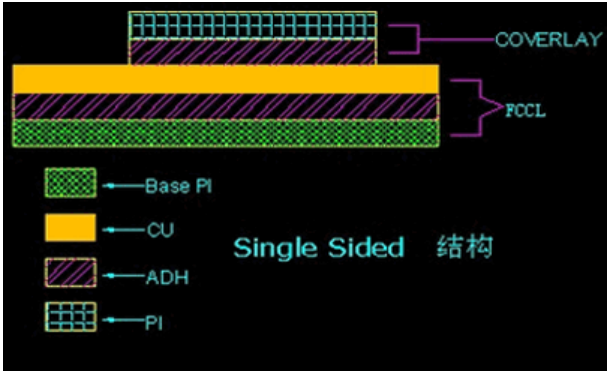
consist of a single copper conductor layer on a flexible dielectric film . Single-sided circuits can be fabricated with or without cover layers.
Single-Layer Flexible Circuits Manufacturer
Single-layer flexible circuits consist of a single copper conductor layer laminated onto a flexible dielectric film, such as polyimide or polyester. The circuit can be supplied with or without a coverlay, depending on the insulation and environmental protection requirements of the end application.
This simple, cost-effective structure is ideal for dynamic interconnections, hinge areas, and space-constrained designs, offering excellent bendability, low weight, and easy integration into consumer electronics, automotive modules, LED lighting, medical devices, and industrial control systems.
Detailed Specification
| Field | Value |
|---|---|
| Product Name | Single-Layer Flexible Circuits |
| Brand / Origin | JS circuit |
| Structure | Single copper conductor layer on flexible dielectric film (PI or PET) |
| Coverlay Option | With or without polyimide coverlay, depending on insulation/protection requirements |
| Copper Thickness | 12–35 μm (custom options available) |
| Dielectric Thickness | 12–50 μm PI or PET (typical range) |
| Min. Trace / Space | 0.10 / 0.10 mm (can be customized per design) |
| Max. Panel Size | Up to 250 × 500 mm (custom panel size on request) |
| Surface Finish | ENIG, OSP, immersion tin, or customer-specified finishes |
| Bend Performance | Suitable for dynamic flex and hinge areas, designed for repeated bending |
| Typical Applications | Consumer electronics, LED strips, automotive modules, cameras, printers, medical devices, EV wiring |
| Customization Services | Engineering support, stack-up design, DFM review, quick-turn prototyping and mass production |
Different Types of Single-Layer Flexible Circuits
Single-Layer Flexible Circuits Design
Single-Layer Flexible Circuit Features
Single-layer flexible circuits consist of a single copper conductor layer laminated onto a flexible dielectric film such as polyimide (PI) or PET. The circuit can be supplied with or without a coverlay, depending on insulation, solder-mask, and environmental protection needs.
Thanks to the simple single-sided stack-up, these flex circuits offer very thin overall thickness, low weight, and excellent dynamic bending performance, making them suitable for repeated flexing in hinge or moving areas. Trace width, spacing, copper thickness, outline, stiffeners, and connector pads can all be customized to match your assembly process. The construction is fully compatible with SMT reflow, manual soldering, and connector termination, providing a stable, reliable interconnect solution for high-volume OEM products.

Wide Applications of Single-Layer Flexible Circuits
Single-layer flexible circuits are widely used in medical devices wherever compact, reliable, and low-profile interconnects are required. In wearable and portable monitoring systems, they connect sensors, electrodes, displays, and control modules in a thin form factor that reduces bulk while maintaining stable signal integrity. They are also well-suited for disposable and single-use products such as diagnostic patches, probes, and testing consumables, where consistent performance and repeatable assembly are essential.
Medical equipment including patient monitors, infusion-related modules, imaging peripherals, and handheld diagnostic tools relies on single-layer flex circuits to route signals through constrained spaces and endure routine handling, repeated bending, and vibration in clinical use. With customizable layouts, medical-suitable material options, and multiple copper thickness choices, single-layer flexible circuits provide OEMs with a production-ready solution that scales across device platforms and volumes—supporting reliability, manufacturability, and application-specific cleaning or sterilization requirements when needed.