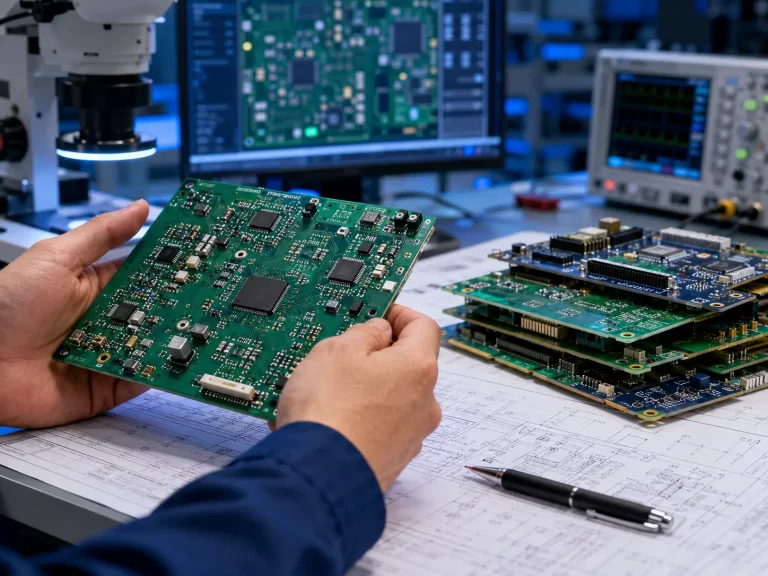
The procurement manager leaned forward. The hardware engineer responded calmly: “If the Rigid PCB stack-up, copper weight, and Tg rating are validated properly, yes. But we need a supplier who understands OEM-level risk.”
This conversation plays out daily inside electronics companies worldwide. From automotive control modules to industrial robotics and medical diagnostics, the Rigid PCB remains the structural backbone of modern electronics. Yet many OEM manufacturers still struggle with yield consistency, long-term reliability, and supply chain transparency.
This guide is a comprehensive, engineering-focused deep dive designed specifically for OEM manufacturers. We will explore structure, performance metrics, manufacturing standards, failure risks, real industry data, and proven solutions — with insights drawn from jscircuit’s manufacturing expertise.
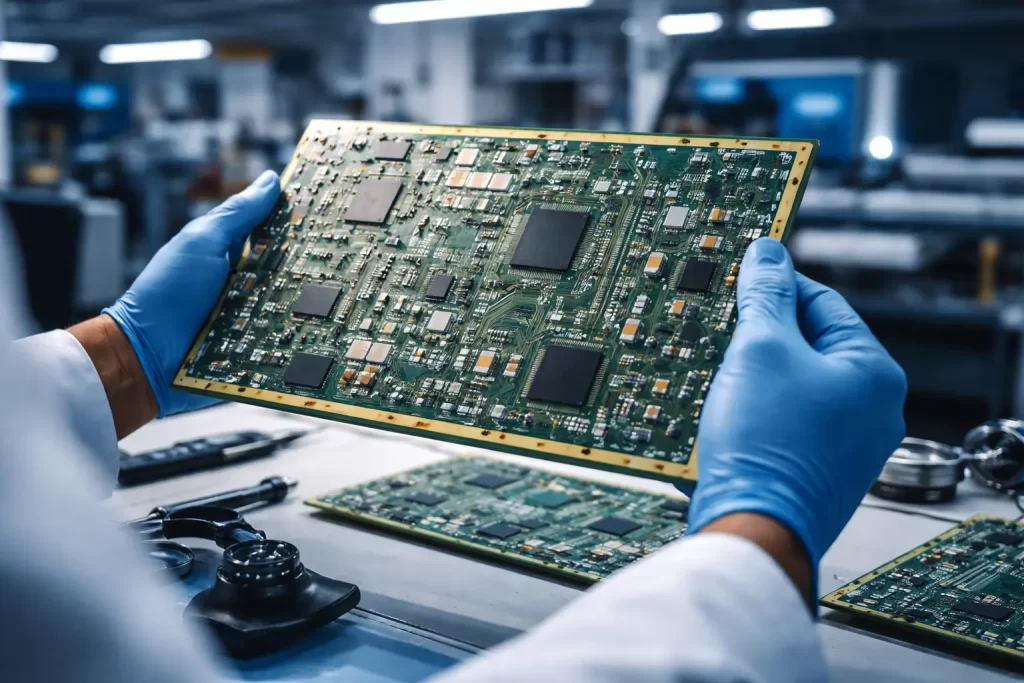
Why Rigid PCB Still Dominates OEM Manufacturing
Despite the rapid growth of flexible and hybrid boards, rigid printed circuit boards continue to dominate over 70% of the global PCB market by volume (based on IPC industry reports).
Why?
Because a Rigid PCB offers:
-
High structural stability
-
Excellent mechanical durability
-
Reliable multilayer routing
-
Cost-effective mass production
-
Strong thermal resistance
Unlike flexible boards, rigid boards maintain dimensional stability under high-temperature soldering and mechanical stress. For OEMs producing thousands or millions of units, repeatability and tolerance control matter more than design novelty.
For companies evaluating suppliers, exploring a professional manufacturing ecosystem like Rigid PCB manufacturer – jscircuit ensures production scalability aligned with IPC-A-600 and IPC-6012 standards.
Engineering Structure: What Makes a High-Quality Rigid PCB?
A high-performance Rigid PCB is not just FR-4 and copper traces. Its performance depends on several engineering parameters:
1. Substrate Material Selection
-
FR-4 (standard Tg 130–170°C)
-
High-Tg FR-4 (170–180°C)
-
Polyimide (high temperature applications)
-
Rogers materials (high frequency RF systems)
2. Copper Weight
-
1 oz standard
-
2 oz for power electronics
-
3–4 oz for industrial control
3. Layer Count
-
2-layer for simple controllers
-
4–6 layer for communication modules
-
8–16 layer for automotive ECU and servers
4. Surface Finishes
-
HASL
-
ENIG
-
Immersion Silver
-
OSP
Engineering data shows that ENIG-coated rigid boards reduce oxidation-related soldering defects by up to 18% compared to standard HASL in long storage cycles.
For OEMs requiring tailored stack-ups and multilayer optimization, the detailed product capabilities page on Rigid PCB solutions outlines fabrication tolerances, copper thickness ranges, and layer configurations.
The Real Pain Points OEM Manufacturers Face
Let’s address the core issues engineers worry about.
1. Thermal Failure in High-Power Designs
Rigid boards in power electronics face repeated thermal cycling. Studies indicate that solder joint fatigue increases 22–35% in boards with low Tg substrates operating above 120°C continuously.
Solution:
-
Choose high-Tg materials (170°C+)
-
Optimize via-in-pad design
-
Use thermal vias under MOSFET arrays
2. Signal Integrity in High-Speed Systems
As data rates exceed 5Gbps, impedance control becomes critical.
Failure factors:
-
Inconsistent dielectric constant
-
Poor trace geometry control
-
Inadequate ground referencing
Reliable manufacturers maintain ±10% impedance tolerance and use AOI plus flying probe testing to ensure signal consistency.
Industry Adoption: Where Rigid PCB Technology Thrives
According to electronics market analytics, rigid PCBs remain dominant across:
-
Automotive electronics (ECU, ADAS)
-
Industrial automation
-
Medical imaging
-
Consumer appliances
-
Aerospace control systems
A deeper breakdown of real application sectors is covered in Top 10 industries that use Rigid PCB technology, demonstrating how different performance standards apply per industry.
For example:
-
Automotive boards require thermal cycling validation (-40°C to 125°C).
-
Medical devices require ISO 13485 process compliance.
-
Industrial robotics demands vibration resistance testing.
OEMs that underestimate industry-specific certification requirements often face costly redesign cycles.
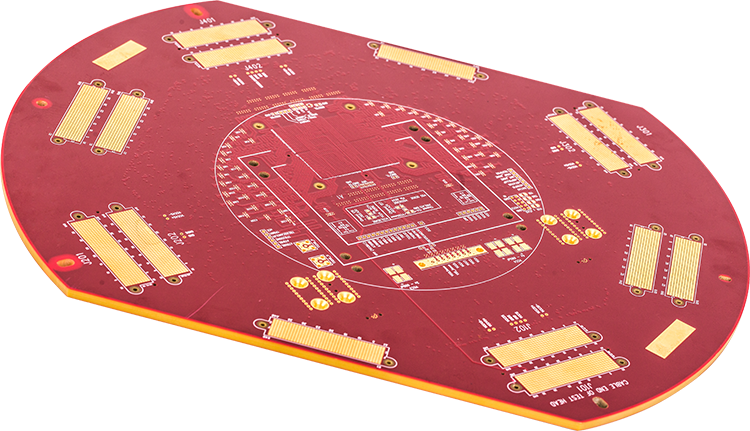
Rigid PCB vs Flexible PCB: Which One Actually Wins?
One of the most common OEM debates revolves around choosing between rigid and flexible circuit solutions.
A full technical comparison is presented in FPC vs Rigid PCB – engineering comparison, but here is a summarized engineering perspective:
| Parameter | Rigid PCB | Flexible PCB |
|---|---|---|
| Mechanical Stability | High | Medium |
| Space Optimization | Medium | High |
| Thermal Dissipation | Better | Moderate |
| Cost at Volume | Lower | Higher |
| Shock Resistance | Moderate | High |
For OEMs building rugged industrial products, rigid boards typically win in durability and cost stability.
Data-Driven Quality Control: What Separates Professional Manufacturers
OEM manufacturers increasingly demand traceable production data.
A reliable Rigid PCB production workflow includes:
-
Incoming material inspection
-
Laser drilling precision control
-
Automated Optical Inspection (AOI)
-
X-ray layer registration verification
-
Electrical testing (100%)
-
Final quality audit
Manufacturers like jscircuit – About Us emphasize advanced testing equipment, ISO certifications, and engineering teams with years of multilayer PCB expertise.
Recent case data from jscircuit production lines shows:
-
98.7% first-pass yield in 6-layer boards
-
±3 mil drilling tolerance control
-
Less than 0.2% impedance deviation in high-speed boards
These metrics significantly reduce OEM warranty risks.
Case Study: Industrial Automation Controller Upgrade
A European OEM manufacturing programmable logic controllers (PLC) experienced:
-
4.2% field failure rate
-
Intermittent overheating issues
-
Poor vibration resistance
After redesigning their board with a 6-layer high-Tg Rigid PCB stack-up and optimized copper distribution:
Results after 12 months:
-
Field failure reduced to 0.6%
-
Thermal stability improved by 31%
-
Production scrap rate reduced by 18%
This demonstrates how structural board optimization directly impacts lifecycle reliability.
Sustainability and Manufacturing Responsibility
Modern OEM procurement teams increasingly assess ESG performance.
Rigid PCB manufacturing impacts:
-
Water consumption
-
Chemical waste
-
Energy usage
Manufacturers committed to wastewater treatment systems and RoHS compliance reduce environmental risks. Companies like jscircuit continue improving process sustainability through chemical recovery systems and automated etching precision to minimize waste.
How to Select the Right Rigid PCB Partner
When evaluating a supplier, OEM manufacturers should verify:
-
IPC certification compliance
-
Material traceability
-
Stack-up design assistance
-
High-layer capability (8+ layers)
-
Impedance control testing
-
Engineering response time
Direct communication is critical. Engineers can discuss custom stack-up or application-specific requirements through Rigid PCB engineering consultation to minimize design iteration cycles.
Frequently Asked Questions (FAQ)
1. What is the lifespan of a Rigid PCB?
Typically 5–10 years in industrial applications, depending on thermal load and environmental conditions.
2. Can Rigid PCBs handle high-frequency signals?
Yes, especially when using low-loss dielectric materials such as Rogers substrates and controlled impedance routing.
3. What layer count is ideal for automotive ECUs?
Most ECUs use 6–12 layers to support power distribution and signal integrity.
4. How do I reduce warpage in multilayer boards?
Use symmetrical stack-ups, balanced copper distribution, and high-Tg materials.
5. Is Rigid PCB more reliable than flexible PCB?
For structural durability and high-volume cost efficiency, rigid boards are generally more reliable in industrial and automotive environments.
Engineering Confidence Begins with the Right Foundation
Returning to the opening conversation:
“Can we trust this board at 10,000 units per batch?”
The answer depends not just on design — but on manufacturing precision, material science, quality control, and supplier transparency.
For OEM manufacturers, the Rigid PCB is more than a circuit platform. It is the structural foundation of product reliability, regulatory compliance, and brand reputation.
When engineering discipline meets advanced fabrication expertise, production risk decreases, lifecycle performance increases, and innovation accelerates.
In an era of shrinking tolerances and rising performance demands, the smartest OEMs don’t just buy boards. They invest in proven engineering partnerships.
And that is where precision manufacturing makes all the difference.