Rigid Flex circuits
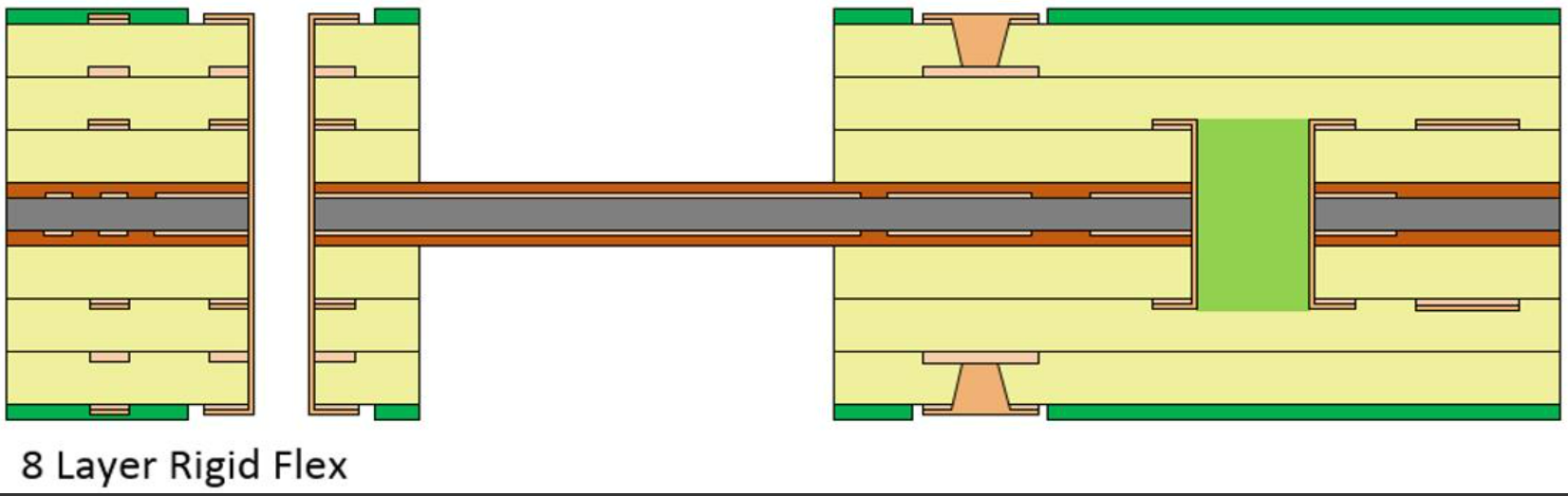
Rigid-flex circuits combine conductors on rigid and flexible layers, connected by plated through-holes. Defined as true multi-layer IPC-6013 structures, they differ from flex circuits with simple stiffeners.
Rigid Flex circuits Manufacturer in China
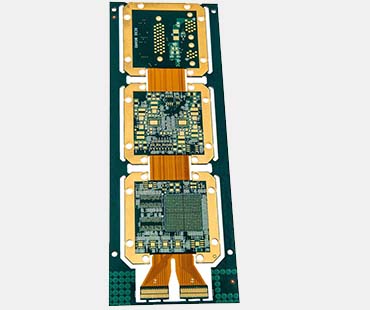
Rigid Flex circuits are characterized by having conductors on both the flexible and rigid layers of the circuit. Plated through-holes extend between the flexible and rigid sections and electrically connect multiple conductor layers. This circuit construction is known as a 8 layers circuit as defined by IPC 6013 and should be distinguished from a flexible circuit with a rigid stiffener attached.
Detailed Specification
| Field | Value |
|---|---|
| Structure | Rigid + flexible layers with PTH interconnection |
| Layer Count | 4–12+ layers (IPC-6013 compliant) |
| Dielectric | Polyimide (flex) + FR-4 (rigid) |
| Copper Thickness | 12–35 μm (custom) |
| Coverlay | Optional polyimide coverlay on flex areas |
| Surface Finish | ENIG, OSP, Immersion Tin |
| Bend Radius | Custom per design and layer stack |
| Typical Use | Folded modules, compact electronics, automotive, medical |
Different Types of Rigid Flex circuits
Rigid Flex circuits Design
Rigid Flex circuits Features
Rigid-flex circuits combine rigid PCB stability with flexible circuit bendability in a single structure. Conductive layers run through both rigid and flexible sections, connected by plated through-holes to form a continuous multilayer stack. This design reduces connector usage, improves signal reliability, supports tighter 3D packaging, and provides excellent mechanical performance in vibration or motion environments.
Wide Applications of Rigid Flex circuits
Rigid-flex circuits are commonly used where compact structure and dynamic bending are required. Typical applications include smartphones, cameras, foldable devices, medical equipment, automotive modules, aerospace electronics, and battery management systems. Their integrated structure allows efficient routing in limited spaces while ensuring long-term electrical and mechanical reliability.