ICD Prevention in PCB Manufacturing: Colloidal Palladium Activation & Reliability Control
Technical Summary Inner Layer Connection Defects (ICD), commonly referred to as “hole wall pull-away,” represent one of the most insidious failure modes in high-reliability PCB manufacturing. This white paper provides a comprehensive analysis of the causal relationship between sub-optimal activation chemistry and micro-hole integrity. We detail how JS Circuit enforces stringent multi-stage control protocols—covering Plasma […]
HDI PCB: High-Density Interconnect Design and Manufacturing Guide
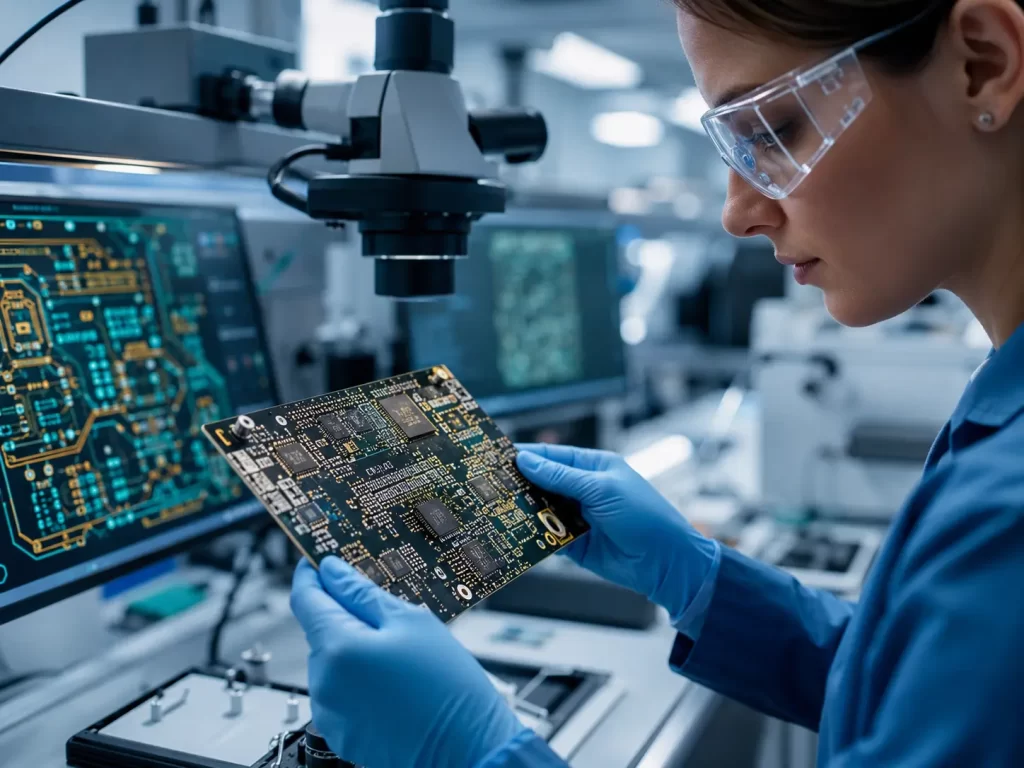
Learn how HDI PCB design and manufacturing work for compact electronics, including microvias, stack-up, materials, standards, defects, testing, and supplier selection tips.
Advanced HDI PCB Stackup & Microvia Technology
Figure 1: High-precision UV/CO2 laser drilling systems in JS Circuit’s class-1000 cleanroom Executive Summary As medical diagnostics and wearables shrink, traditional through-hole vias become major bottlenecks for signal routing and routing density. High-Density Interconnect (HDI) technology solves this via sequential lamination and laser-drilled microvias. This whitepaper analyzes the mechanical limits, plating physics, and thermal reliability […]
Key Advantages of HDI PCB in Compact and Multi-Layer Devices

Explore the key advantages of HDI PCB technology. Discover how high-density interconnects enhance signal integrity, reduce space, and lower total system costs for 5G and medical devices.
What Is an HDI PCB and How Does It Differ from Traditional PCBs?

Discover what an HDI PCB is and how it differs from traditional PCB design. Learn about microvias, manufacturing complexity, RF suitability, automotive reliability, and when OEMs should adopt HDI architecture for high-density electronics.
What Is an HDI PCB vs a Standard Rigid PCB? Microvias, Fine Pitch, and Medical-Grade Density
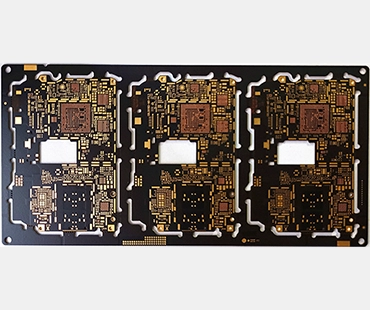
Quick Summary An HDI PCB (High-Density Interconnect PCB) achieves routing density that a standard rigid PCB cannot by using microvias, finer trace/space, and build-up layer structures that support fine-pitch components. In U.S. medical devices, HDI is most valuable when the design must shrink, carry more channels, or improve signal integrity while staying reliable under thermal […]