At the Crossroads of Flexibility and Stability
“Can we make it thinner?”
The product manager tapped the prototype housing.
“It has to bend here — and it can’t fail after 40,000 cycles.”
The hardware engineer leaned back. “If we use a Rigid PCB, we’ll need connectors. That increases failure points.”
A pause.
“What if we switch to FPC?”
That moment — repeated in thousands of design labs worldwide — captures the real debate: FPC vs Rigid PCB is not just a materials choice. It is a structural decision that affects reliability, lifecycle cost, manufacturability, signal integrity, and brand reputation.
In this in-depth technical analysis, we break down the engineering realities behind both technologies, supported by industry research, reliability data, and practical production insights from jscircuit.
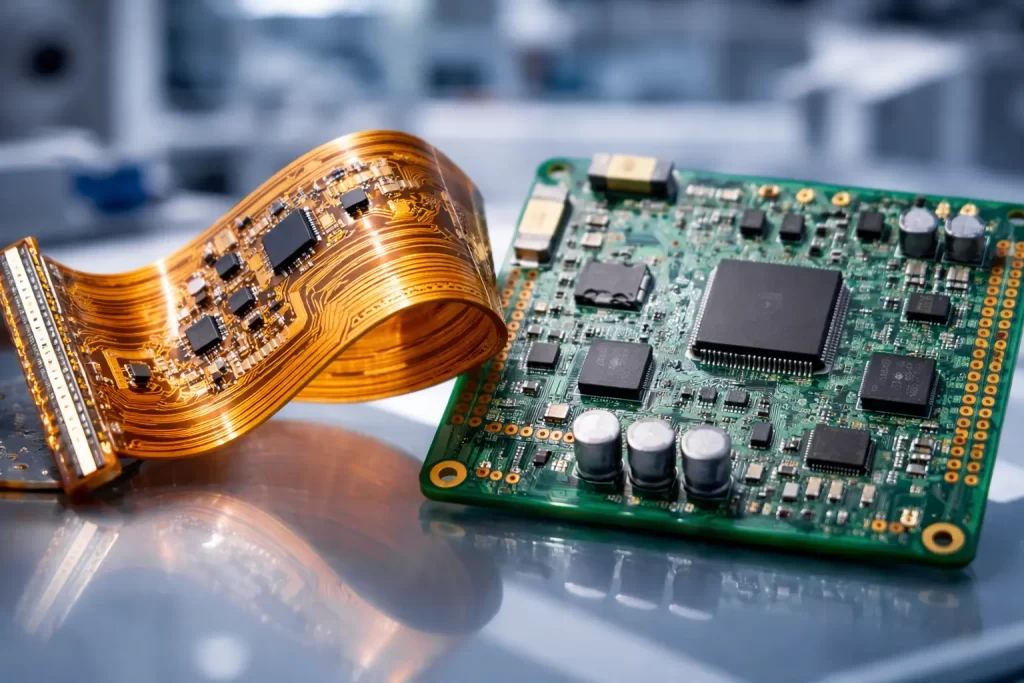
The Core Structural Difference Between FPC and Rigid PCB
At the most fundamental level, the distinction lies in substrate behavior.
FPC (Flexible Printed Circuit)
-
Built on polyimide or similar flexible dielectric
-
Designed to bend, fold, or twist
-
Ideal for 3D packaging
-
Reduces connectors and wiring harnesses
Rigid PCB
-
Typically FR-4 substrate
-
Provides structural support
-
Excellent for multilayer high-density routing
-
Stable under high mechanical load
Industry reports from IPC indicate that mechanical interconnect failures account for over 40% of early-stage product returns in motion-heavy devices. In many of those cases, replacing connector-based rigid interconnects with FPC significantly reduces fatigue-related defects.
But flexibility alone does not guarantee success.
When Rigid PCB Is the Right Choice
Rigid boards dominate traditional electronics for valid reasons.
If your system requires:
-
High power handling
-
Thick copper layers
-
Large multilayer stack-ups (8+ layers)
-
Structural rigidity inside industrial enclosures
Then a Rigid PCB remains highly efficient.
Manufacturers like JSCircuit provide precision fabrication with strict impedance control, layer alignment tolerance, and automated optical inspection systems that meet international reliability standards.
Rigid PCB continues to power:
-
Industrial automation controllers
-
High-load power distribution modules
-
Networking infrastructure
-
Server motherboards
According to market data, rigid PCBs still represent over 60% of global PCB production volume due to scalability and cost-efficiency in static systems.
Where FPC Changes the Game
FPC is not simply “a thinner board.” It is a mechanical integration solution.
Real Engineering Advantages
-
Eliminates soldered wire connections
-
Reduces weight by up to 60% compared to cable assemblies
-
Enables compact folding in wearable devices
-
Improves vibration resistance
NASA reliability data has shown that connector fatigue becomes a primary failure point in vibration-intensive systems. By removing connectors, FPC reduces these transitional stress zones.
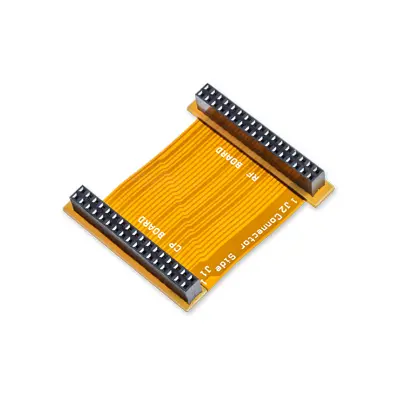
A strong example is the 3 Layers FPC for Electronics Product solution developed for compact consumer devices. The three-layer configuration balances routing density with bending endurance, allowing signal stability while maintaining flexibility in confined enclosures.
This hybridization of density and movement tolerance is where FPC excels.
Data-Driven Reliability Comparison
Let’s evaluate based on measurable engineering metrics.
1. Bend Cycle Endurance
-
Rigid PCB: Not designed for repeated bending
-
FPC: Can withstand 10,000–100,000+ cycles depending on copper type and bend radius
2. Connector Failure Risk
-
Rigid PCB systems often require board-to-board connectors
-
FPC eliminates many connectors, reducing solder joint fatigue
3. Weight Reduction
FPC reduces system weight significantly — critical in aerospace and wearable tech.
4. Assembly Complexity
Rigid PCB systems may require:
-
Additional wiring harnesses
-
Mechanical brackets
-
Connector insertion steps
FPC integrates routing directly into the structure, simplifying assembly.
Industry Applications: Where Each Technology Dominates
A review of the Top 10 Industries That Use Rigid PCB Technology highlights how rigid boards remain foundational in:
-
Telecommunications infrastructure
-
Automotive control modules
-
Industrial robotics
-
Consumer computing
However, wearable healthcare devices, foldable electronics, and lightweight aerospace instrumentation increasingly favor FPC.
The global flexible PCB market has grown steadily at over 8% CAGR in recent years — largely driven by miniaturization and smart device adoption.
The question is not which technology is superior overall.
The question is: which architecture fits your mechanical and electrical stress model?
Signal Integrity: A Critical Engineering Factor
High-speed digital and RF systems demand strict impedance control.
Rigid PCB typically offers:
-
Stable dielectric constant
-
Controlled stack-up thickness
-
Better heat dissipation in high-power systems
FPC requires more careful design:
-
Symmetrical layer balancing
-
Controlled trace geometry
-
Avoidance of vias in bend areas
When engineered correctly, FPC can support high-frequency signals effectively, but it requires tighter process control and manufacturing discipline.
This is where manufacturer expertise becomes critical.
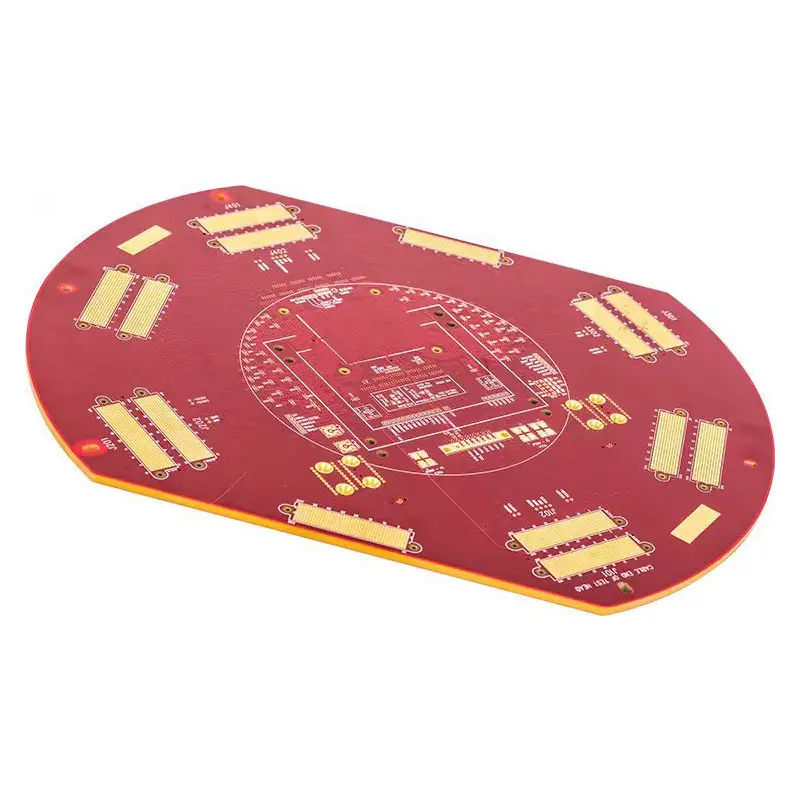
Manufacturing Expertise and Process Control
Producing high-reliability FPC involves:
-
Dimensional stability management
-
Coverlay alignment precision
-
Controlled lamination pressure
-
Rolled annealed copper handling
Not every PCB factory can deliver consistent dynamic-flex reliability.
Reviewing a company’s manufacturing philosophy, certifications, and engineering history — such as the experience shared on the About Us page — provides insight into process maturity and technical credibility.
Jscircuit has built its reputation on strict quality systems, detailed design-for-manufacturing reviews, and application-specific material selection guidance.
In complex flex or rigid-flex programs, early engineering consultation often prevents late-stage redesigns.
For project-specific guidance, direct technical consultation through the Contact Us portal enables OEM teams to align mechanical and electrical requirements before fabrication begins.
Pain Points and Solutions: What Engineers Struggle With
Pain Point 1: Connector Fatigue in Moving Assemblies
Solution: Replace rigid interconnects with FPC to reduce solder joint stress.
Pain Point 2: Excess Assembly Time
Solution: Use integrated FPC routing to eliminate manual wiring.
Pain Point 3: Bulky Internal Architecture
Solution: Foldable FPC enables 3D packaging.
Pain Point 4: Vibration-Induced Failures
Solution: Remove mechanical transition points.
Cost Misconceptions
Many engineers assume FPC is always more expensive.
While raw material costs can be higher, system-level savings often offset this through:
-
Reduced assembly labor
-
Fewer connectors
-
Lower warranty claims
-
Reduced mechanical components
Total cost of ownership matters more than board-level pricing.
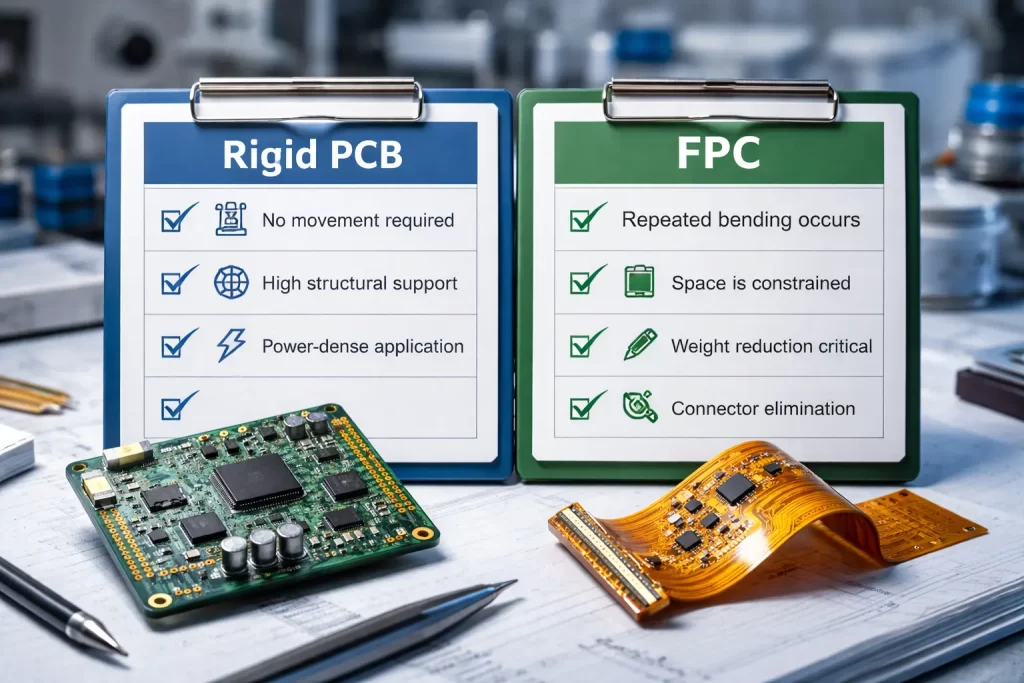
FPC vs Rigid PCB: Decision Framework
Use this simplified engineering filter:
Choose Rigid PCB if:
-
No movement required
-
High structural support needed
-
Power-dense application
Choose FPC if:
-
Repeated bending occurs
-
Space is constrained
-
Weight reduction critical
-
Connector elimination improves reliability
Often, the most advanced solution is rigid-flex integration.
Frequently Asked Questions
1. Is FPC more reliable than Rigid PCB?
In dynamic applications, yes. For static, high-load systems, rigid boards may offer better mechanical stability.
2. Can FPC support high-frequency signals?
Yes, when impedance is properly controlled and dielectric materials are selected carefully.
3. Does FPC reduce system weight significantly?
Yes. Flexible circuits can reduce weight substantially by replacing wiring harnesses and connectors.
4. Are Rigid PCBs better for multilayer high-density boards?
Rigid PCBs are generally more scalable for very high layer counts.
5. Is FPC suitable for industrial environments?
Yes, when designed for environmental stress conditions and manufactured with proper material selection.
It’s Not About Flexibility — It’s About System Survival
Returning to the design table.
The team chose FPC for the bending section and rigid PCB for the processing core.
Six months later, the device passed mechanical endurance testing.
The real lesson?
FPC vs Rigid PCB is not a competition. It is a strategic engineering decision.
When selected correctly — based on movement cycles, stress modeling, signal integrity requirements, and manufacturing discipline — both technologies become powerful tools.
The smartest products today are not built with one or the other.
They are built with the right one in the right place.
And that decision begins long before fabrication — at the design table.