ICD Prevention in PCB Manufacturing: Colloidal Palladium Activation & Reliability Control
Technical Summary Inner Layer Connection Defects (ICD), commonly referred to as “hole wall pull-away,” represent one of the most insidious failure modes in high-reliability PCB manufacturing. This white paper provides a comprehensive analysis of the causal relationship between sub-optimal activation chemistry and micro-hole integrity. We detail how JS Circuit enforces stringent multi-stage control protocols—covering Plasma […]
Advanced HDI PCB Stackup & Microvia Technology
Figure 1: High-precision UV/CO2 laser drilling systems in JS Circuit’s class-1000 cleanroom Executive Summary As medical diagnostics and wearables shrink, traditional through-hole vias become major bottlenecks for signal routing and routing density. High-Density Interconnect (HDI) technology solves this via sequential lamination and laser-drilled microvias. This whitepaper analyzes the mechanical limits, plating physics, and thermal reliability […]
Fundamentals of PCB Stackup Design for High-Reliability Medical Electronics
Figure 1: Engineered symmetry in an 8-layer medical PCB stackup to prevent thermal warpage. Executive Summary In high-precision medical electronics, the PCB stackup design is much more than a simple arrangement of layers; it is a critical component of the circuit’s electrical performance. This article explores the fundamental engineering behind layer sequencing, material physics (Dk […]
Why DFM is the Cornerstone of Medical PCBA Success
Early-stage DFM review: Identifying layout constraints before committing to fabrication. Executive Summary In the development of medical devices, the distance between a successful prototype and a compliant, mass-produced product is measured in DFM. Design for Manufacturing (DFM) is not merely a checklist—it is a risk mitigation strategy that directly impacts product reliability, manufacturing yield, and […]
Why Rigid PCBs Improve Reliability in Portable Medical Imaging and Surgical Electronics
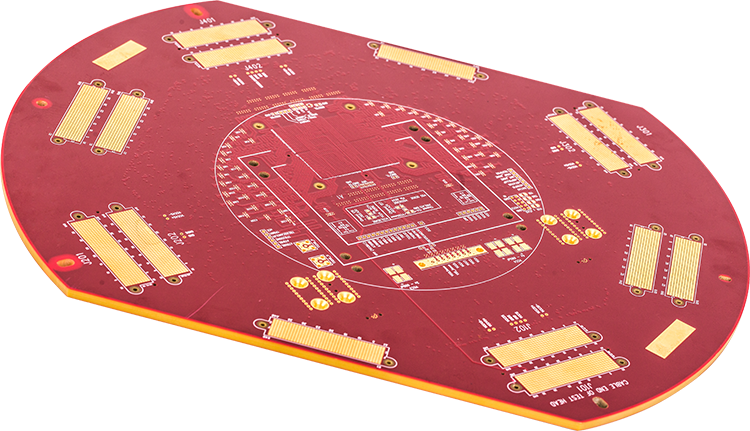
Quick Summary In portable medical imaging and surgical electronics, the highest “hidden” failure risk is rarely the IC—it is the interconnect system under heat, vibration, shock, cleaning exposure, and repeated handling. A well-built Rigid PCB improves reliability by keeping geometry stable, copper-to-dielectric structures consistent, grounding predictable, and assembly repeatable across lots. This article explains the […]
How to Design Multi-Layer Flexible Circuits for Wearables and Patient Monitoring in the U.S. Market
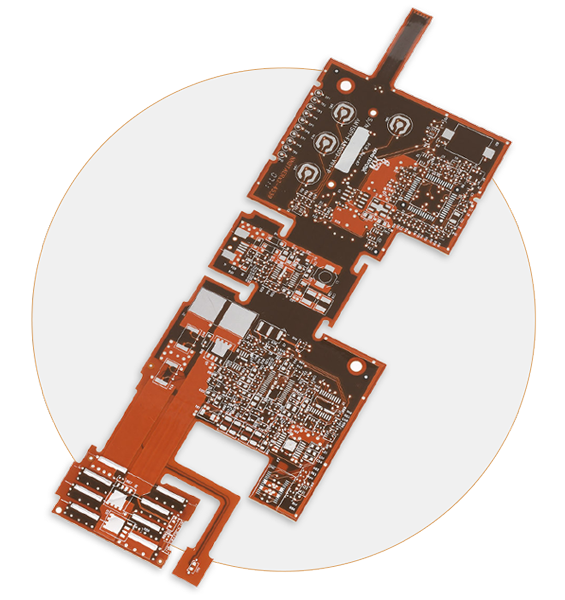
Quick Summary Multi-Layer Flexible Circuits power today’s wearable medical electronics by packing sensing, power, and wireless routing into a thin structure that survives real-world motion. The difference between a “working prototype” and a U.S.-market-ready patient monitoring flex circuit is usually not the sensor—it’s the multilayer flex stackup, bend-zone discipline, grounding strategy, and repeatable flex pcb […]
What Is a Flex PCB? Single-Layer vs Double-Layer Flexible Circuits for U.S. Medical Devices
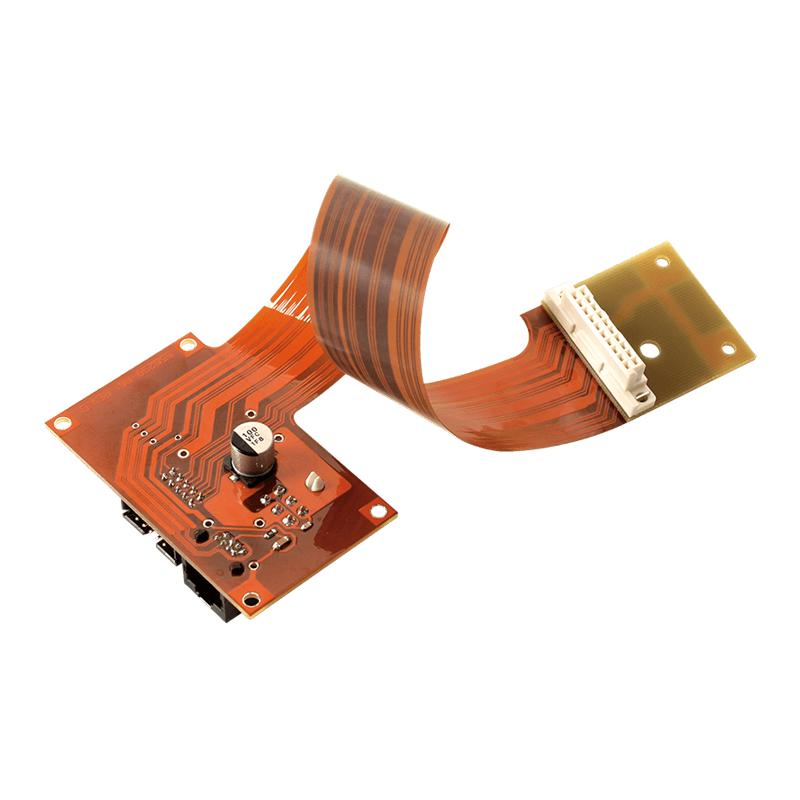
Quick Summary A Flex PCB is a flexible printed circuit built on polymer films (most commonly polyimide) that enables compact routing, reliable interconnects, and controlled bending in modern medical devices. In U.S. medical electronics, the most practical decision is usually between single-layer flexible circuits (thin, light, highly bend-tolerant, best for simple signals and tight packaging) […]