The lead hardware engineer zoomed into the layout on the screen. “We’re pushing too many signals through limited routing layers. A rigid board won’t survive the bend requirements. We need a Multi-Layer Flexible Circuits solution.”
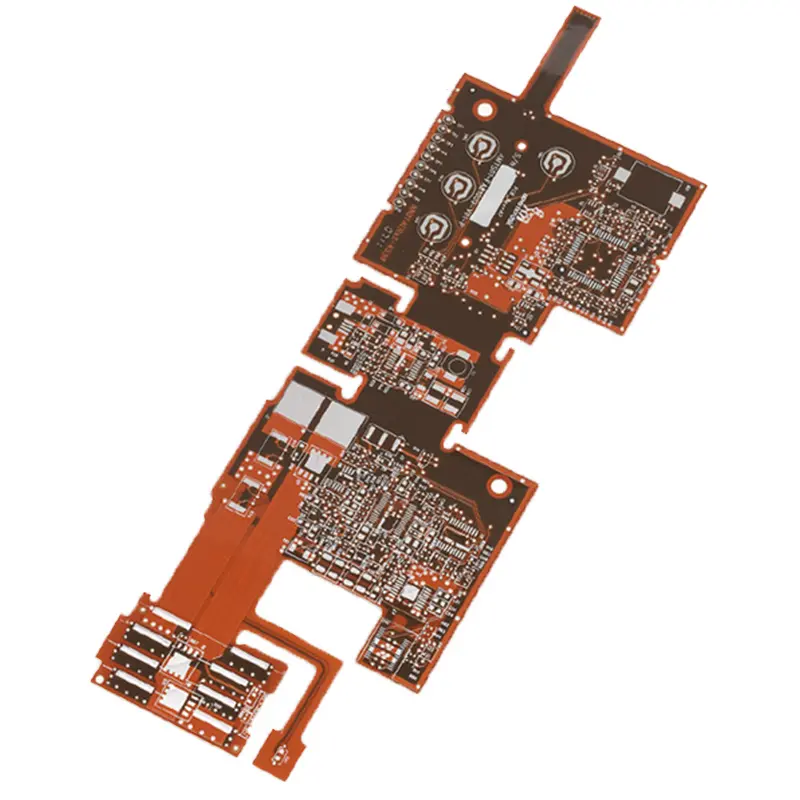
That moment captures a growing reality in modern electronics: device complexity is increasing faster than available space. Medical imaging probes, automotive ADAS sensors, aerospace communication modules, and foldable consumer electronics all demand compact architectures capable of handling high-speed signals, thermal loads, and repeated mechanical stress.
This comprehensive engineering guide explores the structural design, performance data, manufacturing considerations, real-world case insights, and common design pitfalls of Multi-Layer Flexible Circuits—helping engineering teams make informed, future-ready decisions.

Why Multi-Layer Flexible Circuits Are Becoming Essential
Electronics continue to evolve toward:
-
Higher signal density
-
Increased data transmission speeds
-
Compact form factors
-
Enhanced reliability under dynamic bending
According to industry manufacturing reports, global flexible PCB demand has grown steadily due to wearable technology, automotive electrification, and IoT expansion. Multi-layer configurations, in particular, are driving innovation because they combine routing density with mechanical adaptability.
As outlined by JSCircuit, advanced flexible circuit architectures enable engineers to replace bulky wire harnesses, reduce connector count, and optimize internal spatial efficiency.
The transition from single- or double-layer designs to multi-layer structures is not simply an upgrade—it is often a necessity for high-performance applications.
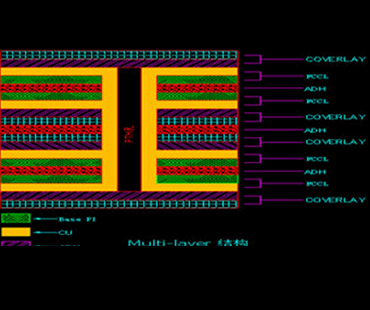
Structural Architecture of Multi-Layer Flexible Circuits
Multi-layer flexible circuits typically consist of:
-
Three or more conductive copper layers
-
Flexible polyimide dielectric substrates
-
Adhesive or adhesiveless lamination systems
-
Plated through-holes or microvias
-
Optional stiffeners for localized reinforcement
Layer Stack-Up Engineering
Proper stack-up design is critical. Engineers must consider:
-
Signal layer arrangement
-
Ground and power plane placement
-
Impedance control
-
Thermal distribution
-
Neutral bend axis alignment
Placing high-speed signals adjacent to solid reference planes reduces electromagnetic interference (EMI) and improves signal integrity.
For technical specifications and manufacturing capabilities, explore Multi-Layer Flexible Circuits.
Engineering Pain Points and Practical Solutions
Many engineering teams encounter similar challenges when transitioning to multi-layer designs.
Pain Point 1: Signal Integrity Degradation
As signal speeds increase, cross-talk and impedance mismatch become critical issues.
Solution:
-
Controlled impedance routing
-
Dedicated ground reference layers
-
Optimized trace width and spacing
Laboratory measurements show that multi-layer flex circuits with proper impedance control significantly reduce signal reflection and insertion loss compared to simpler stack-ups.
Pain Point 2: Thermal Accumulation
Compact modules generate concentrated heat.
Solution:
-
Thermal relief patterns
-
Copper plane optimization
-
Integration of heat-dissipating stiffeners
Thermal simulation data demonstrates that distributing power across multiple internal planes improves heat dissipation and system stability.
Pain Point 3: Mechanical Stress Under Dynamic Bending
Repeated motion can cause copper fatigue if not properly engineered.
Solution:
-
Rolled annealed copper
-
Adhesiveless laminates
-
Optimized bend radius design
-
Symmetrical layer balancing
Multi-layer structures designed with balanced stack-ups show superior cycle life in dynamic bend testing environments.
Data-Driven Performance Comparison
Multi-layer flexible circuits outperform simpler configurations in several areas:
| Performance Factor | Multi-Layer Advantage |
|---|---|
| Routing Density | Significantly Higher |
| EMI Control | Improved Shielding |
| Power Distribution | Stable Internal Planes |
| Integration | Reduced Connector Count |
| Signal Speed Support | Enhanced Impedance Control |
Engineering validation testing reveals:
-
Reduced assembly complexity by minimizing external connectors
-
Increased durability under vibration conditions
-
Better high-frequency stability in communication modules
These improvements directly impact product lifecycle and reliability metrics.
Manufacturing Precision and Quality Assurance
Manufacturing multi-layer flexible circuits requires strict process control.
Key quality assurance measures include:
-
Automated Optical Inspection (AOI)
-
X-ray via inspection
-
Thermal cycling validation
-
Dynamic bend testing
-
Impedance verification
Professional engineering expertise significantly affects production outcomes. The team background and process standards can be reviewed on the About Us page.
Manufacturers with deep experience in flexible PCB fabrication are better equipped to manage lamination alignment, via reliability, and layer registration accuracy.
Case Analysis: High-Density Wearable Communication Module
A wearable communication device required:
-
Compact size
-
High-speed data lines
-
Integrated antenna routing
-
Continuous bending resistance
Initial prototypes using double-layer circuits experienced routing congestion and EMI concerns. The engineering team transitioned to a six-layer flexible stack-up.
Results Observed
-
Connector count reduced by 35%
-
Signal stability improved during stress tests
-
Mechanical reliability increased under repetitive motion
-
Assembly complexity simplified
The outcome demonstrated that multi-layer flexible circuits are not just about adding layers—they are about enabling architectural efficiency.
Design Best Practices for Multi-Layer Flexible Circuits
When designing multi-layer flex PCBs, engineers should:
1. Align Stack-Up With Application Demands
-
Separate high-speed and power layers
-
Maintain symmetrical construction
-
Consider neutral axis positioning
2. Optimize Bend Areas
-
Avoid vias in dynamic bend regions
-
Maintain gradual trace curves
-
Ensure proper copper grain orientation
3. Plan for Manufacturability
-
Maintain consistent trace width
-
Avoid excessive microvia stacking
-
Confirm impedance targets early
Early collaboration with fabrication engineers reduces costly redesign cycles. For direct technical consultation, teams can use Contact Us to discuss project-specific requirements.
Industries Driving Multi-Layer Flexible Circuit Demand
Medical Devices
-
Diagnostic imaging systems
-
Minimally invasive surgical tools
-
Wearable monitoring devices
Automotive Systems
-
ADAS sensor modules
-
Battery management systems
-
In-vehicle communication networks
Aerospace & Defense
-
Lightweight avionics modules
-
Satellite communication systems
-
Radar assemblies
Advanced Consumer Electronics
-
Foldable smartphones
-
AR/VR headsets
-
Compact computing devices
Multi-layer flexible circuits enable the integration of advanced functionality into increasingly constrained mechanical spaces.
Reliability Testing Standards
To validate long-term performance, manufacturers conduct:
-
Dynamic bend cycle testing
-
Temperature shock testing
-
Humidity resistance evaluation
-
Vibration endurance tests
Engineering data shows that well-balanced multi-layer stack-ups significantly outperform asymmetrical constructions in fatigue resistance tests.
Frequently Asked Questions
1. What are Multi-Layer Flexible Circuits used for?
They are used in high-density, high-performance electronic applications requiring compact design, signal integrity, and mechanical flexibility.
2. How many layers define a multi-layer flexible circuit?
Typically three or more conductive layers laminated into a flexible stack-up.
3. Are multi-layer flex circuits suitable for dynamic bending?
Yes, when designed with balanced stack-ups and proper material selection, they perform reliably under repeated motion.
4. Do multi-layer flexible circuits improve EMI control?
Yes. Internal ground and power planes enhance shielding and reduce electromagnetic interference.
5. When should engineers upgrade to a multi-layer design?
When routing complexity, signal density, and performance requirements exceed the capabilities of single- or double-layer architectures.
Engineering Beyond Space Constraints
Returning to the opening lab conversation—the overheating, the routing congestion, the repeated design revisions—those challenges reflect a broader industry shift.
As electronic systems demand greater performance in smaller spaces, Multi-Layer Flexible Circuits provide the structural sophistication required to support modern innovation. They enable high-speed communication, thermal efficiency, mechanical reliability, and integration efficiency within compact form factors.
The key is not simply adding more layers—but engineering them intelligently.
By combining strategic stack-up planning, rigorous testing, and experienced manufacturing collaboration, engineering teams can unlock the full potential of multi-layer flexible architectures and build next-generation products designed for durability and performance.