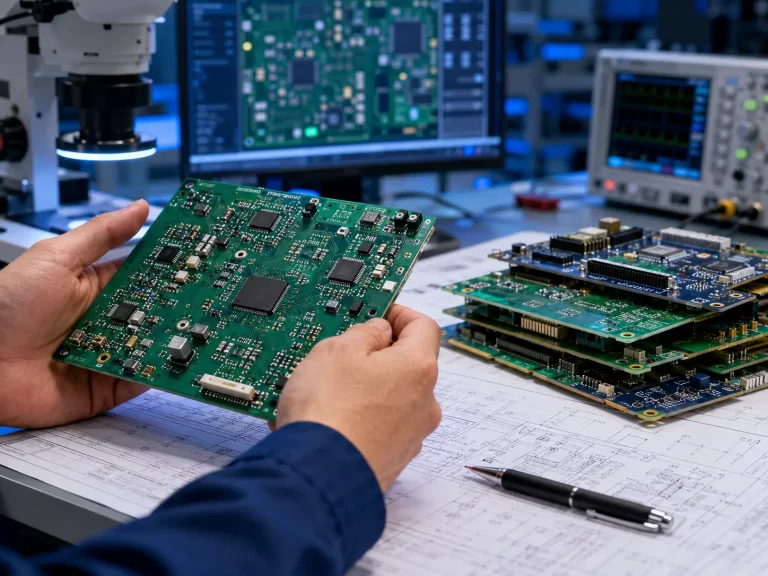
The global electronics infrastructure is navigating an unprecedented technological threshold. Driven by the relentless consumer and industrial demand for instantaneous data transfer, modern communication networks, autonomous driving algorithms, and advanced aerospace telemetry systems are aggressively pushing operational frequencies from the megahertz (MHz) range deep into the gigahertz (GHz) and millimeter-wave spectrums.
In this high-speed, high-stakes realm, traditional epoxy-glass laminates are fundamentally obsolete. The physical limitations of standard substrates cause severe signal attenuation, phase distortion, and destructive electromagnetic radiation. For procurement directors and hardware engineers sourcing wholesale high frequency PCB solutions, the margin for error is virtually zero. A slight miscalculation in material specification or a minor flaw in factory fabrication can derail a multi-million-dollar product launch. This comprehensive B2B guide unpacks the buyer pain points, common industry myths, critical material science, and the strategic decision logic required to successfully source advanced microwave circuit boards.
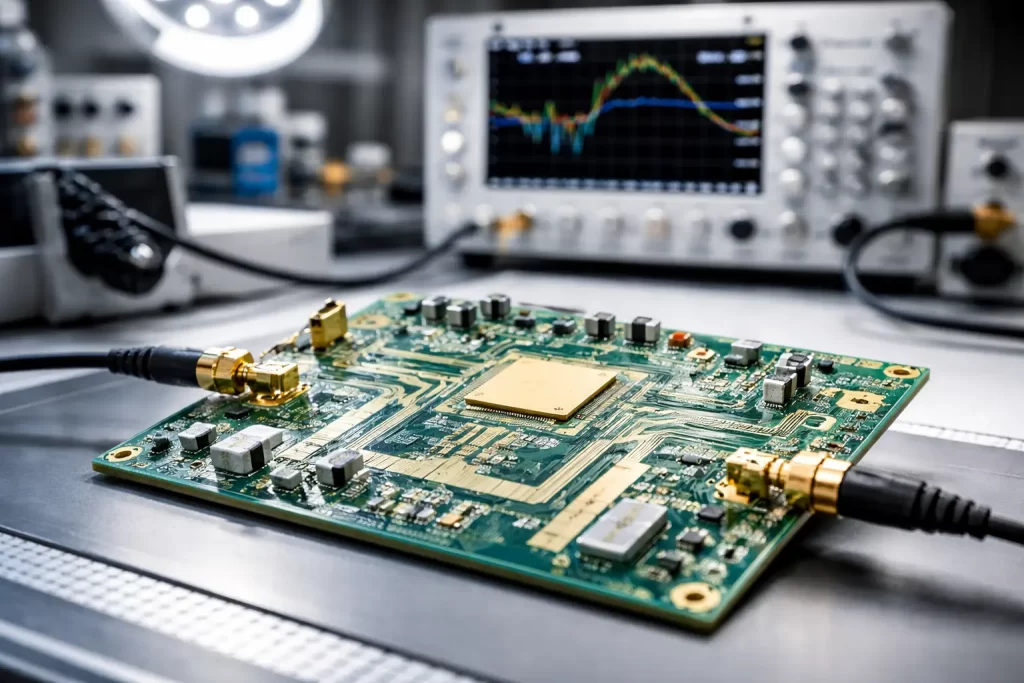
Decoding the Buyer Pain Points and Hidden Procurement Risks
Procurement officers and hardware startups often encounter catastrophic, budget-destroying failures when venturing into microwave electronics. Navigating this specialized supply chain requires identifying the exact pain points that plague high-speed product development.
The Nightmare of Failed EMI Certifications
One of the most expensive risks in RF procurement is failing regulatory emissions testing (such as FCC or CE certifications). When an engineering team mistakenly specifies a low-cost substrate with an unstable Dielectric Constant (Dk) for a 5GHz device, the impedance fluctuates across the board. This impedance mismatch causes the high-speed signals to reflect and radiate outward as electromagnetic interference (EMI). Failing an EMI test requires complete board respins, delaying time-to-market by months and inflating R&D budgets exponentially.
Thermal Expansion and Catastrophic Field Failures
For applications in harsh environments, such as 77GHz automotive radar modules, the physical stress on the board is immense. If a buyer procures a pure PTFE (Teflon) board without verifying its Coefficient of Thermal Expansion (CTE), the board will expand rapidly under the heat of a vehicle engine bay. This excessive Z-axis expansion physically tears the copper plating inside the via barrels, leading to intermittent open circuits. In the realm of Advanced Driver Assistance Systems (ADAS), this transitions from a mere hardware bug to a lethal, brand-destroying field liability.
Yield Loss and Manufacturing Scrap
Buyers often experience massive budget overruns when they assume any standard fabrication house can process exotic RF materials. If a factory uses standard mechanical drills on PTFE without utilizing a vacuum plasma etching chamber, the Teflon melts and smears over the internal copper rings. The factory will experience a 40% to 60% scrap rate, and those costs are inevitably passed down to the B2B buyer in the form of astronomical unit prices.
Common Misunderstandings in Microwave PCB Procurement
To optimize your supply chain, you must discard outdated industry assumptions. Relying on traditional procurement myths frequently leads to wasted capital and underperforming hardware.
Myth 1: “Standard FR4 is Fine for Very Short RF Traces”
A pervasive engineering myth is that standard FR4 is acceptable for a 5GHz or 10GHz signal if the physical trace is shorter than an inch. In reality, microwave physics do not forgive short distances. Even a half-inch trace on standard epoxy-glass at 10GHz will introduce significant phase distortion and capacitive coupling, degrading the Signal-to-Noise Ratio (SNR) before the data even reaches the antenna.
Myth 2: “Always Buy the Most Expensive PTFE Available”
Many procurement teams fall into the trap of over-specifying. They assume that purchasing the absolute lowest-loss pure PTFE material is the safest route for every project. However, pure PTFE is incredibly soft and difficult to manufacture into multi-layer boards. For many sub-6GHz applications, this is a massive waste of capital. Modern ceramic-filled hydrocarbon laminates offer excellent loss characteristics at a fraction of the cost and process much easier in standard fabrication lines.
Understanding when to scale material costs is critical, especially when exploring the top 10 high-frequency PCB applications in RF and 5G systems. From massive MIMO base stations to consumer IoT gateways, the material choice must align precisely with the operational frequency and thermal budget.
Core Material Science: Evaluating Exotic Substrates
Procurement engineers must rigorously scrutinize two primary material parameters: Dielectric Constant (Dk) and Dissipation Factor (Df). Dk determines the speed at which an electrical signal travels through the material, and it must remain exceptionally stable across temperature variations. Df measures how much energy leaks into the substrate as heat. High-speed electronics require a Df of 0.005 or lower to prevent the signal from fading out.
To assist engineering teams in specifying the correct substrate, the following scientific data table outlines the performance metrics of various industrial laminates:
| Material Specification | Standard Epoxy Glass (FR4) | PTFE Laminate (e.g., Rogers 3003) | Ceramic-Hydrocarbon (e.g., Rogers 4350B) |
| Dielectric Constant (Dk) @ 10GHz | 4.30 – 4.60 (Unstable) | 3.00 ± 0.04 (Highly Stable) | 3.48 ± 0.05 |
| Dissipation Factor (Df) @ 10GHz | 0.0200 | 0.0010 | 0.0037 |
| Moisture Absorption (%) | 0.15% – 0.25% | < 0.04% | < 0.06% |
| Z-Axis Thermal Expansion (CTE) | ~70 ppm/°C | 24 ppm/°C | 32 ppm/°C |
The Convergence of High Frequency and Flexible Circuits
As hardware shrinks, engineers face the complex challenge of routing microwave signals through highly dynamic and confined physical environments. We are increasingly seeing high-frequency material capabilities converge with advanced FPC (Flexible Printed Circuit) and Rigid-Flex PCB technologies.
In the medical sector, the push for compact, wearable telemetry devices and non-invasive diagnostic patches requires high-speed RF data transmission on substrates that can bend with the human body. In the automotive industry, flexible RF interconnects are replacing bulky coaxial cables to transmit high-definition radar data from the vehicle’s bumper to the central processing unit. Designing a Rigid-Flex board that can maintain strict 50-ohm impedance while flexing requires an exceptionally capable manufacturing partner. Reviewing a manufacturer’s history and technical infrastructure by reading about us provides critical insight into whether a facility possesses the laser-profiling and LCP (Liquid Crystal Polymer) processing capabilities required for these next-generation flex-RF hybrids.
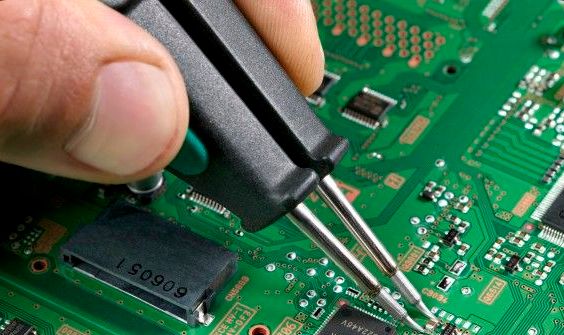
Advanced Design Protocols and Fabrication Challenges
Procuring the correct exotic material is entirely useless if the layout violates the laws of microwave physics or if the factory lacks the machinery to process it.
The Skin Effect and Copper Surface Roughness
At 10GHz and above, a physical phenomenon known as the “Skin Effect” dominates. High-speed alternating currents do not flow through the entire cross-section of a copper trace; magnetic fields push the current entirely to the outer “skin” of the metal. At millimeter-wave frequencies, this skin depth is less than a micrometer. Standard Electrodeposited (ED) copper features a rough, tooth-like structure. At microwave speeds, the signal is forced to travel up and down these microscopic mountains, causing severe resistive loss. Therefore, advanced procurement contracts must mandate the use of Low Profile (LP) or Rolled Annealed (RA) copper foils, which possess near-mirror finishes.
Strict Impedance Control and Via Back-Drilling
Every copper trace on an RF layout acts as a dedicated transmission line. Controlled impedance routing requires calculating exact trace widths, copper weights, and dielectric spacing using complex 3D electromagnetic solvers. Furthermore, Plated Through-Hole (PTH) vias act as highly disruptive antennas in microwave environments. The unused portion of a via (the “via stub”) acts as a resonant cavity, reflecting signals and destroying data streams. High-performance layouts mandate precision depth “back-drilling” to mechanically remove these parasitic via stubs.
Strategic Decision Logic Framework
To streamline procurement, eliminate hidden risks, and protect product margins, technical buyers should employ the following decision logic matrix when defining material specifications:
-
IF the application operates below 2GHz (e.g., standard Wi-Fi, basic IoT BLE) → CHOOSE High-Tg FR4 or Mid-Loss materials. This optimizes budget while providing sufficient signal integrity.
-
IF the application operates between 2GHz and 10GHz (e.g., Sub-6GHz 5G infrastructure, C-band radar) → CHOOSE Ceramic-Filled Hydrocarbon laminates. These offer excellent low-loss characteristics but process like standard FR4, drastically reducing manufacturing scrap rates.
-
IF the application operates above 10GHz (e.g., 77GHz automotive radar, satellite telemetry) → CHOOSE Pure PTFE laminates with Very Low Profile (VLP) copper. Do not compromise on cost; the physics of millimeter waves demands absolute minimal dissipation factors.
-
IF the device requires massive layer counts but only two critical RF lines → CHOOSE a Hybrid Stack-up. Bond 2 layers of expensive PTFE to 6 layers of inexpensive FR4 to achieve flawless microwave performance while slashing the overall board cost by up to 40%.
Recommendations and Next Steps
Sourcing advanced RF substrates is not merely an exercise in finding the lowest quote; it is a highly strategic partnership in material science and fabrication physics. B2B buyers must actively audit facilities to ensure they possess vacuum plasma desmear capabilities, laser microvia drills, and TDR (Time Domain Reflectometry) testing equipment to empirically verify impedance matching before shipment.
Are you preparing to launch a next-generation 5G base station, a flexible medical telemetry wearable, or an autonomous driving radar module? Before finalizing your CAD layouts and locking in your bill of materials, we strongly encourage engineering teams to collaborate with a specialized fabrication partner. Engaging in a comprehensive Design for Manufacturability (DFM) and stack-up review early in the prototyping phase is the most effective strategy to eliminate impedance mismatches and prevent costly revisions. Do not leave your high-speed signal integrity to chance; contact us today to discuss your technical specifications, request exotic material data sheets, and secure a robust manufacturing pipeline for your most demanding RF projects.\
FAQ
1. What makes standard FR4 unsuitable for high-frequency microwave applications?
Standard FR4 is an epoxy-glass laminate that possesses a high Dissipation Factor (Df), typically around 0.020. At microwave frequencies, this high loss tangent causes the substrate to absorb a massive amount of the electromagnetic signal, converting vital data into wasted thermal heat. Additionally, the Dielectric Constant (Dk) of FR4 fluctuates significantly with temperature changes, causing severe phase distortion, impedance mismatches, and timing jitter in high-speed circuits.
2. Why is pure PTFE (Teflon) often mixed with ceramics for RF circuit boards?
While pure PTFE offers the absolute lowest signal loss, it is mechanically soft, exhibits a high coefficient of thermal expansion (CTE), and is notoriously difficult to laminate into multi-layer boards. By impregnating the PTFE or hydrocarbon resin with micro-ceramic particles, manufacturers stabilize the material physically. This lowers the Z-axis thermal expansion (preventing via barrels from cracking during soldering) and makes the board much easier to process in standard fabrication machinery, reducing yield loss.
3. How does copper surface roughness affect high-speed signal integrity?
Due to the “Skin Effect,” high-frequency alternating currents travel almost entirely on the extreme outer surface of the copper trace. If standard Electrodeposited (ED) copper is used, its rough, tooth-like microscopic surface forces the signal to travel up and down these jagged peaks. This drastically increases the distance the signal travels and introduces severe resistive loss. Microwave boards require Rolled Annealed (RA) or Low Profile (LP) copper to ensure a smooth, frictionless path for the electromagnetic waves.
4. What is a hybrid PCB stack-up and how does it save procurement costs?
A hybrid stack-up is an advanced manufacturing technique where dissimilar materials are bonded together in the same multi-layer board. Because exotic RF materials like PTFE are highly expensive, engineers will designate only the critical outer layers for the high-speed microwave routing using PTFE. The inner layers, which handle low-speed digital logic and power delivery, are built using inexpensive FR4. This optimizes RF performance while reducing the total material cost by up to 40%.
5. Why is vacuum plasma desmear mandatory for manufacturing PTFE boards?
When a mechanical drill bit creates a via hole in a PTFE board, the intense friction melts the Teflon, smearing it over the internal copper layers. Because PTFE is chemically inert, standard alkaline desmear chemicals cannot remove this residue. If the hole is plated over the smear, the electrical connection will fail. Vacuum plasma etching, using a specialized mixture of oxygen and carbon tetrafluoride gases, is the only reliable method to aggressively ablate the PTFE smear before copper plating.
References:
-
“Microwave and RF Design of Wireless Systems.” David M. Pozar, John Wiley & Sons.
-
“High-Speed Digital Design: A Handbook of Black Magic.” Howard Johnson, Martin Graham.
-
“Dielectric Properties of Polymers at Microwave Frequencies.” IEEE Transactions on Microwave Theory and Techniques.
-
“The Skin Effect and Copper Surface Roughness Impact on Signal Integrity.” International Journal of RF and Microwave Computer-Aided Engineering.
-
“IPC-2223: Sectional Design Standard for Flexible Printed Boards (Includes Rigid-Flex constraints).” IPC Association Connecting Electronics Industries.
-
“Advanced Laminates for 77 GHz Automotive Radar Applications.” Microwave Journal.
-
“Plasma Desmear and Etchback for Advanced Substrates.” Surface Mount Technology Association (SMTA).
-
“Time Domain Reflectometry Theory and Applications for Impedance Testing.” Agilent Technologies / Keysight Application Notes.
Strategic Procurement Logic (Why & What): Sourcing high-frequency PCBs fundamentally revolves around mitigating signal attenuation and EMI radiation in the microwave spectrum. The core logic dictates abandoning high-loss FR4 in favor of PTFE or ceramic-filled hydrocarbon laminates. B2B buyers must prioritize materials that provide an ultra-stable Dielectric Constant (Dk) and exceptionally low Dissipation Factor (Df) to maintain pristine signal integrity in 5G infrastructure, 77GHz ADAS radar, and emerging rigid-flex medical wearables.
Key Sourcing Options & Fabrication Considerations
- Pure PTFE vs. Hybrid Stackups (Option)
Cost-to-Performance Context: While pure PTFE offers the absolute lowest signal loss, it is mechanically soft and highly expensive. For complex multi-layer boards, engineers execute hybrid stackups: pressing 1 or 2 layers of exotic PTFE for the high-speed RF routing, bonded to 4 to 6 layers of standard FR4 for low-speed power delivery. This optimizes microwave performance while drastically reducing the overall wholesale cost of the PCB. - Plasma Desmear & Copper Roughness (Consideration)
Risk Mitigation: Standard PCB facilities cannot process advanced RF materials. B2B buyers must audit facilities to ensure they possess vacuum plasma etching chambers—the only method to safely clean drilled PTFE via walls and prevent thermal open-circuits. Furthermore, procurement must specify Very Low Profile (VLP) copper foils to mitigate the “Skin Effect” and prevent severe resistive signal loss at millimeter-wave frequencies.