Technical Summary
In the era of miniaturized medical and industrial computing, 0.3mm and 0.4mm fine-pitch BGA components represent the pinnacle of integration. This article outlines the multi-layered DFM and process control strategies—including stencil engineering, thermal kinetics, and vacuum-assisted reflow—deployed by JS Circuit to drive voiding ratios consistently below IPC requirements, ensuring long-term fatigue life in mission-critical hardware.
1. Introduction: The Fine-Pitch BGA Assembly Paradox
The transition to 0.3mm and 0.4mm pitch BGA components is the cornerstone of modern miniaturized high-performance hardware. For JS Circuit, successful Fine-Pitch assembly is not a standard SMT process—it is a study in fluid dynamics, thermal mass management, and interfacial integrity.
2. Stencil Engineering & Area Ratio Management
For pitches under 0.4mm, the “Area Ratio” (Aperture Area / Aperture Wall Area) is the limiting factor. JS Circuit enforces a minimum Area Ratio of 0.66, coupled with laser-cut, electro-polished stainless steel stencils with nano-coatings to reduce the frictional resistance of the solder paste during the release process.
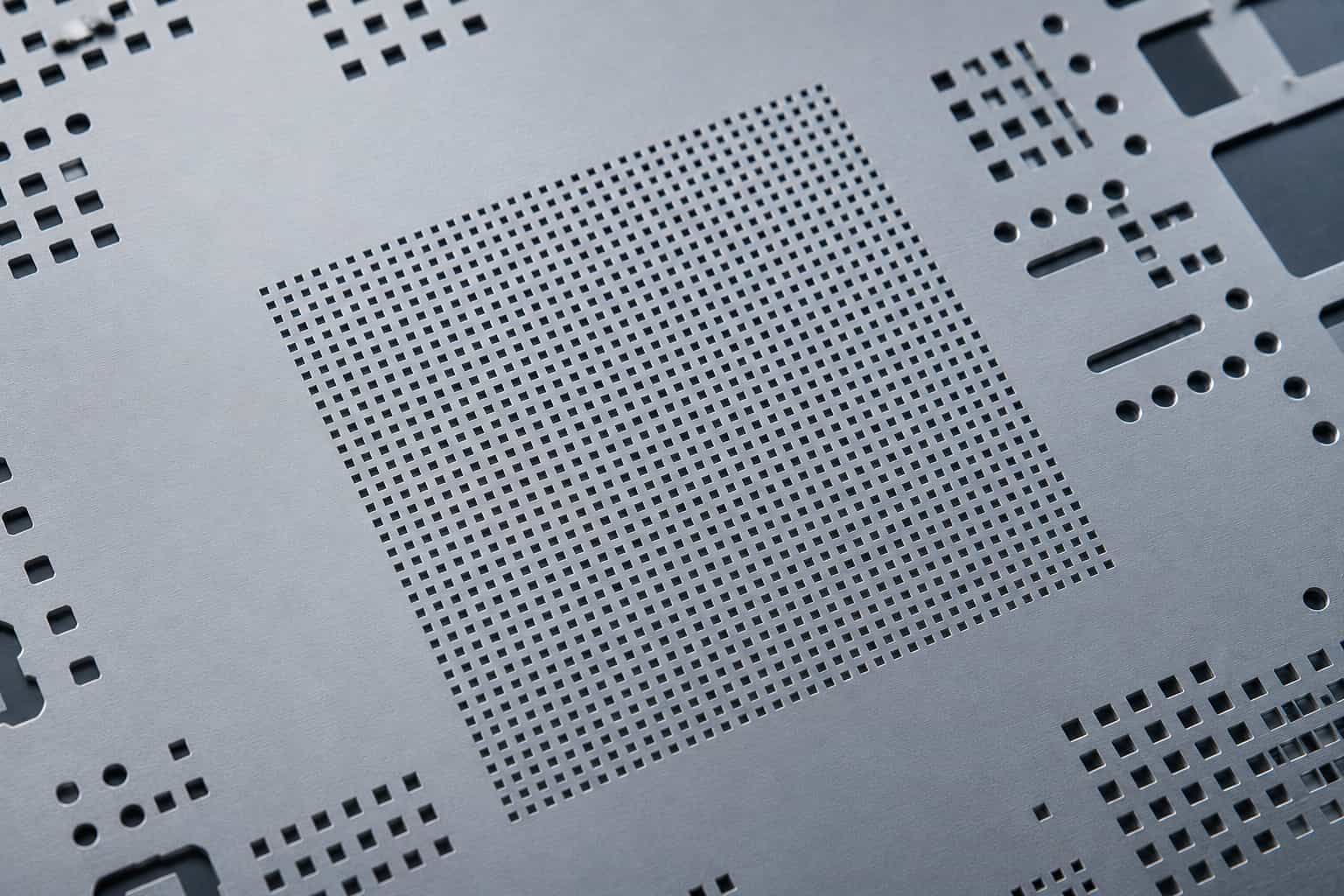
Figure 1: High-precision stencil aperture design. Our rounded-square geometry reduces solder paste sticking.
3. SMD Pad Design: NSMD vs. SMD Guidelines
In fine-pitch applications, the choice between Non-Solder Mask Defined (NSMD) and Solder Mask Defined (SMD) pads is critical. For 0.3mm BGA, JS Circuit recommends NSMD pads to provide a larger copper bonding area, which improves the mechanical attachment strength and accommodates thermal expansion cycles better than SMD pads.
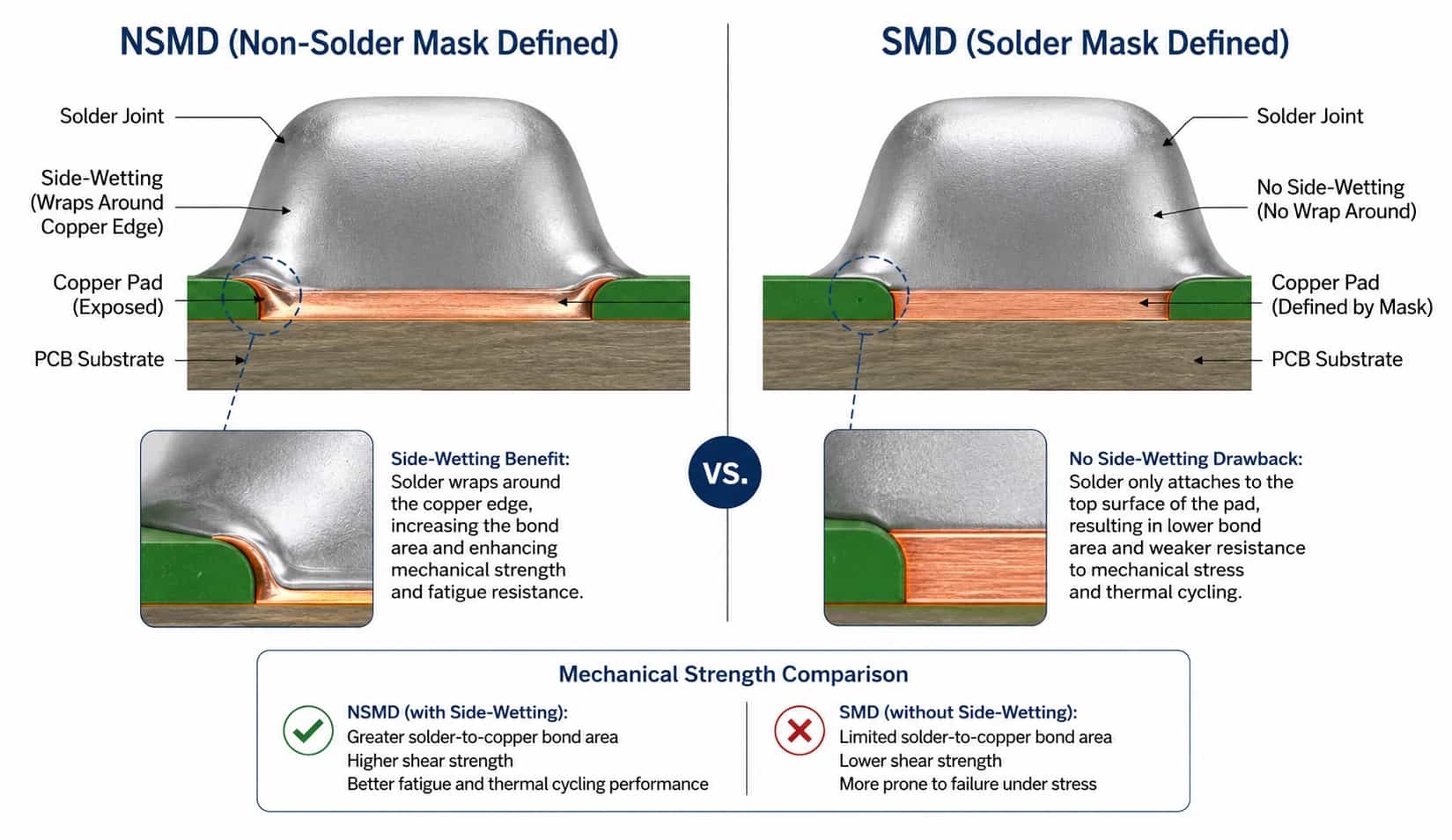
Figure 2: Pad design comparison for BGA reliability. NSMD pads allow for improved solder wrap around the land, increasing shear force resistance.
4. Reflow Optimization & Vacuum Control
We employ a controlled “Soak/Reflow” hybrid profile that prioritizes solvent evaporation. In high-reliability builds, we integrate a Vacuum-Assisted Reflow Cycle. By applying negative pressure at the critical liquidus stage, entrapped micro-bubbles are physically extracted, ensuring the solder joint integrity.

Figure 3: Vacuum cycle dynamics. Extracting gas at the liquidus point is the ultimate defense against voiding.
5. Flux Residue & Reliability Management
For dense 0.3mm BGA arrays, trapped flux residue acts as a parasitic electrolyte. We utilize automated wash-process protocols and ion-chromatography testing to verify that residue levels are well below the industry-standard.
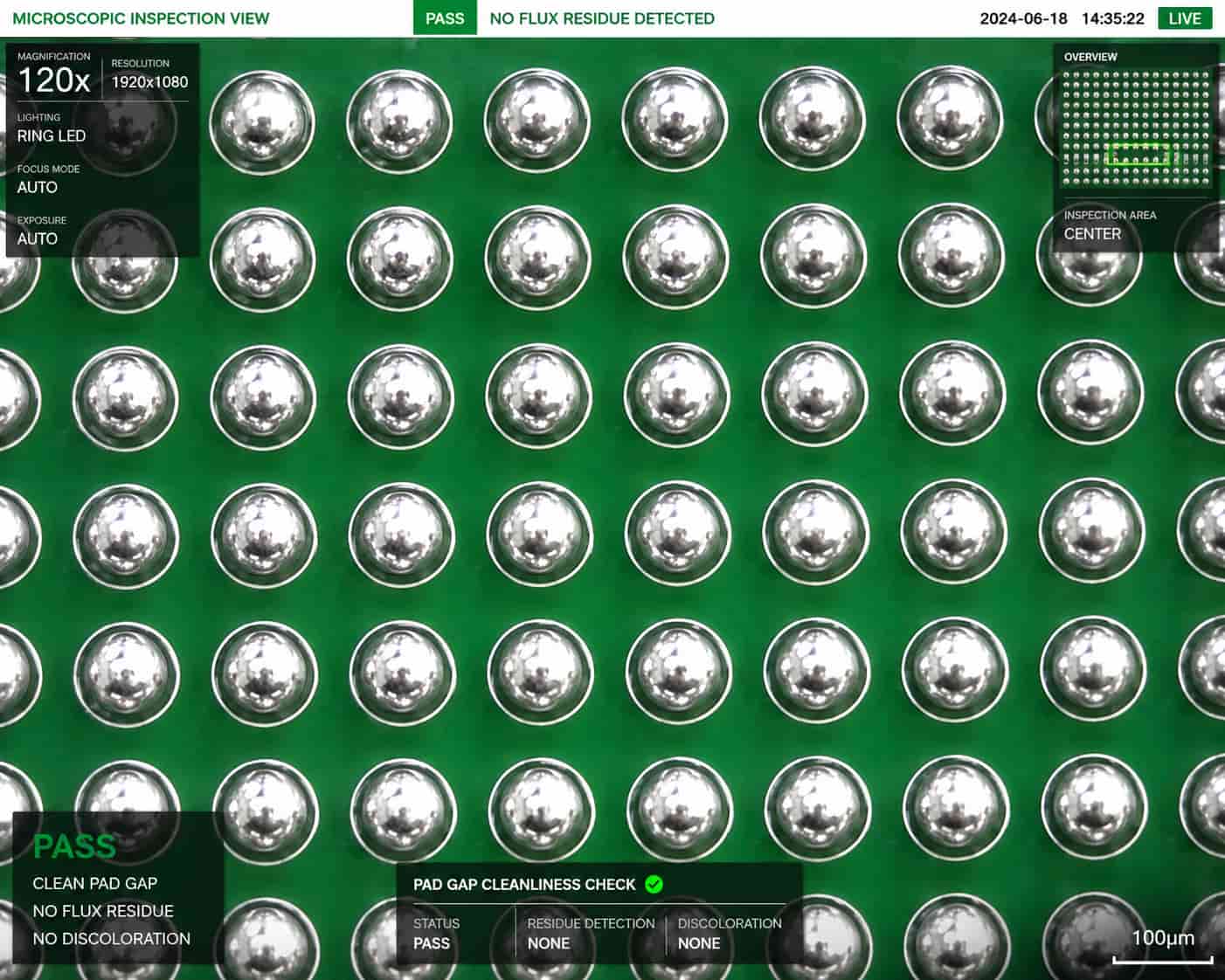
Figure 4: Post-wash cleanliness validation. Ensuring zero ionic contamination under fine-pitch BGA arrays.
6. Manufacturing Tolerances & Parameters
| Parameter | Standard | JS Circuit Optimized |
|---|---|---|
| Min. Area Ratio | 0.55 | > 0.66 |
| Voiding Ratio | < 20% | < 10% |
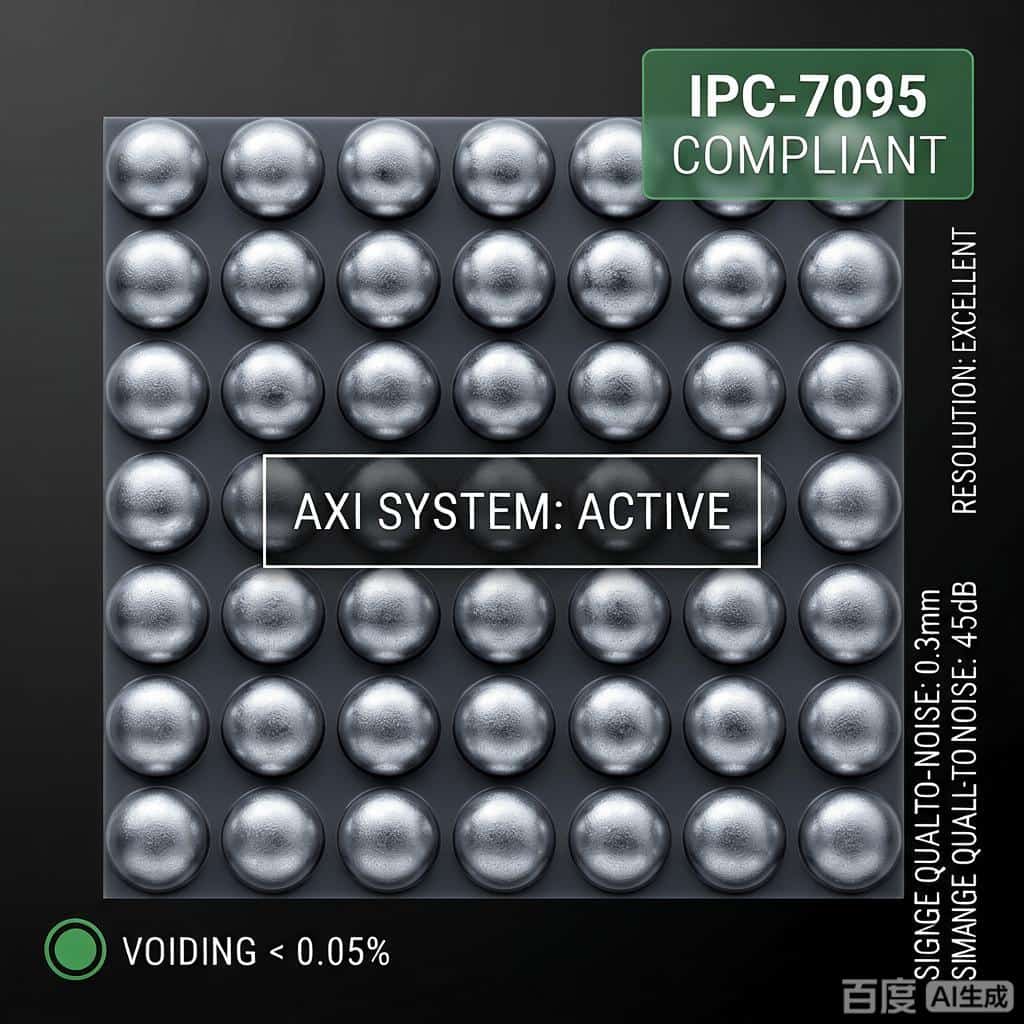
Figure 5: AXI inspection report. Quantitative validation of voiding across the entire BGA array.
📋 Technical FAQ: BGA Assembly & Voiding Control
Q1: How do you differentiate between process voids and material voids?
A1: Process voids are typically larger and associated with flux outgassing; material voids often appear as tiny, clustered “pinholes.” Our AXI profiling allows us to categorize them.
Q2: Is vacuum reflow suitable for all BGA types?
A2: Yes, particularly for high-reliability medical boards. It significantly reduces voiding without sacrificing solder joint morphology.
Q3: How does board finish impact BGA voiding?
A3: Immersion Silver often shows lower voiding rates due to better wetting compared to ENIG, which is susceptible to minor nickel oxidation issues.
Q4: Can we use standard SMT stencils for 0.3mm BGA?
A4: No. 0.3mm BGA requires specialized stencil manufacturing (laser-cut with nanocoating) to ensure paste doesn’t stick.
Q5: What is your primary standard for BGA acceptance?
A5: We adhere strictly to IPC-7095, as well as IPC-A-610 Class 3 for mission-critical inspection requirements.
Q6: Why is NSMD pad design preferred for 0.3mm BGA?
A6: NSMD pads provide better mechanical grip and thermal fatigue resistance by allowing solder to wrap around the copper sides.
Q7: How often should AXI be performed?
A7: For high-reliability builds, 100% AXI inspection is mandatory to guarantee zero-defect shipment.
Need to optimize your BGA DFM? Contact JS Circuit’s engineering team today.