When Design Constraints Demand Intelligent Flexibility
“Can we make it thinner?”
The product designer leaned forward, sliding a 3D-printed wearable prototype across the table.
“It has to bend here,” she said, pointing to a curved housing edge. “And survive at least 50,000 movement cycles.”
The hardware engineer paused. “If we stay with rigid boards, we’ll need connectors. That adds failure risk.”
Silence. Then a quiet response: “What about a Flexible PCB?”
That single question has reshaped modern electronics design across industries — from wearable health monitors to aerospace instrumentation.
But what exactly is a Flexible PCB, and why has it become a structural solution rather than just a space-saving trick?
This article delivers a technical deep dive, combining data-driven insights, engineering realities, and manufacturing experience to help OEM decision-makers fully understand Flex PCB technology.
Understanding Flexible PCB: Beyond “Bendable Boards”
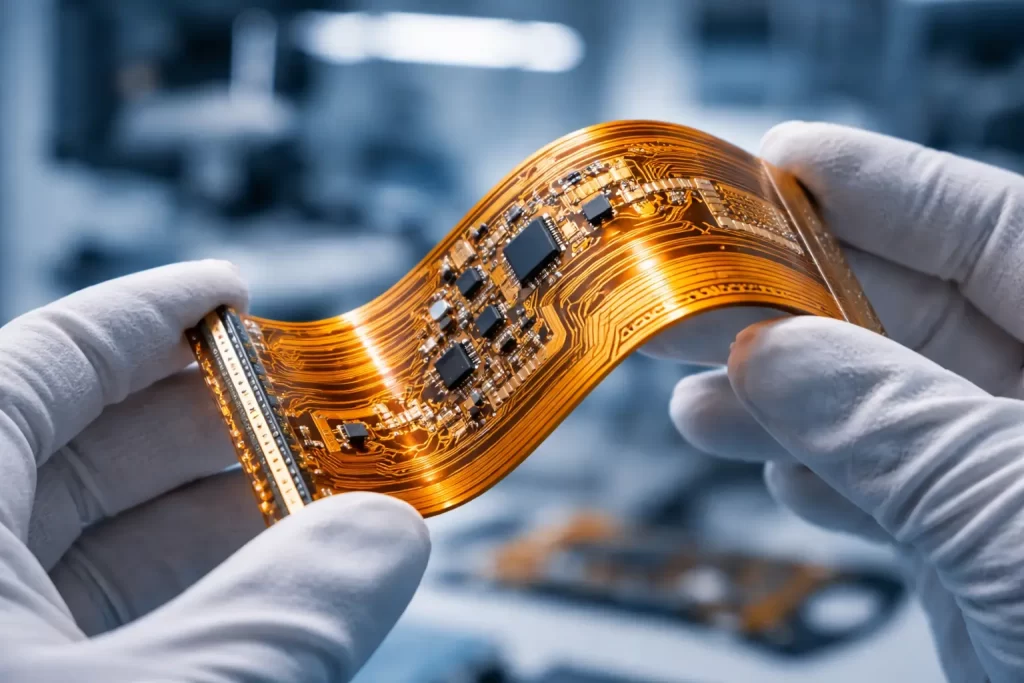
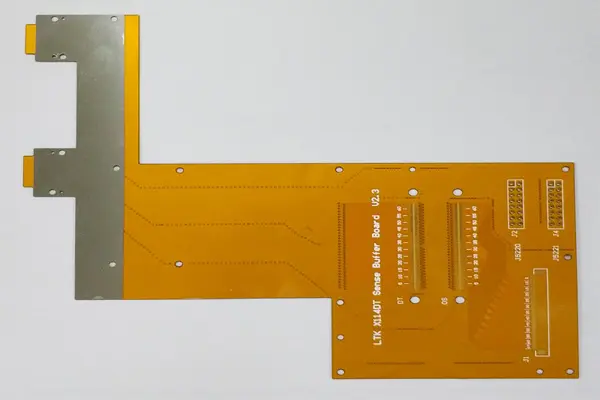
A Flexible PCB (Flexible Printed Circuit Board) is a circuit substrate built on flexible dielectric materials such as polyimide, allowing the board to bend, fold, or twist without damaging conductive traces.
Unlike rigid boards built on FR-4, flexible circuits are engineered for dynamic or static bending applications.
Key structural components include:
-
Polyimide substrate
-
Rolled annealed copper foil
-
Adhesiveless laminate options
-
Coverlay protection layers
-
Stiffeners (when mechanical reinforcement is required)
According to IPC industry reports, flexible and rigid-flex PCBs account for an increasing percentage of compact electronics, especially in aerospace, medical, and consumer wearables. However, flexible circuits are not replacements for rigid boards — they are strategic engineering tools.
Manufacturers with vertically integrated fabrication systems, such as JSCircuit, emphasize design-for-reliability (DFR) during the early stages to reduce fatigue risk and impedance inconsistencies.
Why Flexible PCB Adoption Is Accelerating
1. Miniaturization Demands
The global electronics industry continues shrinking device form factors. Smartphones, AR/VR devices, IoT sensors, and implantable medical systems all require tighter packaging density.
Flexible circuits eliminate:
-
Board-to-board connectors
-
Ribbon cable assemblies
-
Mechanical interconnect failures
A 2023 electronics packaging survey indicated that removing connectors in dynamic systems reduced field failure rates by up to 18% in vibration-prone environments.
2. Mechanical Reliability Under Motion
Dynamic bending applications — such as folding devices or robotics arms — require materials that withstand cyclic stress.
Key engineering metrics include:
-
Minimum bend radius
-
Copper grain structure (rolled vs. electrodeposited)
-
Neutral axis positioning
-
Strain distribution modeling
Experienced engineering teams, such as those detailed in About Us, focus heavily on fatigue simulation and copper elongation tolerance when designing Flexible PCB solutions.
Flexible PCB vs. Rigid PCB: Structural Trade-Offs
Flexible PCBs provide dynamic adaptability, but rigid PCBs still dominate where structural stiffness and multilayer scalability are critical.
When Rigid PCB Is Superior:
-
High-layer-count server boards
-
Heavy component mounting
-
High-current power systems
-
Stable impedance routing across large planes
For applications requiring dimensional rigidity and multilayer density, manufacturers often recommend Rigid PCB platforms.
When Flexible PCB Wins:
-
Limited space
-
Repeated bending cycles
-
Weight reduction requirements
-
Connector elimination strategy
Understanding this balance is crucial for system architects.
High-Frequency Considerations in Flexible PCB Design
One overlooked factor in Flexible PCB engineering is signal integrity at higher frequencies.
As 5G infrastructure, radar systems, and high-speed data communication expand, Flex PCB must handle:
-
Controlled impedance routing
-
Dielectric constant stability
-
Reduced insertion loss
-
Crosstalk mitigation
For RF-dominant applications, hybrid integration with High Frequency PCB materials may be required.
Material selection becomes decisive. Polyimide has favorable thermal endurance but requires impedance recalibration compared to FR-4 or PTFE-based substrates.
Common Pain Points in Flexible PCB Projects (And Solutions)
Pain Point 1: Trace Cracking After Cyclic Bending
Solution: Use rolled annealed copper and increase bend radius margin.
Pain Point 2: Delamination Under Heat Stress
Solution: Adhesiveless laminate structures improve thermal bonding reliability.
Pain Point 3: Impedance Drift in High-Speed Designs
Solution: Early-stage stack-up modeling and simulation reduce tolerance stacking.
Pain Point 4: Assembly Complexity
Solution: Add stiffeners strategically to improve SMT process compatibility.
Flex PCB reliability is less about the material alone — it’s about engineering discipline.
Manufacturing Process of Flexible PCB
Flexible PCB production differs significantly from rigid fabrication:
-
Laser drilling for microvias
-
Precision etching on thin copper
-
Coverlay lamination under controlled pressure
-
Dynamic reliability testing
-
Electrical continuity verification
High-quality manufacturers maintain strict AOI inspection and microsection analysis standards before shipment.
For OEM engineering teams evaluating feasibility or prototyping inquiries, technical consultation through Contact Us ensures early-stage optimization and cost-of-failure reduction.
Case Insight: Flexible PCB in Wearable Medical Monitoring
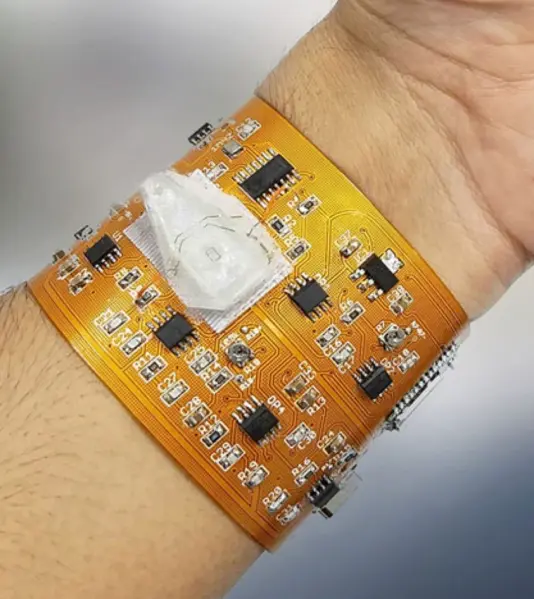
In one recent wearable ECG monitoring project, replacing rigid interconnect assemblies with a single flexible PCB:
-
Reduced overall device thickness by 22%
-
Eliminated 3 connectors
-
Improved shock resistance
-
Reduced internal wiring weight
Long-term fatigue testing simulated 40,000 flex cycles without copper fracture — achieved through controlled neutral-axis placement and copper grain optimization.
Such results highlight why flexible PCB is not merely a convenience feature — it is a structural design evolution.
The Data Perspective: Where Flexible PCB Is Growing Fastest
Market research indicates accelerated growth in:
-
Medical implants and monitoring devices
-
Foldable smartphones
-
Aerospace instrumentation
-
Robotics and automation systems
-
Military portable communication equipment
However, growth does not eliminate the need for rigid or hybrid platforms. The most advanced systems often integrate rigid and flexible architectures strategically.
Engineering Best Practices for Flexible PCB Design
To maximize performance:
Design Phase
-
Define static vs. dynamic flex application
-
Calculate minimum bend radius (≥10× thickness guideline)
-
Align traces perpendicular to bend axis
Material Phase
-
Choose rolled annealed copper for dynamic bending
-
Select appropriate polyimide thickness
-
Evaluate thermal cycling tolerance
Manufacturing Phase
-
Confirm lamination control
-
Request microsection validation
-
Perform impedance testing if required
Flexible PCB success depends on disciplined engineering decisions from design to production.
Frequently Asked Questions
1. What is the main advantage of a Flexible PCB?
The primary advantage is mechanical flexibility combined with electrical reliability, allowing circuits to bend or fold without connector-based failure risks.
2. Are Flexible PCBs more reliable than rigid boards?
In dynamic applications, yes. In high-load static systems, rigid boards often provide better structural support.
3. How many bend cycles can a Flexible PCB withstand?
It depends on copper type, bend radius, and design. High-quality designs can survive tens of thousands of cycles under controlled conditions.
4. Can Flexible PCB handle high-frequency signals?
Yes, but impedance control and dielectric stability must be carefully engineered, sometimes integrating high-frequency material strategies.
5. Is Flexible PCB more expensive than rigid PCB?
Cost depends on complexity, layer count, material choice, and production volume. However, eliminating connectors can offset system-level costs.
When Flexibility Becomes Reliability
Back in that product design meeting, the decision was made to prototype using a Flexible PCB.
Six months later, the wearable device passed mechanical reliability testing without connector fatigue failure.
Flexible PCB technology is not about bending for novelty. It is about solving real mechanical constraints while maintaining electrical integrity.
For OEM manufacturers and system engineers, the right question is not “Can it bend?”
The real question is:
“Can the entire system survive because it bends intelligently?”
When engineered correctly, Flexible PCB becomes not just a component — but a strategic advantage in modern electronics architecture.