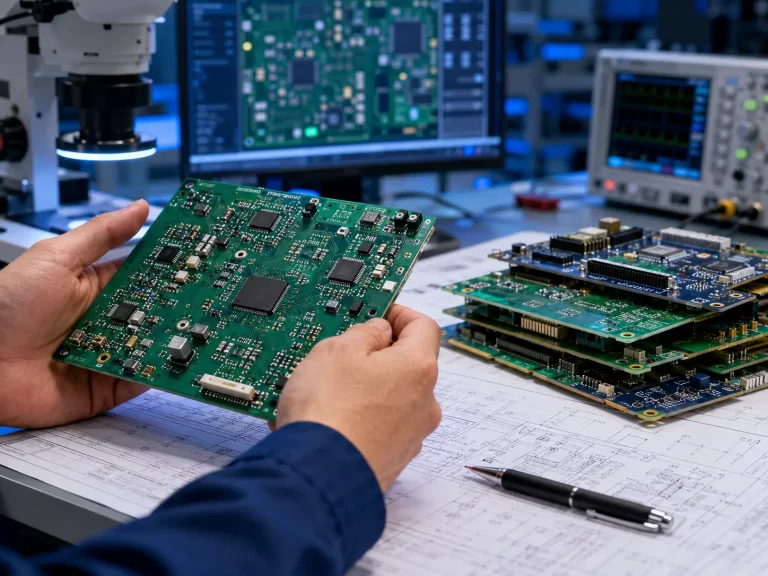
Selecting a Rigid PCB material looks simple until the product reaches assembly, testing, certification, or field operation. A buyer may approve a low-cost FR-4 board during prototype development, only to discover warpage after lead-free reflow, signal instability in a high-speed design, or insulation risk in a humid industrial environment. At that point, the real cost is no longer the PCB price. It becomes redesign cost, delayed shipment, failed customer approval, and sometimes warranty exposure.
A Rigid PCB is usually chosen because it offers stable mechanical support, predictable assembly performance, and cost-efficient mass production for fixed electronic products. However, “rigid” does not mean “one material fits all.” The laminate, copper thickness, glass transition temperature, dielectric performance, thermal conductivity, flame rating, and compliance documents all affect whether the board can survive its actual working environment.
This guide is written for OEM engineers, sourcing managers, product developers, and electronics buyers who need more than a textbook answer. It explains how to match Rigid PCB material to real applications, how to avoid common selection mistakes, and how to communicate material requirements clearly with a Rigid PCB manufacturer or custom rigid PCB supplier before production begins.
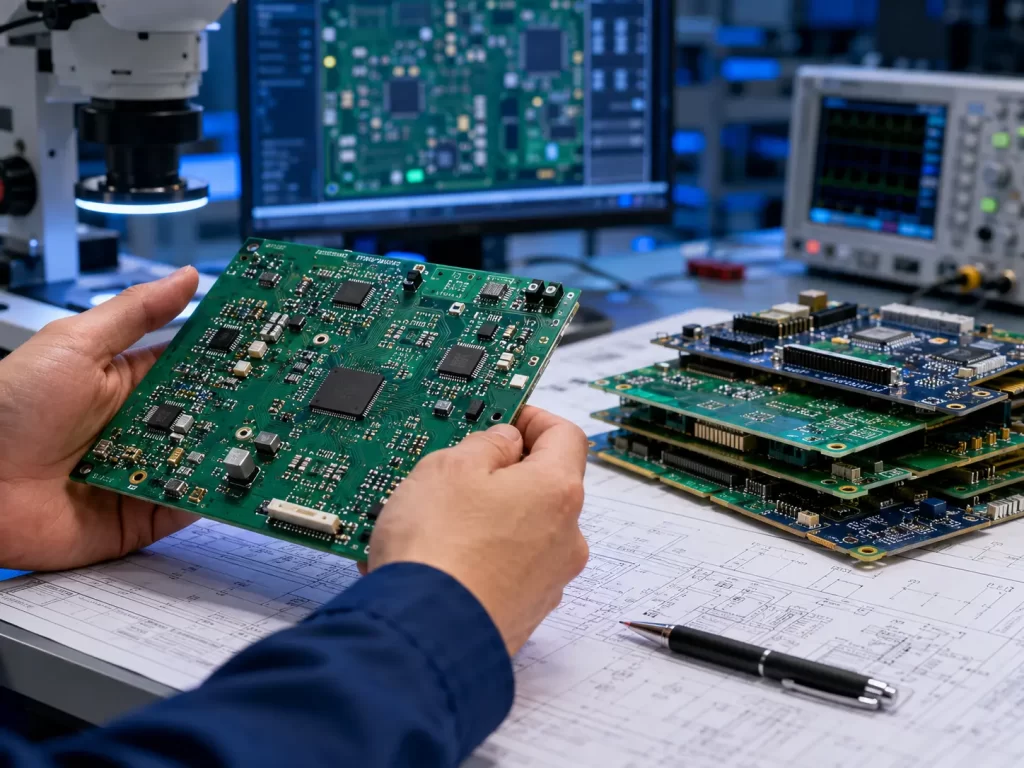
Start With the Product Environment, Not the Cheapest Material
The first mistake many buyers make is asking, “What is the cheapest material for this Rigid PCB?” A better question is, “What operating conditions must this board survive for the product lifetime?” A low-cost material may be acceptable for a small indoor control board, but it can be risky for automotive electronics, power supplies, medical devices, LED lighting, or high-frequency communication modules.
Before requesting a quotation, define the product environment: operating temperature, humidity, vibration, voltage, current, layer count, assembly method, expected service life, and target market compliance. If the project involves lead-free soldering, multilayer stack-up, high current, outdoor use, or strict export requirements, material selection should be reviewed early. For projects where the buyer is unsure, it is safer to contact a PCB engineering team with Gerber files, stack-up requirements, and application details before locking the material.
Think of PCB material like the foundation of a building. The finished product may look fine from the outside, but if the foundation is wrong, failures appear later in ways that are hard to repair. In electronics, those failures may include delamination, via cracking, solder joint stress, impedance drift, CAF risk, reduced insulation resistance, overheating, or failed certification testing.
What Rigid PCB Material Actually Includes
When buyers talk about Rigid PCB material, they often mean the base laminate. In practice, the material system includes copper foil, laminate core, prepreg, solder mask, surface finish, and sometimes metal core or specialty dielectric material. In multilayer boards, prepreg and core selection are especially important because they determine bonding strength, dielectric thickness, impedance control, dimensional stability, and thermal behavior.
A reliable Rigid PCB manufacturer should be able to explain which material brand and grade will be used, whether the material fits IPC-4101-related requirements, and whether the finished board can meet IPC-6012 performance expectations for rigid printed boards. Buyers should not accept vague answers such as “normal FR-4” for projects involving heat, high voltage, high speed, medical-grade density, or automotive reliability.
The most common Rigid PCB materials include standard FR-4, high Tg FR-4, halogen-free FR-4, aluminum-based PCB material, CEM-1, CEM-3, and low-loss high-frequency laminates. Each option has a different cost-performance balance. The right choice depends on what the product must do, not what the quotation table makes look attractive.
Rigid PCB Material Selection by Application
Different industries stress PCB materials in different ways. A consumer electronics board may prioritize cost and compact assembly. An automotive control board must survive thermal cycling and vibration. An LED lighting board needs thermal dissipation. A communication module may require low dielectric loss. A medical device may need traceability, cleanliness, documentation, and stable supply.
If you are comparing industry requirements, this overview of industries that use Rigid PCB technology helps show why one material decision cannot serve every market equally. The same board size and layer count may require very different laminate specifications when the final product moves from home appliances to automotive electronics, industrial control, charging systems, or medical equipment.
| Application Scenario | Recommended Material Direction | Key Selection Reason | Risk If Material Is Wrong |
|---|---|---|---|
| Consumer electronics | Standard FR-4 | Good cost-performance balance | Over-specification increases cost; under-specification may affect assembly yield |
| Automotive electronics | High Tg FR-4 or high-reliability laminate | Better thermal cycling and dimensional stability | Via cracking, delamination, intermittent failure |
| LED lighting | Aluminum-based PCB or metal-core PCB | Improved heat dissipation path | LED decay, overheating, reduced product life |
| Industrial control | High Tg FR-4, high CTI material when needed | Voltage, humidity, and long-term reliability | Tracking, insulation failure, field shutdown |
| RF and high-speed communication | Low-Dk / low-Df laminate | Signal integrity and controlled impedance | Signal loss, unstable impedance, failed performance testing |
| Medical or safety-critical electronics | Traceable high-reliability material | Documentation, process stability, compliance | Audit risk, approval delay, product rejection |
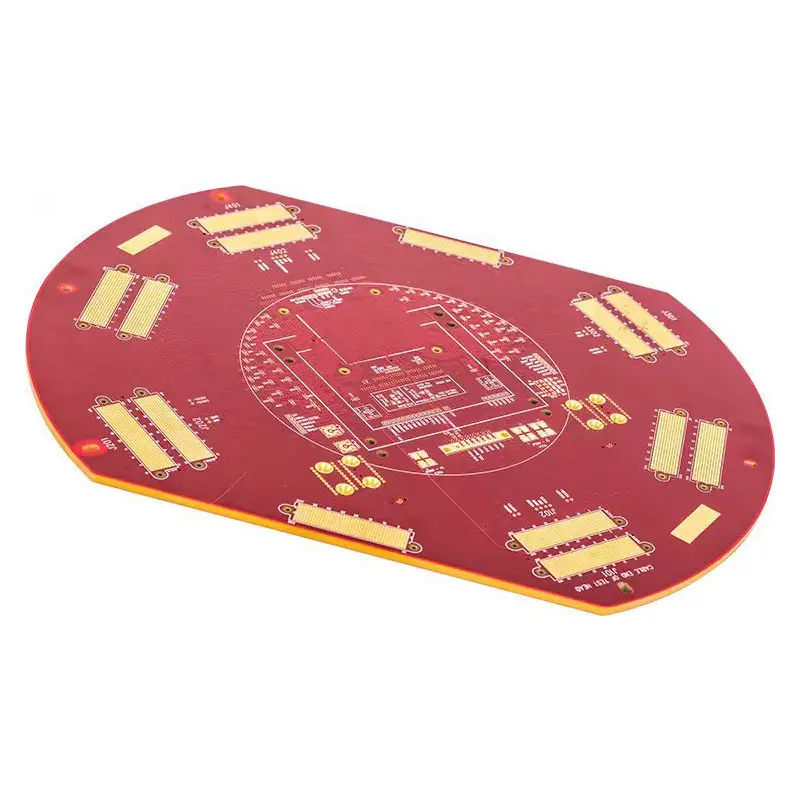
Main Types of Rigid PCB Materials
Standard FR-4 Rigid PCB Material
Standard FR-4 is the most widely used material for Rigid PCB production because it offers a practical balance of cost, mechanical strength, insulation performance, and manufacturing availability. It is suitable for many consumer electronics, small appliances, communication accessories, control boards, and general industrial devices where the operating environment is not extreme.
For many buyers, standard FR-4 is the correct choice because it avoids unnecessary cost. If the product is low to medium power, used indoors, and does not involve high-frequency signal paths or severe thermal stress, standard FR-4 can be efficient and reliable. The danger is using it automatically without checking operating temperature, soldering profile, layer count, and electrical requirements.
For OEM projects, this Rigid PCB engineering guide for OEM manufacturers is useful when buyers need to connect material selection with fabrication limits, stack-up planning, production yield, and supplier communication. In procurement language: FR-4 is common, but the grade, Tg value, copper thickness, and process control still matter.
High Tg FR-4 Material
Tg means glass transition temperature. It is the temperature range where the resin system begins to transition from a rigid glassy state to a softer rubber-like state. For Rigid PCB buyers, Tg matters because it affects thermal stability, dimensional movement, soldering reliability, and long-term resistance to heat-related stress.
Standard FR-4 commonly uses Tg values around 130–140°C, while high Tg FR-4 often reaches around 150–180°C or higher depending on the material system. The exact value must be confirmed by the material datasheet, not guessed from the supplier’s product name. High Tg PCB material is especially important for multilayer boards, lead-free assembly, automotive electronics, industrial devices, and products exposed to repeated thermal cycling.
| Parameter | Standard FR-4 | High Tg FR-4 | Buyer Decision Logic |
|---|---|---|---|
| Typical Tg range | About 130–140°C | About 150–180°C+ | If the board faces higher soldering or operating heat → choose high Tg |
| Best fit | General electronics | Multilayer, automotive, industrial control | If product reliability matters more than lowest unit price → choose high Tg |
| Thermal stability | Medium | Higher | If thermal cycling is expected → avoid low Tg risk |
| Cost level | Lower | Medium | If cost pressure is high and environment is mild → standard FR-4 may be enough |
Halogen-Free Rigid PCB Material
Halogen-free material is often selected for electronics brands, export products, medical devices, consumer electronics, and projects with environmental requirements. It does not automatically mean the board is better in every technical parameter, but it may help satisfy customer environmental policies and certain market expectations.
Buyers should be careful here: a green solder mask does not mean the board is environmentally compliant. Compliance depends on material composition, declarations, test reports, and supplier traceability. For EU-market products, RoHS and REACH requirements are often part of the approval process. If the buyer ignores documentation during sourcing, the shipment may face customer rejection or delayed approval even when the board itself functions correctly.
Aluminum-Based and Metal-Core Rigid PCB Material
When heat is the main problem, material selection must focus on thermal path. Aluminum-based PCB and metal-core PCB materials are commonly used in LED lighting, power modules, automotive lamps, charging products, and high-power electronics. Their advantage is not “stronger board appearance”; it is improved heat transfer from components to the base material and housing.
If an LED board is built on standard FR-4 when the thermal load is high, the product may pass a short test but fail in real operation. Heat can reduce LED lifespan, shift color performance, damage solder joints, and increase customer complaints. In this case, saving a small amount on board material can burn money later — sometimes literally, and electronics buyers prefer fewer campfire surprises.
CEM-1 and CEM-3 Materials
CEM-1 and CEM-3 may be considered for simple and cost-sensitive PCB projects, especially single-sided or basic double-sided boards. They are often used in lower-complexity consumer appliances or simple control circuits where demanding thermal, mechanical, or signal requirements are limited.
However, buyers should not use these materials for high-reliability multilayer applications, dense routing, high-temperature environments, or products requiring stronger long-term stability. If the product requires export compliance, long service life, or stable repeat production, the sourcing team should confirm material limitations before choosing a lower-cost option.
High-Frequency and High-Speed Rigid PCB Materials
High-frequency and high-speed designs require special attention to dielectric constant, dissipation factor, copper roughness, impedance tolerance, and stack-up control. Ordinary FR-4 may work for low-speed control boards, but it may create unacceptable signal loss or impedance variation in RF, 5G, antenna, radar, or high-speed communication products.
For compact layouts, buyers may also need to compare standard Rigid PCB construction with HDI technology. This guide on HDI PCB vs standard Rigid PCB is relevant when the project involves microvias, fine-pitch components, medical-grade density, or limited board space. If the design needs smaller vias, tighter routing, and higher interconnect density, material and process capability must be reviewed together.
Rigid PCB vs FPC: Choose Based on Mechanical Requirement
A Rigid PCB is best when the board needs to remain flat and mechanically stable inside a fixed housing. It supports connectors, heavier components, heat sinks, and automated assembly well. Flexible PCB is better when the circuit must bend, fold, or fit into a moving or curved space. Rigid-flex PCB combines both approaches, but it usually comes with higher design complexity and cost.
If the product is installed in a stable enclosure, choose Rigid PCB. If repeated bending is required, choose FPC. If the product needs multiple rigid sections connected in a tight space, consider rigid-flex. For buyers comparing both options, this detailed FPC vs Rigid PCB comparison can help clarify which board type actually fits modern electronics design requirements.
| Board Type | Best For | Main Advantage | Main Limitation |
|---|---|---|---|
| Rigid PCB | Fixed electronics, control boards, power boards | Stable, cost-efficient, strong component support | Cannot bend during use |
| FPC | Wearables, cameras, compact moving assemblies | Lightweight and bendable | Higher material and handling sensitivity |
| Rigid-flex PCB | Medical, aerospace, compact high-reliability products | Reduces connectors and saves space | Higher design and manufacturing cost |
Key Material Parameters Buyers Must Check
Tg: Glass Transition Temperature
Tg is one of the first material parameters buyers should check. It affects how the PCB behaves under soldering heat, operating heat, and thermal cycling. If the Tg margin is too low, the board may experience warpage, resin softening, dimensional instability, or delamination risk.
If the product uses standard assembly, low power, and mild operating conditions, standard FR-4 may be enough. If the board is multilayer, exposed to lead-free reflow, or used in automotive or industrial environments, high Tg FR-4 is usually a safer choice.
Td: Decomposition Temperature
Td indicates the temperature where material decomposition begins. Buyers sometimes check Tg but ignore Td. That is risky because a board may survive one process step but still suffer hidden resin degradation after repeated thermal exposure.
For lead-free assembly and high-reliability products, Td provides an important second layer of thermal confidence. If a product requires multiple reflow cycles, selective soldering, or high-temperature operation, Td should be discussed with the PCB factory before production.
CTE: Coefficient of Thermal Expansion
CTE describes how much the material expands when temperature changes. Z-axis CTE is especially important because excessive expansion can stress plated through holes and vias. In multilayer Rigid PCB designs, this can lead to via barrel cracking or intermittent electrical failure after thermal cycling.
For automotive electronics, industrial control boards, and outdoor equipment, CTE is not a decorative number. It is part of long-term reliability control. If the project uses BGA packages, blind vias, buried vias, or high layer count construction, CTE and stack-up should be reviewed carefully.
Dk and Df: Dielectric Constant and Dissipation Factor
Dk affects impedance and signal propagation. Df affects signal loss. For simple low-speed control boards, standard FR-4 may provide acceptable performance. For RF, high-speed digital, antenna, radar, and 5G-related designs, low-loss material may be necessary.
The common mistake is assuming that all green boards perform the same electrically. They do not. In high-speed projects, material tolerance, copper roughness, dielectric thickness, stack-up symmetry, and impedance control can decide whether the product passes testing.
CTI: Comparative Tracking Index
CTI matters when boards operate at higher voltage or in humid, polluted, or industrial environments. It relates to the material’s resistance to tracking across the insulating surface. For power supplies, chargers, industrial controls, and appliances, CTI should be reviewed together with creepage and clearance design.
If the board handles low-voltage signal control, standard material may be enough. If it carries higher voltage or works in a demanding environment, choosing a material with better CTI performance can reduce insulation risk.
Moisture Absorption
Moisture absorption can affect soldering reliability, insulation resistance, and delamination risk. Boards that absorb moisture during storage may blister or delaminate during reflow. This is why vacuum packing, humidity control, and baking instructions are not small details.
Buyers should ask how boards are packed, how long they can be stored, whether baking is recommended before assembly, and whether the supplier controls humidity during production and shipment.
Flame Rating and Compliance
Many electronics projects require flame-retardant materials, often with UL 94 V-0 expectations. Export markets may also require RoHS, REACH, customer environmental declarations, and traceable material documentation. For Rigid PCB buyers, compliance should be confirmed before mass production, not after the customer asks for documents.
| Parameter | Why It Matters | Typical Buyer Question | Risk If Ignored |
|---|---|---|---|
| Tg | Thermal stability | Will the board survive lead-free soldering and operating heat? | Warpage, delamination, poor reliability |
| Td | Material decomposition resistance | Can the resin system tolerate repeated heat exposure? | Hidden degradation, insulation decline |
| CTE | Expansion under temperature change | Will vias survive thermal cycling? | Via cracking, intermittent failure |
| Dk / Df | Signal speed and signal loss | Is this material suitable for RF or high-speed signals? | Impedance drift, signal attenuation |
| CTI | Electrical tracking resistance | Is the material safe for voltage and humidity conditions? | Tracking, insulation failure |
| Moisture absorption | Assembly and long-term insulation reliability | Does the board need baking before reflow? | Blistering, delamination, weak insulation |
Common Mistakes When Choosing Rigid PCB Materials
Mistake 1: Choosing Only by Unit Price
Low unit price can be attractive, especially in wholesale rigid PCB boards or high-volume purchasing. But the cheapest material is not always the lowest total cost. If poor material selection causes yield loss, rework, shipment delay, field failure, or customer rejection, the real cost becomes much higher than the original saving.
Recommendation: compare material grade, Tg, copper thickness, tolerance control, compliance documents, testing capability, and supplier engineering support. Price should be evaluated after the technical baseline is correct.
Mistake 2: Using Standard FR-4 for High-Temperature Products
Standard FR-4 can work very well in the right environment. The mistake is using it for high-temperature products simply because it worked in a previous design. A new product may have higher current, denser components, more soldering cycles, or a harsher operating environment.
Recommendation: if the board is multilayer, used in automotive electronics, exposed to lead-free reflow, or expected to operate near heat sources, review high Tg PCB material before approving standard FR-4.
Mistake 3: Ignoring Signal Speed and Frequency
A standard Rigid PCB material may look acceptable from a mechanical viewpoint, but high-speed and RF products require electrical stability. If Dk and Df are not suitable, the product may face insertion loss, impedance instability, poor RF performance, or failed certification testing.
Recommendation: if the design involves RF, 5G, antennas, high-speed digital interfaces, or strict impedance control, discuss material choice and stack-up with the PCB manufacturer before layout is finalized.
Mistake 4: Not Checking Compliance Documents
For export products, compliance is not optional paperwork. RoHS, REACH, UL-related material information, IPC-related production capability, and customer-specific declarations may be required before shipment approval. If documents are missing, the customer may delay approval even when the boards are already produced.
Recommendation: request material datasheets, declarations, stack-up drawings, inspection reports, and production traceability before mass production.
Mistake 5: Copying Old Specifications Without Reviewing the New Product
Many companies reuse old material specifications because it feels efficient. Sometimes that works. Sometimes it quietly creates risk. A new product may use different components, higher voltage, tighter spacing, more layers, higher current, or a new target market.
Recommendation: review each project based on actual application, not old purchasing habits. Yesterday’s safe choice can become today’s hidden defect.
Recommended Material Decision Logic
| If Your Project Has This Requirement | Choose This Material Direction | Why |
|---|---|---|
| General indoor electronics with moderate temperature | Standard FR-4 | Balanced cost, availability, and reliable assembly performance |
| Multilayer board, lead-free reflow, or thermal cycling | High Tg FR-4 | Better resistance to heat-related expansion and delamination |
| LED lighting or high-power thermal load | Aluminum PCB or metal-core PCB | Improved heat dissipation and component life |
| RF, 5G, radar, antenna, or high-speed signal | Low-Dk / low-Df laminate | Lower signal loss and better impedance stability |
| EU export or brand environmental policy | RoHS/REACH-compliant, possibly halogen-free material | Reduces approval and audit risk |
| High voltage or humid environment | Material with suitable CTI and insulation performance | Reduces tracking and insulation failure risk |
How to Work With a Rigid PCB Factory Before Ordering
A good Rigid PCB factory should not only quote a board. It should help verify whether the material fits the product environment, stack-up, layer count, soldering process, tolerance requirements, compliance market, and production quantity. Buyers should provide more than Gerber files if they want accurate material advice.
Useful RFQ information includes application industry, operating temperature, board size, layer count, copper thickness, current, voltage, signal speed, surface finish, compliance market, prototype quantity, annual volume, and expected product lifetime. If the product is used in automotive, medical, industrial, power electronics, or RF communication, include that information clearly.
| RFQ Item | Why It Helps the Supplier |
|---|---|
| Gerber files and drill files | Confirms layout, holes, dimensions, and manufacturability |
| Layer count and stack-up | Determines laminate, prepreg, impedance, and board thickness |
| Operating temperature | Helps decide standard FR-4, high Tg FR-4, or special material |
| Voltage and current | Helps evaluate copper thickness, spacing, CTI, and thermal risk |
| Signal speed or frequency | Determines whether low-loss material or impedance control is needed |
| Target market | Clarifies RoHS, REACH, UL, and documentation requirements |
| Prototype and annual volume | Helps balance material availability, cost, and mass production stability |
Industry Trends Affecting Rigid PCB Material Choices
Rigid PCB material selection is becoming more technical because electronics products are becoming smaller, hotter, faster, and more regulated. Higher power density increases demand for thermal reliability. Lead-free assembly raises thermal stress. Automotive and industrial electronics require better long-term stability. RF and high-speed communication require better dielectric control. Environmental regulations and customer audits require stronger documentation.
This means buyers should not treat PCB materials as a generic purchasing line item. In many projects, the material decision is part of product engineering. A supplier that can support DFM review, stack-up advice, impedance planning, alternative material recommendations, and compliance documentation can reduce the chance of expensive redesign.
Better Rigid PCB Material Choices Start With Better Questions
The right Rigid PCB material is not always the most expensive option. It is the material that fits the product’s real operating environment, assembly process, electrical requirements, compliance obligations, and production plan. Standard FR-4 may be perfect for a general control board. High Tg FR-4 may be necessary for multilayer industrial electronics. Aluminum PCB may be the smart choice for LED and power applications. Low-loss laminate may be required for RF and high-speed designs.
Before locking your material, review the application, heat profile, voltage, current, layer count, signal speed, target market, and expected product lifetime. If the project has any uncertainty, request an engineering review before mass production. A small material discussion before ordering can prevent a very expensive lesson after delivery.

Frequently Asked Questions About Rigid PCB Material Selection
1. What is the best material for a Rigid PCB?
The best material for a Rigid PCB depends on the product application, operating temperature, layer count, signal speed, voltage, and compliance requirements. Standard FR-4 is suitable for many general electronics because it offers a strong balance of cost, availability, mechanical support, and insulation performance. However, high Tg FR-4 is usually better for multilayer boards, automotive electronics, industrial control, and products exposed to heat or repeated soldering cycles. Aluminum-based PCB material is better for LED lighting and power electronics where heat dissipation is critical. Low-loss laminate is preferred for RF, 5G, antenna, radar, and high-speed communication designs.
2. Is standard FR-4 always suitable for Rigid PCB manufacturing?
No. Standard FR-4 is widely used, but it is not suitable for every Rigid PCB project. It may be enough for low-to-medium power indoor electronics, simple control boards, and cost-sensitive products. But it can become risky when the board faces high operating temperature, lead-free soldering stress, high layer count, high current, high voltage, or high-frequency signals. Buyers should check Tg, Td, CTE, CTI, Dk, Df, board thickness, copper thickness, and compliance requirements before approving standard FR-4 for mass production.
3. When should I choose high Tg PCB material?
You should choose high Tg PCB material when the board needs better thermal stability and long-term reliability. Typical cases include multilayer Rigid PCB designs, automotive electronics, industrial control boards, lead-free reflow assembly, power-related products, and electronics exposed to thermal cycling. High Tg material helps reduce the risk of warpage, delamination, via cracking, and dimensional instability. If your product must operate reliably under heat or pass strict customer approval, high Tg FR-4 is often a safer choice than standard FR-4.
4. How does PCB material affect signal performance?
PCB material affects signal performance mainly through dielectric constant and dissipation factor. Dk influences impedance and signal propagation speed, while Df affects signal loss. For low-speed control boards, standard FR-4 may perform well enough. For RF modules, 5G equipment, antennas, radar, and high-speed digital circuits, ordinary FR-4 may cause insertion loss, impedance drift, or unstable signal behavior. In these projects, buyers should discuss low-loss laminate, controlled impedance, copper roughness, and stack-up design with the PCB manufacturer before production.
5. What documents should I request from a Rigid PCB supplier?
Buyers should request material datasheets, stack-up drawings, RoHS declarations, REACH declarations, UL-related material information when required, inspection reports, and production traceability records. For more demanding projects, it is also useful to request impedance test reports, microsection analysis, solderability test results, and reliability test data when available. These documents help confirm that the selected Rigid PCB material meets engineering requirements, compliance expectations, and customer approval standards before mass production.
References
- IPC-4101E: Specification for Base Materials for Rigid and Multilayer Printed Boards, IPC, IPC International.
- IPC-6012F: Qualification and Performance Specification for Rigid Printed Boards, IPC, IPC International.
- RoHS Directive: Restriction of Hazardous Substances in Electrical and Electronic Equipment, European Commission, Environment Directorate-General.
- Combustion Fire Tests for Plastics and UL 94 Flammability Ratings, UL Solutions, UL Technical Resources.
- Printed Circuit Handbook, Clyde F. Coombs Jr. and Happy T. Holden, McGraw-Hill Education.
- High-Speed Digital Design: A Handbook of Black Magic, Howard Johnson and Martin Graham, Prentice Hall.
- PCB Base Materials: Make the Right Choice, NCAB Group, Technical Knowledge Center.
- All About IPC-4101 and IPC-4103 Slash Sheets, Zachariah Peterson, Altium Resources.
How Buyers Should Think About Rigid PCB Material Selection
How does the right Rigid PCB material reduce project risk?
The right Rigid PCB material reduces risk by matching the board’s thermal, electrical, mechanical, and compliance performance to the real product environment. If the board faces heat, vibration, high voltage, high-speed signals, or export approval, material selection becomes a reliability decision rather than a simple purchasing choice.
Why should buyers avoid choosing PCB material only by price?
Unit price does not show the full cost of a PCB decision. A cheaper material may increase warpage, rework, signal failure, delamination, certification delay, or warranty claims. For B2B buyers, the smarter decision is to compare material grade, supplier capability, testing support, documentation, and repeat-production stability.
What is the practical selection option for most projects?
For general electronics, standard FR-4 is usually practical and cost-effective. For multilayer, automotive, industrial, or high-temperature projects, high Tg FR-4 is safer. For LED and power electronics, aluminum or metal-core PCB material should be considered. For RF and high-speed designs, low-loss laminate is often necessary.
What considerations matter before mass production?
Buyers should confirm Tg, Td, CTE, Dk, Df, CTI, copper thickness, board thickness, surface finish, flame rating, RoHS/REACH status, and material traceability. The best timing to confirm these details is before layout finalization or prototype approval, not after mass production starts.
Recommendation
If the project is simple, indoor, low-power, and cost-sensitive, choose standard FR-4. If the project involves heat, multilayer stack-up, lead-free assembly, high voltage, RF signals, or strict export compliance, choose a material based on engineering review. Share your Gerber files, stack-up, operating environment, and compliance market with a custom rigid PCB supplier before locking the specification.
If you are not sure whether standard FR-4, high Tg FR-4, aluminum PCB, or low-loss laminate is the right option, prepare your Gerber files and application requirements for a material review before prototype or mass production.