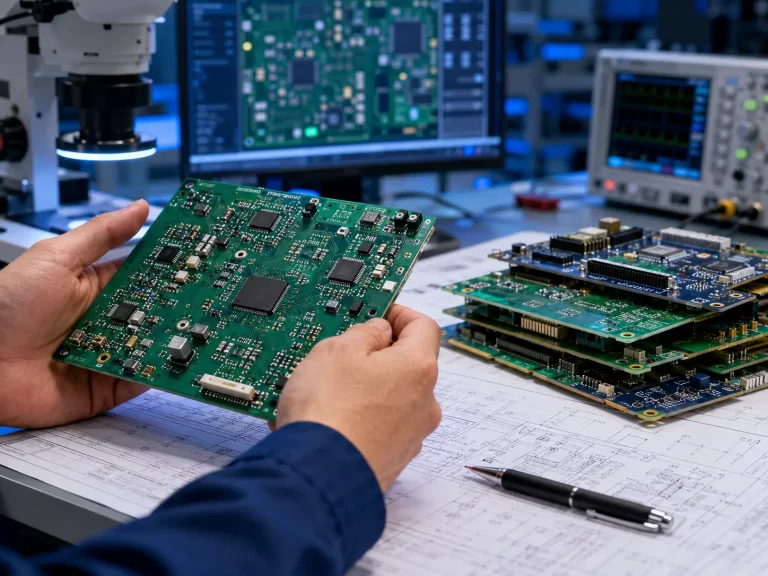
Rigid PCB technology continues to serve as the structural and electrical backbone of modern high-reliability systems. From automotive control units to aerospace avionics and medical monitoring equipment, rigid platforms deliver mechanical stability, multilayer integration, and consistent signal integrity. While flexible and hybrid boards gain attention, rigid PCB remains the dominant architecture where lifecycle durability, thermal resistance, and impedance precision are non-negotiable. Understanding its foundational role helps engineers and OEM decision-makers build long-term system reliability rather than short-term performance gains.
The Unseen Architecture of Stability
“Why did the system fail?”
The failure analysis report showed no software bug. No firmware crash. No power anomaly.
The issue traced back to something more fundamental — a marginally specified Rigid PCB that slowly degraded under thermal cycling.
In high-reliability industries, electronics don’t fail dramatically. They fail gradually — through micro-cracks, copper fatigue, layer separation, and impedance drift. And in most mission-critical systems, the silent backbone behind long-term stability is the Rigid PCB.
According to global electronics manufacturing data, multilayer rigid PCBs still account for the majority of high-performance system architectures worldwide. Despite the rise of flexible and hybrid boards, rigid platforms remain the dominant choice where mechanical strength, signal integrity, and lifecycle stability matter most.
This is not a commodity story.
This is an infrastructure story.
Let’s examine the 10 industries where Rigid PCB technology is not optional — it is foundational.
The Hidden Constant Behind Electronic Reliability
Before discussing industries, consider a structural truth:
Every advanced electronic system ultimately depends on substrate stability.
Semiconductors evolve. Software updates. Components shrink.
But if the base PCB layer shifts dimensionally, delaminates, warps, or suffers dielectric inconsistency, the entire system degrades.
Modern fabrication leaders like JS Circuit emphasize process stability because the PCB is not just a carrier — it is a structural performance component.
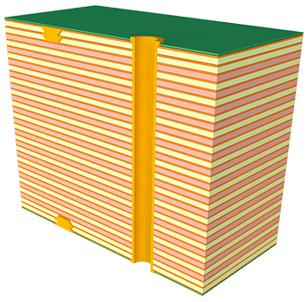
Rigid PCB reliability depends on:
-
Controlled lamination cycles
-
Accurate layer registration
-
High-Tg material selection
-
Via integrity
-
Copper thickness precision
When these fundamentals are right, downstream reliability improves exponentially.
1. Automotive Electronics: Surviving the Real World
Automotive electronics operate in one of the harshest non-military environments.
A vehicle control module experiences:
-
Continuous vibration
-
Thermal swings exceeding 150°C differential
-
Humidity and condensation cycles
-
Electrical noise from multiple subsystems
Studies in automotive reliability engineering show that PCB structural fatigue is a leading contributor to long-term electronic malfunction.
Advanced multilayer rigid PCBs reduce failure risk by:
-
Enhancing thermal resistance
-
Strengthening via barrels
-
Maintaining dimensional stability
Manufacturers with deep cross-industry engineering foundations, such as outlined in About JS Circuit, understand that automotive PCB manufacturing is a discipline — not a production shortcut.
2. Medical Devices: Reliability Beyond Compliance
In medical systems, PCB performance directly impacts patient safety.
Portable diagnostic equipment, monitoring systems, and imaging devices depend on:
-
Stable signal routing
-
Minimal electromagnetic interference
-
Long lifecycle durability
Rigid PCBs support:
-
High-density multilayer routing
-
Component stability
-
Consistent sterilization tolerance
Medical device lifecycle studies consistently show that high-quality substrate engineering extends device operational lifespan significantly.
3. Industrial Automation: Continuous Operation, Zero Downtime
Factories never truly sleep.
Robotics controllers and programmable logic systems must function for years without interruption.
Industrial environments introduce:
-
Dust contamination
-
Mechanical shock
-
Temperature fluctuation
-
Electromagnetic interference
Rigid PCBs provide the mechanical platform required to ensure:
-
Stable solder joints
-
Reduced board flex
-
Consistent electrical performance
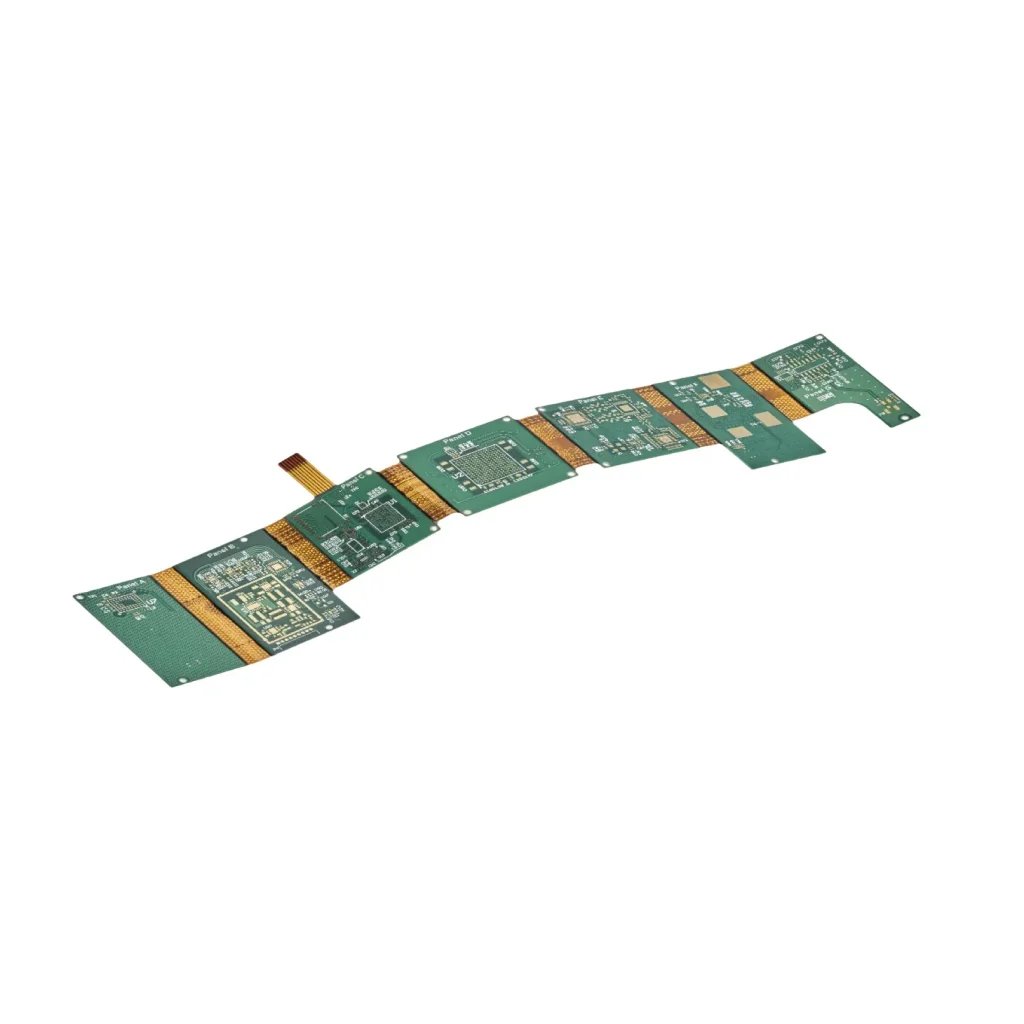
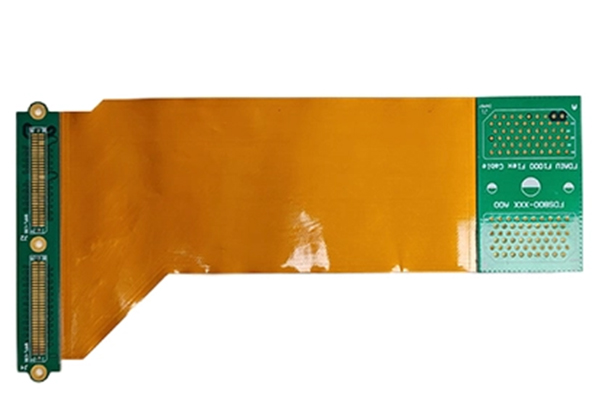
In certain compact industrial modules requiring spatial efficiency, engineers may integrate hybrid Rigid Flex Circuits to combine durability with layout flexibility.
4. Telecommunications Infrastructure: Signal Integrity Under Load
Telecom hardware operates at high frequency and high bandwidth.
Even minor dielectric inconsistencies can create:
-
Signal reflection
-
Crosstalk
-
Insertion loss
Rigid PCB stack-up design plays a critical role in:
-
Controlled impedance routing
-
High-frequency stability
-
Thermal dissipation
With global data traffic projected to grow exponentially over the next decade, the demand for precision-engineered rigid PCBs will only increase.
5. Aerospace Systems: Engineering Without Margin for Error
Aerospace applications amplify every reliability challenge.
Electronics may face:
-
Rapid pressure changes
-
Extreme cold
-
Mechanical vibration
-
Radiation exposure
Rigid PCBs used in avionics often employ high-Tg laminates and reinforced vias to prevent long-term structural fatigue.
Failure tolerance is measured in microns, not millimeters.
6. Energy and Power Conversion Systems
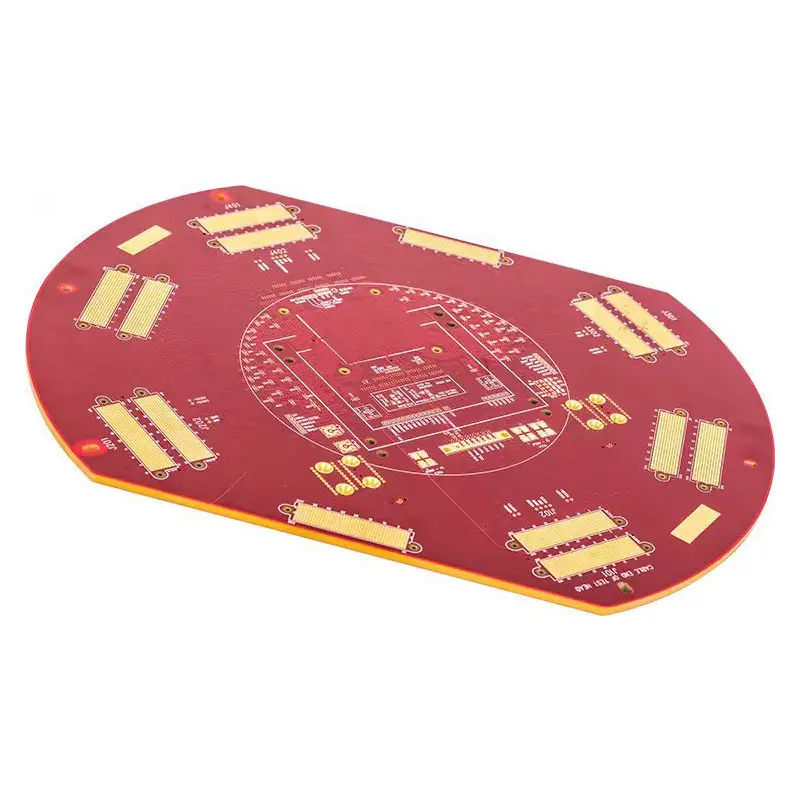
Renewable energy inverters, EV charging stations, and battery management systems rely on heavy copper rigid boards capable of sustaining high current loads.
Thermal dissipation efficiency directly impacts:
-
Energy efficiency
-
System lifespan
-
Safety margins
Well-designed multilayer rigid PCBs reduce resistive losses and improve heat transfer.
7. Security and Surveillance Equipment
Modern surveillance systems require stable high-speed image processing and encrypted communications.
Rigid PCBs enable:
-
Dense routing architectures
-
Shielding layer optimization
-
Mechanical alignment consistency
Long-term structural stability preserves calibration accuracy.
8. Research and Laboratory Equipment
Scientific instrumentation demands electrical precision.
Oscilloscopes, signal analyzers, and measurement tools depend on:
-
Impedance accuracy
-
Noise reduction
-
Layer consistency
Rigid PCB dimensional control significantly influences measurement reliability.
9. Consumer Electronics: Mass Production Stability
While consumer electronics prioritize cost efficiency, structural quality cannot be compromised.
Smart home devices, computing hardware, and wearable tech rely on multilayer rigid boards for:
-
Component density
-
Mechanical support
-
Thermal management
Consistency in fabrication yield determines production scalability.
10. Defense and Strategic Communication Systems
Secure communication hardware and radar platforms demand uncompromising reliability.
Rigid PCBs in defense applications often require:
-
Tight tolerance fabrication
-
Controlled dielectric properties
-
Strict documentation traceability
Manufacturers that combine engineering depth with process transparency stand apart.
For technical consultation regarding high-reliability applications, OEM teams can directly connect through Contact PCB Experts.
The Structural Decision: Why Rigid PCB Still Dominates
Despite innovation in flexible and hybrid technologies, rigid PCB remains dominant because:
-
It provides mechanical integrity
-
It supports multilayer complexity
-
It scales across industries
-
It ensures predictable signal behavior
-
It delivers long lifecycle durability
For OEM engineers evaluating manufacturing partners, understanding fabrication capability is crucial. Precision-controlled processes such as those in Rigid PCB Manufacturing Solutions define long-term reliability outcomes.
Frequently Asked Questions
1. Why is Rigid PCB technology still dominant in modern electronics?
Because it offers unmatched structural stability, multilayer scalability, and predictable electrical performance across demanding environments.
2. Which industries depend most on high-reliability rigid PCBs?
Automotive, aerospace, medical, telecom, industrial automation, and energy systems rely heavily on advanced rigid PCB platforms.
3. How does rigid PCB improve signal integrity?
Through controlled impedance routing, stable dielectric materials, and consistent stack-up design.
4. When should engineers consider rigid-flex instead of rigid PCB?
When mechanical space constraints or connector elimination requirements justify integrated flexible interconnections.
5. What defines a high-quality rigid PCB manufacturer?
Engineering expertise, advanced process control, material selection knowledge, and transparent quality systems.
The Quiet Backbone of Innovation
Rigid PCB technology rarely makes headlines.
Processors get attention. AI algorithms generate excitement. Software captures imagination.
But beneath every reliable system is a carefully engineered rigid substrate that quietly sustains performance year after year.
From vehicle control modules to medical monitors, from telecom infrastructure to aerospace avionics, the industries shaping modern life continue to depend on one constant foundation:
The Rigid PCB.
And in a world where reliability defines reputation, the board beneath the components matters more than ever.
For OEM manufacturers and system architects, rigid PCB selection is not merely a sourcing decision—it is a strategic engineering choice that directly impacts product lifespan, regulatory compliance, and field reliability. Prioritize stack-up discipline, material stability, impedance control, and manufacturer process transparency. Evaluate partners based on technical depth rather than production volume alone. In mission-critical industries, a well-engineered rigid PCB reduces failure risks, enhances signal consistency, and protects long-term operational performance across harsh mechanical and thermal environments.