When Connectors Become the Weakest Link in High-Reliability Designs
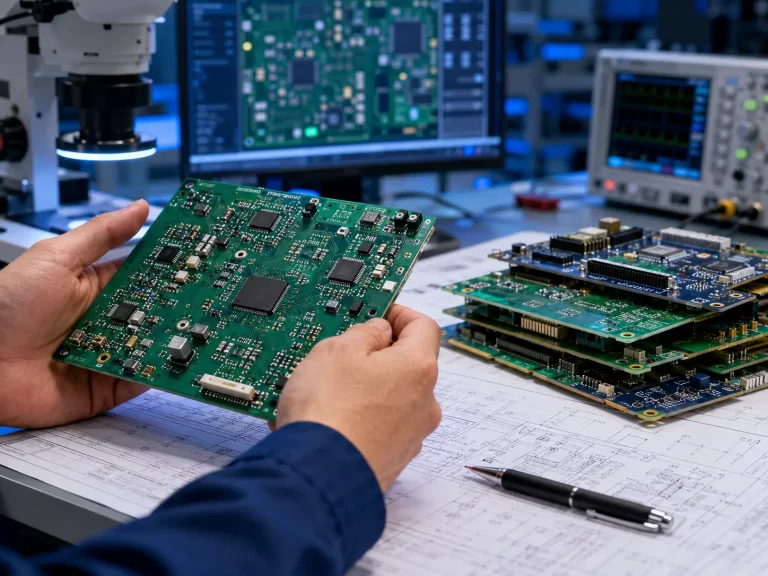
The OEM project manager looked at the damaged connector under the microscope. The hardware engineer sighed: “The board-to-board connector is the weak point. If we eliminate it and integrate the structure, we solve both reliability and space issues. We need Rigid Flex Circuits.”
That scenario is common in OEM manufacturing. As product designs become smaller, lighter, and more integrated, traditional rigid PCB assemblies with connectors and wire harnesses introduce mechanical risks, signal instability, and assembly complexity. Rigid-flex technology bridges this gap by combining rigid board stability with flexible circuit adaptability in a single unified structure.
This comprehensive guide explores the engineering structure, design strategy, reliability data, industry case applications, and OEM-level manufacturing considerations of Rigid Flex Circuits, providing practical insight for manufacturers seeking higher reliability and integration efficiency.

Why Rigid Flex Circuits Are Transforming OEM Manufacturing
OEM manufacturers today face mounting pressures:
-
Miniaturization requirements
-
Harsh operating environments
-
High vibration exposure
-
Complex signal routing
-
Faster production timelines
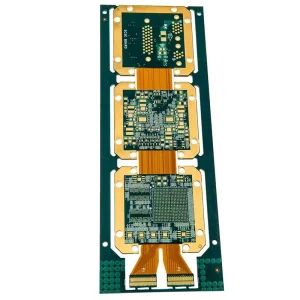
Rigid-flex architecture integrates rigid PCB sections with flexible interconnect layers into one cohesive unit. This eliminates connectors, reduces assembly steps, and enhances mechanical resilience.
As highlighted by JSCircuit, advanced PCB solutions increasingly focus on integration efficiency and structural durability—key priorities for OEM production lines.
The shift toward rigid-flex is not trend-driven; it is performance-driven.
Structural Anatomy of Rigid Flex Circuits
Rigid-flex circuits combine:
-
Rigid FR-4 or high-Tg substrates
-
Flexible polyimide layers
-
Plated through-holes connecting rigid and flex zones
-
Controlled impedance routing
-
Reinforcement stiffeners where needed
For detailed specifications and fabrication capabilities, explore Rigid Flex Circuits.
Key Engineering Characteristics
-
Integrated mechanical and electrical structure
-
Reduced connector dependency
-
Improved shock and vibration tolerance
-
Enhanced 3D packaging flexibility
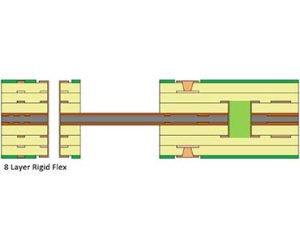
Rigid-flex technology supports multi-layer stack-ups, enabling complex routing in compact spaces.
Pain Points in Traditional PCB Assemblies (And How Rigid Flex Solves Them)
Problem 1: Connector Failure
Connectors are common mechanical failure points in high-vibration environments.
Solution:
Rigid-flex eliminates internal connectors by embedding flex interconnects directly into the board structure.
Problem 2: Assembly Complexity
Multiple boards and cable harnesses increase labor and potential assembly errors.
Solution:
Rigid-flex consolidates components into a unified assembly, reducing handling steps and improving production yield.
Problem 3: Signal Integrity Risks
Inter-board connectors introduce impedance discontinuities.
Solution:
Continuous copper routing across rigid and flex zones ensures stable signal paths.
|
|
|
Reliability Data and Engineering Performance
Studies in automotive and aerospace electronics indicate that removing connectors significantly reduces mechanical failure rates. Integrated flex transitions distribute stress more evenly compared to soldered cable connections.
Performance validation commonly includes:
-
Thermal cycling tests
-
Vibration endurance testing
-
Dynamic flex testing
-
Impedance verification
Engineering teams with strong fabrication expertise, such as those presented on the About Us page, emphasize design-for-reliability from early project phases.
OEM manufacturers benefit most when rigid-flex design decisions are aligned with production capability.
Industry Applications of Rigid Flex Circuits
Rigid-flex technology is particularly valuable in sectors requiring durability and compact integration.
Medical Electronics
In Medical applications, rigid-flex boards are used in:
-
Portable diagnostic systems
-
Imaging modules
-
Surgical tools
They enable compact form factors while maintaining electrical stability under movement.
Automotive Systems
In Automotives environments, rigid-flex supports:
-
ADAS control modules
-
Engine monitoring systems
-
Battery management units
Automotive electronics must withstand vibration, temperature extremes, and long operational lifecycles—making rigid-flex integration highly advantageous.
Industrial Equipment
In Industrial automation systems, rigid-flex boards reduce wiring complexity in:
-
Robotics
-
Control panels
-
Embedded sensing devices
The structural integration minimizes failure points in continuous operation environments.
Consumer Products
Within Consumer Products, rigid-flex circuits enable:
-
Foldable electronics
-
Compact wearables
-
High-density smart devices
The combination of thin flex sections and rigid component areas supports modern industrial design aesthetics.
Telecommunications Infrastructure
In Telecom systems, rigid-flex boards improve:
-
High-frequency signal routing
-
Controlled impedance pathways
-
Space optimization in network modules
As 5G and high-speed data demands increase, rigid-flex design enhances signal stability in constrained layouts.
Aerospace and Security Systems
In Aerospace & Security applications, rigid-flex circuits are used in:
-
Avionics systems
-
Satellite modules
-
Defense communication platforms
Weight reduction and mechanical durability are critical factors, and rigid-flex integration supports both.
Design Best Practices for OEM Manufacturers
1. Optimize Layer Stack-Up
-
Balance rigid and flex layers
-
Align neutral bend axis
-
Avoid vias in dynamic bend regions
2. Plan 3D Mechanical Integration Early
Rigid-flex boards are often folded during assembly. 3D modeling reduces mechanical interference risks.
3. Focus on Impedance Control
High-speed designs require consistent reference planes across rigid-flex transitions.
4. Collaborate Early With Fabrication Engineers
Manufacturability considerations influence material selection and layer alignment. OEM teams can initiate technical discussions through Contact Us to ensure early-stage alignment.
Data-Driven Advantages for OEM Production
Rigid-flex circuits deliver measurable benefits:
-
Reduced component count
-
Lower assembly error rate
-
Enhanced mechanical reliability
-
Improved signal integrity
-
Space-saving integration
OEM production lines often experience increased yield due to simplified assembly structures.

Common Mistakes OEM Teams Should Avoid
-
Ignoring bend radius limitations
-
Placing vias in flex zones
-
Overlooking thermal expansion differences
-
Treating rigid-flex like a traditional rigid PCB
Proper engineering discipline prevents costly redesign cycles.
Frequently Asked Questions
1. What are Rigid Flex Circuits used for?
They are used in compact, high-reliability electronic systems that require both structural stability and flexible interconnections.
2. Do rigid-flex boards reduce assembly time?
Yes. By eliminating connectors and cable assemblies, they simplify production workflows.
3. Are rigid-flex circuits suitable for high-vibration environments?
Yes. Integrated structures improve mechanical durability compared to multi-board assemblies.
4. Can rigid-flex support high-speed signal routing?
Yes. Controlled impedance routing across rigid and flex sections enhances signal integrity.
5. When should OEMs consider rigid-flex integration?
When space constraints, reliability requirements, or assembly complexity exceed the capabilities of traditional rigid PCB systems.
Engineering Integration for the Next Generation of OEM Products
Returning to the opening lab discussion—the failed vibration test was not simply a component issue. It was an architectural limitation.
Rigid-flex technology addresses the root cause by integrating mechanical and electrical systems into one unified design. For OEM manufacturers seeking durability, compact integration, and long-term reliability, Rigid Flex Circuits offer a strategic engineering solution.
By aligning stack-up planning, manufacturing precision, and application-specific requirements, OEM teams can reduce failure risks, enhance signal performance, and streamline production processes.
In a world where electronics must bend without breaking, rigid-flex circuits provide the structural intelligence modern manufacturing demands.