Flex PCB for Automotive Industry
- Prevent accidental contact with electrical components, reducing the risk of failure in automotive systems that require high performance and safety.
- Can be tailored for customized applications, ensuring flexibility and reliability across various automotive electronics, from car control sensors to advanced driver-assistance systems.
- Easy installation and integration into your automotive equipment, ensuring smooth wiring, long-term maintenance, and functionality in your product development lifecycle.
JS Circuit - Your Reliable Flex PCB Manufacturer for Automotive Industry
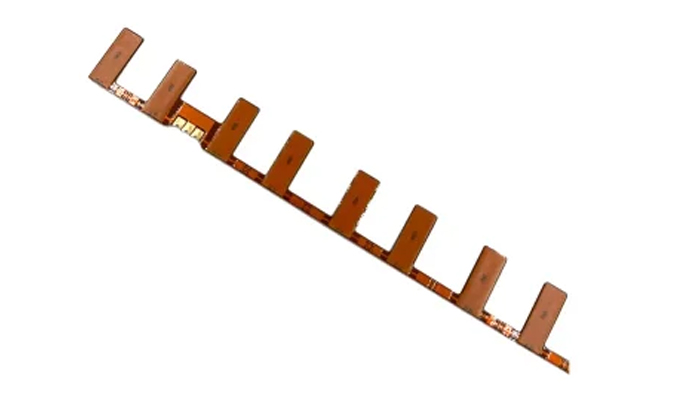
Flex PCB (Flexible Printed Circuits), particularly Flex PCBs for Automotive, is crucial in automotive applications, offering both flexibility and reliability for a wide range of automotive systems. These circuits are ideal for use in car control systems, driver assistance systems, and sensor technologies that require durable and high-performance designs.
Our Flex PCB solutions provide robust performance while minimizing size, enabling compact and reliable automotive electronics. The materials we use, such as Polyester and Polyimide, ensure long-lasting functionality under diverse conditions, including moisture, temperature fluctuations, and electrical stress. Additionally, we provide immersion gold (ENIG) surface treatment, precise V-cut and routing board cutting, and customized solder mask options to meet your specifications.
| Parameter | Specification |
|---|---|
| Layers | 6 |
| Surface Treatment | Immersion Gold |
| Special Process | Half Hole |
| Material | FR4 Stiffener |
| Resistance Value | 80+/-10 ohms |
| Plate Thickness | 0.62mm |
| Hole Wall Copper Thickness | 15-20um |
| FR4 Stiffener Total Thickness | 0.7+/-0.1mm |
Advanced Features of Flex PCB for Automotive Industry
JS Circuit’s Flex PCB for Automotive offers excellent performance in automotive applications, providing reliable operation even in challenging environments such as moisture, temperature fluctuations, and electrical stress. Made from Polyester and Polyimide, these circuits offer enhanced durability and long-lasting reliability, making them ideal for use in car control systems, driver assistance systems, and sensor technologies.
Our precise manufacturing process, including immersion gold (ENIG) surface treatment and tight tolerances, ensures excellent conductivity and optimal performance. The flexible design allows for compact, high-performance devices while reducing the risk of accidental contact with electrical components. Designed for efficient integration, these Flex PCBs ensure smooth installation, wiring, and overall system integration in automotive electronics.
Key Applications of Flex PCBs in the Automotive Industry
Flex PCBs play a crucial role in the automotive industry by offering flexibility, reliability, and compactness for various automotive systems. These circuits are used in car control systems, advanced driver-assistance systems (ADAS), and sensor technologies, where high performance and durability are required in challenging environments.
In automotive electronics, Flex PCBs are integral in providing compact solutions for infotainment systems, navigation systems, and power management modules. Their ability to fit into tight spaces while maintaining performance makes them ideal for smart sensors, automated driving features, and battery management systems. The flexible nature of these circuits ensures that they can withstand vibration, temperature changes, and harsh environmental conditions, making them essential for modern automotive applications.
Answer Your Questions
FAQs
What makes Flex PCBs suitable for automotive applications?
Flex PCBs are well-suited for automotive applications due to their compact design, durability, and ability to withstand harsh environmental conditions such as vibration, temperature fluctuations, and moisture. Their flexibility also enables them to fit into tight spaces while maintaining reliable performance.
What are the key benefits of using Flex PCBs in automotive electronics?
Flex PCBs offer several advantages in automotive electronics, including:
- Space-saving design: Ideal for compact systems like sensors, control modules, and ADAS.
- Durability: Resistant to temperature changes, moisture, and mechanical stress.
- Customization: Can be tailored to meet specific automotive design and performance requirements.
What is the surface treatment used for Flex PCBs in automotive applications?
Our Flex PCBs for automotive applications use immersion gold (ENIG) surface treatment, which ensures excellent conductivity, corrosion resistance, and long-term reliability, essential for automotive electronics that require high performance.
What materials are used in Flex PCBs for automotive applications?
Flex PCBs for automotive use are typically made from Polyester and Polyimide, both of which offer flexibility, durability, and resistance to temperature fluctuations, moisture, and electrical stress—key factors in automotive electronics.
How does JS Circuit ensure the quality of Flex PCBs for automotive applications?
We follow strict quality control processes throughout the manufacturing of our Flex PCBs. These processes include precise V-cut and routing board cutting, along with detailed testing for performance and durability under automotive conditions. All our products are manufactured following industry standards to ensure reliability and longevity.
Can JS Circuit provide customized Flex PCBs for automotive applications?
Yes, we offer OEM/ODM services for fully customized Flex PCBs. Our experienced team works closely with automotive manufacturers to design circuits tailored to specific needs, whether for sensors, control systems, or power management modules.
Are your Flex PCBs suitable for use in advanced driver-assistance systems (ADAS)?
Yes, our Flex PCBs are ideal for ADAS applications due to their ability to handle high-performance electronics while remaining compact and flexible. These circuits are used in sensor systems, camera modules, and radar systems, all of which are essential for ADAS.