HDI Manufacturing
Mass-ready HDI builds with controlled impedance, tight tolerances, and traceable process control—designed to reduce build risk in advanced electronics.
HDI PCB Manufacturer in China
High-Density Interconnect (HDI) PCBs are built for compact devices that demand high routing density, stable signal performance, and reliable layer-to-layer interconnects. By using laser-drilled microvias, fine line/space imaging, and sequential lamination, HDI boards help engineers shrink PCB size while improving electrical consistency for high-speed and high-pin-count designs.
As an HDI PCB manufacturer in China, we support advanced build-ups such as 1+N+1 and 2+N+2, including via-in-pad solutions (filled and capped), controlled impedance routing, and strict process traceability. HDI is widely used in smartphones, wearables, automotive electronics, medical modules, and compact industrial control systems where space is limited but reliability cannot be negotiated.
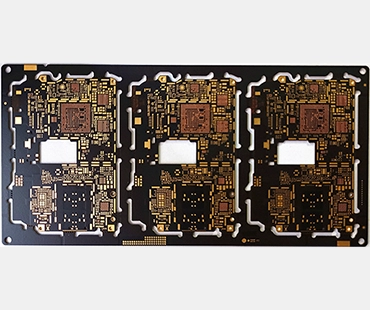
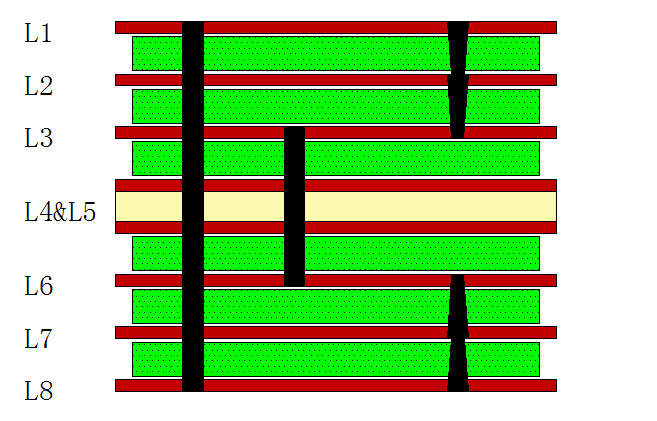
Below is an example specification for a smartphone-grade HDI stackup. If you share your Gerber, impedance targets, and assembly constraints, we can recommend the optimal layer build-up and microvia strategy for stable yields in pilot and mass production.
Detailed Specification
| Item | Value |
|---|---|
| Application Field | Smartphone |
| Layer Count | 8 (2+4+2) |
| Board Thickness | 0.69 ±10% mm |
| Line Width / Space | 0.075 / 0.05 mm |
| Lamination | EMC EM-285 |
| Aspect Ratio | 3.1073 |
| Surface Treatment | ENIG + OSP |
Different Types of HDI PCB
HDI Design
Key Features of High-Density Interconnect HDI
HDI PCBs are engineered to pack more routing into less space by using laser-drilled microvias, blind and buried vias, and fine line/space capability. With sequential lamination build-ups such as 1+N+1 and 2+N+2, HDI designs shorten interconnect paths and unlock higher component density, making them ideal for compact layouts and BGA escape routing.
Compared with standard multilayer boards, HDI improves signal integrity and routing efficiency for high-speed interfaces by reducing stub effects, minimizing crosstalk, and enabling tighter impedance control. Options like via-in-pad (filled and capped), modern surface finishes, and process traceability support stable assembly and consistent yields in smartphones, wearables, automotive electronics, medical modules, and other space-constrained products.
Medical Applications of HDI PCBs in Modern MedTech
HDI PCBs are widely used in medical devices where space is tight, signal performance matters, and reliability must be repeatable in volume builds. Typical examples include portable patient monitors, wearable biosensors, infusion and drug-delivery controllers, and compact diagnostic modules. With microvias, fine line/space routing, and advanced stackups, HDI designs help medical teams integrate high-pin-count processors, memory, RF, and sensor interfaces into smaller, cleaner layouts—without turning assembly into a “guessing game.”
In imaging and high-speed medical electronics, HDI supports dense interconnects and stable signal paths for systems such as ultrasound boards, endoscopy control modules, medical cameras, lab analyzers, and precision motion/control units. Features like via-in-pad (filled and capped), controlled impedance routing, and process traceability reduce risk from opens, weak joints, and inconsistent yields. When a MedTech program needs compact form factor, high functionality, and documented manufacturing control from prototype to mass production, HDI PCBs become the preferred interconnect platform.