Key Project Overview: 2-Layer Rigid PCB Solutions for Commercial Beverage Systems
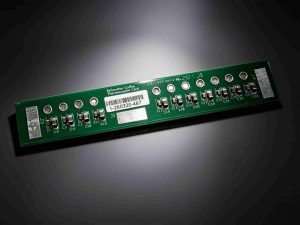
2-Layer Rigid PCB for Commercial Coffee Machines: Engineering Thermal Endurance and System Reliability
The global commercial beverage industry demands uninterrupted uptime and precise environmental control. At the heart of modern professional espresso equipment lies the electronic control unit, an architectural component operating within an environment characterized by elevated temperatures, high humidity, and continuous electrical loads. For these systems, a highly optimized 2-layer rigid PCB serves as the backbone for power distribution, sensor telemetry, and user interface management. While multilayer boards are often selected for highly dense computing architectures, consumer and commercial appliances benefit significantly from the mechanical robustness, thermal dissipation capability, and cost-efficiency of precision-engineered double-sided circuitry.
Working alongside an expert rigid PCB manufacturer, original equipment manufacturers (OEMs) can navigate the unique challenges of structural longevity under thermal stress. Commercial coffee systems operate with water boilers maintained at temperatures exceeding 120°C, creating localized internal ambient conditions that rapidly degrade substandard electronics. This case study details the engineering processes, material specifications, and quality controls utilized by a dedicated commercial coffee machine PCB factory to produce boards capable of surviving decade-long service lifecycles without electronic drift or structural failure.
By leveraging dedicated custom PCB manufacturing for appliances, engineering teams can tailor the dielectric stackup and copper thickness to prevent typical appliance failure modes, including trace delamination, solder joint fatigue, and moisture-induced electrochemical migration. The following analysis highlights how strategic engineering transitions a standard 2-layer platform into a mission-critical industrial control assembly.

Substrate Performance: High-Temperature FR4 and Thermal Management
The selection of the base material dictates the baseline reliability of any printed circuit board exposed to cyclical heat. For high-draw heating elements and steam management systems, regular FR4 materials with a glass transition temperature (Tg) of 130°C are insufficient. Over extended operational cycles, the mechanical expansion along the Z-axis stresses plated through-holes, ultimately breaking the internal barrel structures. In this specialized application, selecting a high-temperature PCB substrate with a Tg ranking of 170°C to 180°C ensures mechanical equilibrium is maintained.
Thermal dissipation in a closed appliance chassis represents a significant challenge. Because a 2-layer rigid PCB lacks internal ground and power planes to act as heat sinks, designers must maximize external copper surface areas and incorporate structural thermal vias. Utilizing standard 1 oz (35µm) copper foil is often inadequate for circuits powering heavy solenoid valves, pumps, and heating relays. Consequently, a transition to heavy copper PCB production using 2 oz (70µm) or 3 oz (105µm) outer layers provides the cross-sectional area necessary to carry higher currents without inducing parasitic temperature rises across the board trace geometry.
Technical Specifications and Layer Stackup Analysis
The mechanical configuration of this double-sided board focuses on durability and a highly streamlined profile. With a tightly controlled total finished thickness of 0.813mm (32.00mil), the stackup provides the ideal balance of physical rigidity and compact height integration inside the appliance chassis. The core insulation relies on a 0.721mm (28.40mil) high-temperature FR-4 dielectric material sandwiched between balanced 0.036mm (1.40mil) copper signal layers.
To ensure the board remains completely unaffected by moisture ingress and oxidation, a 0.010mm (0.40mil) top and bottom solder resist layer is uniformly applied. This project implements a high-grade lead-free HASL surface finish (Hot Air Solder Leveling) over the exposed copper pads. Lead-free HASL offers strong mechanical joint integrity, which is vital for components like mechanical relays, power terminals, and transformers that experience physical stress and continuous pump vibrations during service lifecycles.
Critical Material and Engineering Parameters
| Technical Feature / Layer | Material Specification | Thickness Parameter | Gerber File Mapping |
|---|---|---|---|
| Top Overlay | White Silk Screen Legend | Standard Component Marking | GTO |
| Top Solder Mask | Liquid Photoimageable (LPI) Resist | 0.010mm (0.40mil) | GTS |
| Top Layer (Signal) | Copper Foil | 0.036mm (1.40mil) | GTL |
| Dielectric Core | High-Temperature FR-4 Substrate | 0.721mm (28.40mil) | N/A |
| Bottom Layer (Signal) | Copper Foil | 0.036mm (1.40mil) | GBL |
| Bottom Solder Mask | Liquid Photoimageable (LPI) Resist | 0.010mm (0.40mil) | GBS |
| Total Finished Board Thickness | 0.813mm (32.00mil) | ||
Manufacturing Optimization: SMT and THT Integration
The component topography of a commercial beverage control system typically requires a hybrid assembly workflow. Precision microcontrollers, flow sensor telemetry circuits, and wireless communication chips are best accommodated via Surface Mount Technology (SMT). Conversely, bulky components such as power transformers, heavy-duty mechanical relays, and terminal blocks require Through-Hole Technology (THT) to achieve the necessary mechanical anchoring. A 2-layer rigid PCB provides an ideal substrate for hybrid lines, allowing simultaneous high-speed SMT placement on the primary side and wave soldering for THT leads.
During the FR4 PCB fabrication lifecycle, strict step-by-step verification protocols are critical. Every batch of wholesale 2-layer circuit boards undergoes automated 100% electrical testing (E-test) via flying probe or dedicated fixture matrices to check for continuity anomalies or micro-shorts. For high-volume projects, establishing a close partnership with an experienced appliance control board supplier allows for design-for-manufacturability (DFM) adjustments, ensuring trace clearance rules accommodate the high creepage and clearance distances mandated by international appliance safety standards.
Regulatory Compliance and Safety Frameworks
Electronic subsystems integrated into commercial food and beverage machinery must strictly satisfy global regulatory structures. Because these controllers directly interface with line voltages (110V to 240V AC) to actuate heavy water heating elements, flame retardancy is a primary concern. Substrates must conform to the UL 94V-0 flammability standard, guaranteeing that the board will self-extinguish within a defined timeframe if a component experiences catastrophic failure. Furthermore, components operating in commercial kitchens must meet strict electromagnetic compatibility (EMC) targets to avoid disrupting nearby kitchen infrastructure like induction ranges or point-of-sale systems.
Environmental standards are equally critical. Global markets mandate compliance with the Restriction of Hazardous Substances (RoHS) and the Registration, Evaluation, Authorization, and Restriction of Chemicals (REACH) directives. These regulations forbid the use of heavy metals, including lead, polybrominated biphenyls, and specific phthalates within the circuit matrix. Partnering with a vetted rigid PCB manufacturer guarantees that all constituent raw laminates, prepregs, solder masks, and surface finish chemicals are accompanied by valid, certified laboratory documentation proving compliance.
Strategic Insights & AI-Driven Appliance Industry Analysis
Expert Engineering Summary: Reliability Optimization in High-Humidity Environments
The Architectural Challenge: Commercial beverage electronics face a challenging operating environment. The continuous cycle of heating and cooling creates localized condensation, which can lead to electrochemical migration along the surface traces of a control board. If condensation bridges two high-voltage traces, it can trigger localized arcing or parasitic leakage currents, leading to system failure or intermittent sensor readouts.
Advanced Material Mitigation: To overcome these environmental threats, the engineering workflow pairs a high-Tg substrate with specialized layout practices. This specific 0.813mm stackup provides rapid ambient heat equalization across the compact layer boundary. Designers widen trace clearances beyond standard industrial limits and use conformal coatings over critical logic areas. This layer of insulation prevents airborne moisture from making physical contact with active copper trace paths. Additionally, adopting a lead-free HASL surface finish over stable 0.036mm copper tracks provides the physical heft required to withstand thermal cycling without trace lifting.
Expert Conclusion: Commercial electronics design is shifting toward highly reliable, simplified structures. This case study demonstrates that a thoughtfully engineered 2-layer rigid board can match the durability of complex multilayer options while lowering overall manufacturing costs. By focusing on heavy copper profiles and proper thermal via placement, high-volume appliance brands can secure predictable product lifespans while reducing field warranty claims.
High-Reliability Appliance Electronics Strategy and Trends
How Commercial Appliance Control Units Achieve 10+ Year Lifespans
Achieving structural reliability over a decade requires matching mechanical architecture with appropriate material properties. Industrial espresso machinery subjects control circuits to constant vibrations from high-pressure water pumps alongside severe heat cycles. Vetted factories resolve this through heavy copper PCB production using robust 0.036mm (1.40mil) copper tracks on high-Tg FR4 backbones. This thickness reduces trace heating and provides the physical strength needed to support heavy relays and power transformers without trace separation over long-term operations.
Why a 2-Layer Rigid PCB Remains Preferred Over Multilayer Boards for Large Appliances
While multilayer layouts are excellent for compact consumer tech, high-power appliances prioritize physical ruggedness, heat management, and cost efficiency. Double-sided boards permit wide trace spacing, which simplifies compliance with industrial safety creepage and clearance mandates. This layout dramatically minimizes layer-to-layer delamination risks in high-humidity settings, streamlines the application of protective conformal coatings, and reduces production costs for large-scale production.
What Manufacturing Safeguards Protect Appliance PCBs Against Moisture and Steam
Moisture protection requires a multi-layered defense strategy. It begins during FR4 PCB fabrication with a high-density, matte-finish Liquid Photoimageable (LPI) solder mask that resists moisture tracking. Post-assembly, boards receive a premium automated conformal coating (such as acrylic or silicone resin) over sensitive control components. This creates a secure barrier against steam and condensation, effectively eliminating risks of dendritic copper growth and surface corrosion.
Future Considerations: IoT Connectivity and Eco-Design Requirements
Modern commercial equipment increasingly integrates IoT modules for remote diagnostics and telemetry tracking. This requires design teams to shield sensitive RF tracks from high-current power stages within a 2-layer constraints. Concurrently, global legislation focuses on eco-design mandates, requiring electronic assemblies to be easily disassembled for recycling. This shifts the market toward lead-free finishes and halogen-free laminates to meet sustainability goals without sacrificing operational life.
Frequently Asked Questions
1. Why is a 2-layer rigid PCB chosen for commercial coffee machines over multilayer alternatives?
A double-sided rigid board offers superior cost-effectiveness, thicker trace layouts, and exceptional mechanical durability for heavy power delivery. It allows for wide creepage and clearance distances necessary to manage 230V AC lines safely. This design minimizes the risk of layer delamination in environments exposed to high moisture and temperature fluctuations.
2. How does a high-temperature PCB substrate protect appliance electronics from boiler heat?
High-temperature substrates feature a Glass Transition Temperature (Tg) of 170°C to 180°C, well above standard 130°C variants. This ensures the structural resin remains stable under sustained operational warmth, drastically reducing Z-axis thermal expansion. This protects plated through-holes from cracking and prevents trace delamination near heating components.
3. What role does heavy copper weight play in commercial appliance control board supplier manufacturing?
Heavy copper configurations (2 oz or 3 oz) increase the trace cross-sectional area, lowering resistance and minimizing heat generation from high current loads. This allows the circuit board to safely operate high-power solenoids, heating coils, and industrial pumps without thermal stress or degradation over time.
4. Why is a lead-free HASL surface finish preferred over ENIG for high-vibration applications?
Lead-free HASL creates a thick, structurally resilient solder alloy layer that provides size-appropriate mechanical anchor strength for large, through-hole components. This high physical strength prevents solder joints from cracking under continuous vibration from commercial rotary vane pumps, ensuring long-term connection integrity.
5. What compliance standards must a commercial coffee machine PCB factory meet?
Production lines must adhere to UL 94V-0 for certified fire safety and flame retardancy. They must also comply with global RoHS and REACH directives to exclude hazardous substances, and meet IPC-A-600 Class 2 requirements to ensure professional-grade fabrication quality and reliability.
References
- IPC-A-600L: Acceptability of Printed Boards, IPC International Quality Standard (2024).
- UL 94: Standard for Tests for Flammability of Plastic Materials for Parts in Devices and Appliances, Underwriters Laboratories.
- IEC 60335-1: Household and similar electrical appliances – Safety – Part 1: General requirements, International Electrotechnical Commission.
- RoHS 3 Directive (2015/863/EU): Restriction of Hazardous Substances in Electrical and Electronic Equipment.
- IEEE Transactions on Industry Applications: Thermal Stress and Reliability Analysis of High-Power Control Boards.
- National Electrical Manufacturers Association (NEMA): Standards for Industrial and Commercial Appliance Control Systems.
- Isola Group Technical Data: High-Performance Laminate and Prepreg Thermal Characteristics (Tg/Td).
- SMTA International Conference Proceedings: Evaluating Lead-Free HASL and ENIG Mechanical Fatigue under High-Vibration Profiles.