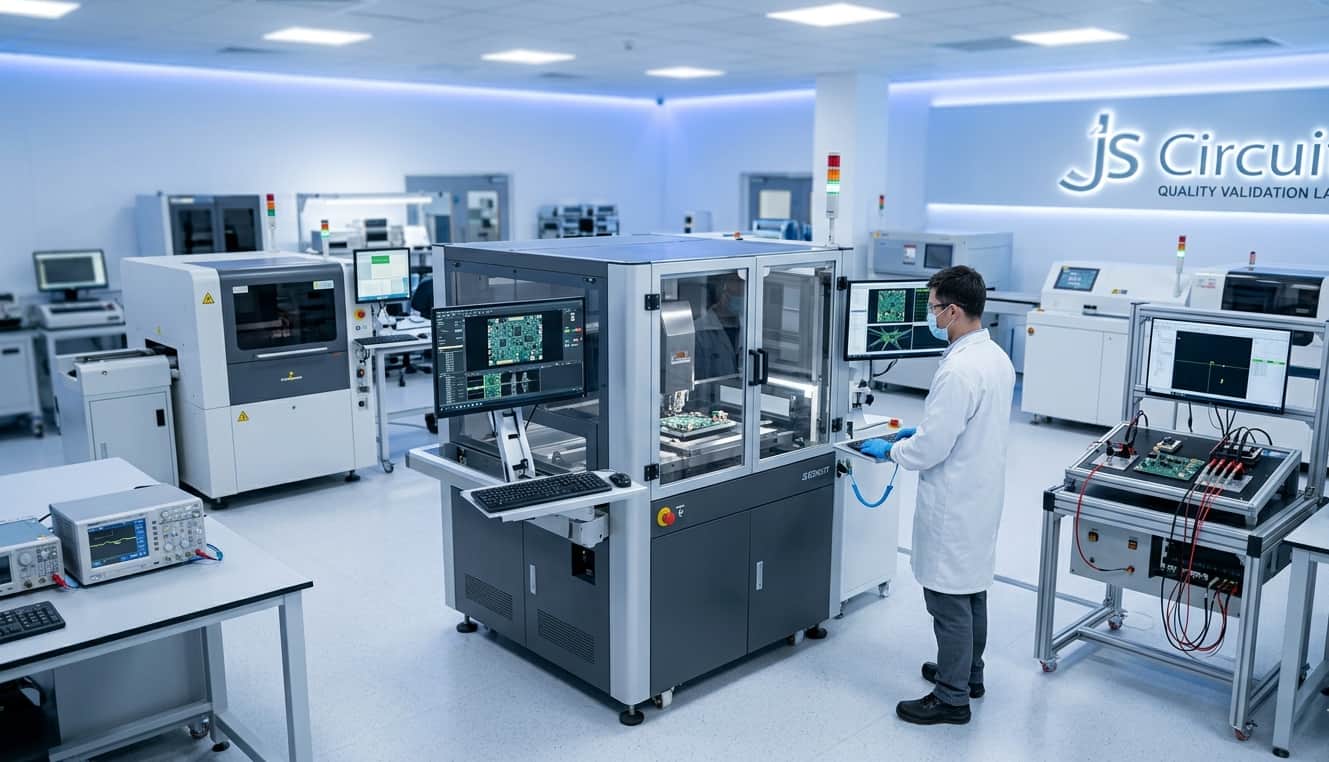
Process Summary
In the high-stakes world of medical PCBA, reliability is non-negotiable. This article details our end-to-end quality validation protocol—a sophisticated, multi-layered approach designed to exceed the stringent requirements of ISO 13485 and ISO 14971 standards. We view quality not as a final gate, but as an integrated lifecycle management process that begins before a single component is placed.
1. Incoming Quality Control (IQC) & MSL Management
Quality begins long before the first component touches our SMT line. We enforce strict Incoming Quality Control (IQC) protocols based on rigorous JEDEC standards and IPC-A-610 Class 3 criteria. For medical-grade assemblies, moisture management is not just a recommendation—it is a requirement. We adhere to strict MSL (Moisture Sensitive Level) storage protocols, utilizing humidity-controlled storage cabinets. Components are subjected to precise pre-reflow baking cycles at 125°C when necessary to eliminate moisture. This proactive step prevents the “popcorn effect,” delamination, and internal micro-cracking, ensuring that every component possesses the structural integrity required for 5-10 year clinical lifespans.
2. Proactive Quality: Statistical Process Control (SPC)
To achieve the high yields and stability required for medical production, we move beyond simple inspection to Statistical Process Control (SPC). Our production lines are equipped with real-time feedback loops that monitor critical process variables—including solder paste deposit volume, placement offsets, and thermal reflow profiles. By tracking these variables against established control limits and maintaining a Cpk (Process Capability Index) > 1.33, we identify process drift before a defect occurs. This data-driven approach allows us to make micro-adjustments in real-time, preventing the common “trial-and-error” assembly methods and ensuring absolute repeatability across large-volume production runs.
3. The Tiered Inspection Strategy: 3D AOI & X-Ray
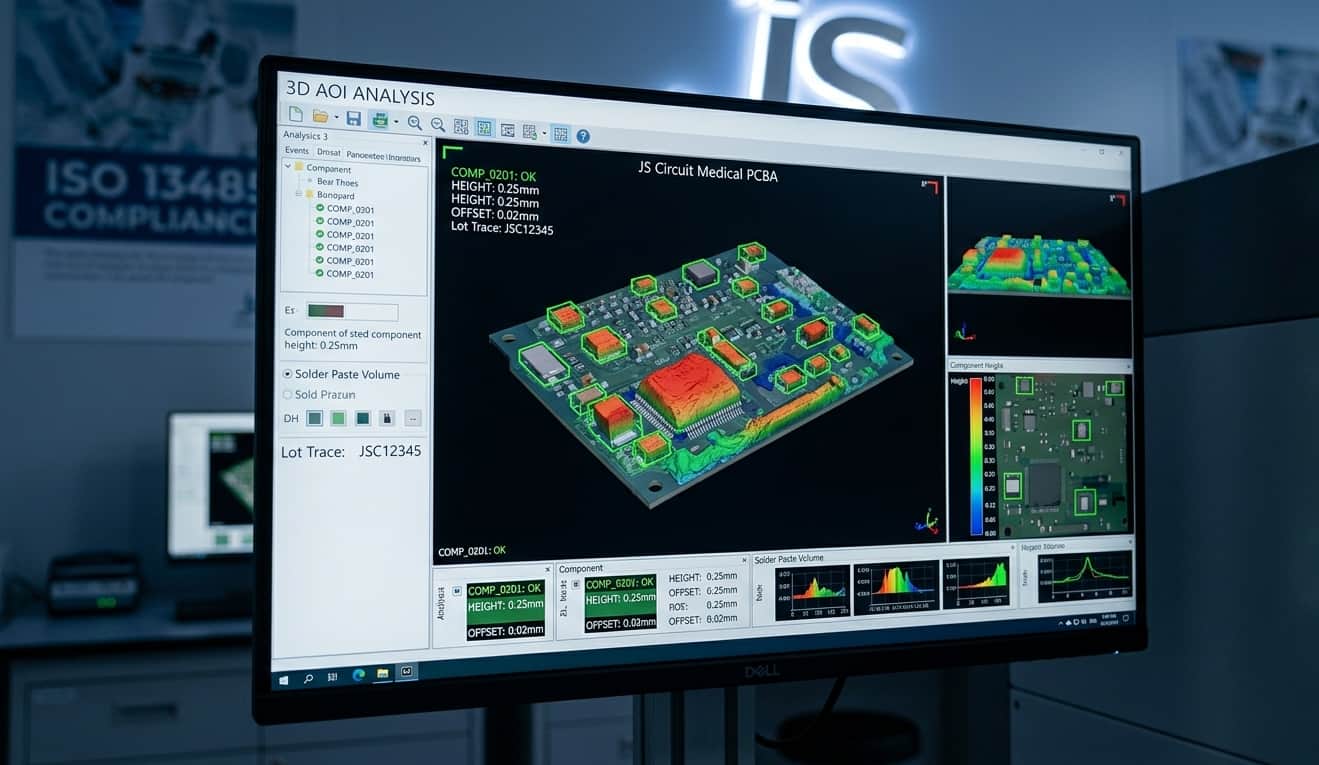
Our validation strategy implements a tiered inspection architecture to ensure zero escapes. We utilize advanced 3D AOI (Automated Optical Inspection) for surface-level validation. Unlike 2D systems, our 3D AOI uses phase-shift profilometry to measure component coplanarity, polarity, and precise volumetric solder geometry, capturing micro-displacements that are often missed by human eyes.
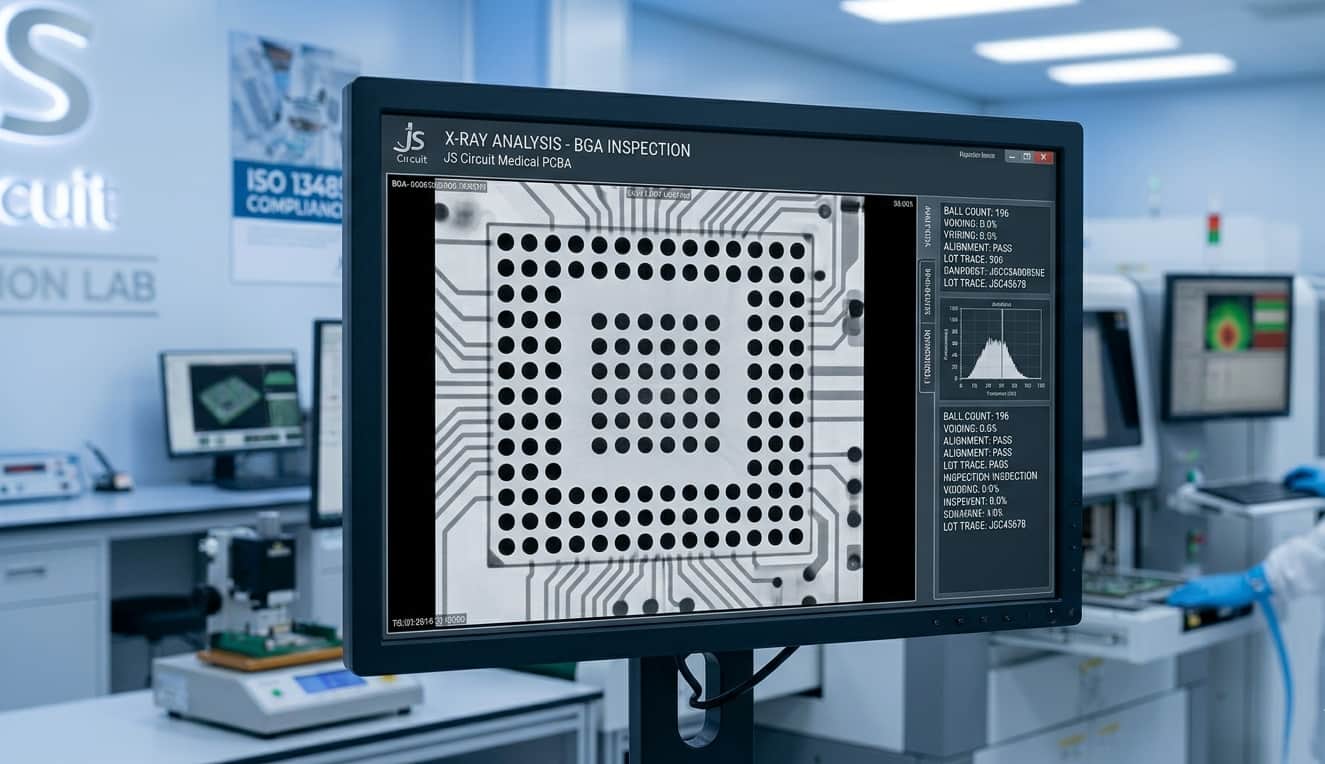
For high-density BGA, QFN, and LGA components, optical sight is obstructed. We deploy high-resolution X-Ray inspection, adhering to IPC-7095 guidelines, to visualize hidden solder joints. This process allows us to quantify solder ball voiding percentages, check for bridging, and verify the wetting quality of internal thermal pads. By maintaining voiding levels well below the accepted industry thresholds, we guarantee the mechanical and electrical integrity of dense medical interconnects under thermal stress.
4. Electrical Integrity & Ionic Cleanliness Testing
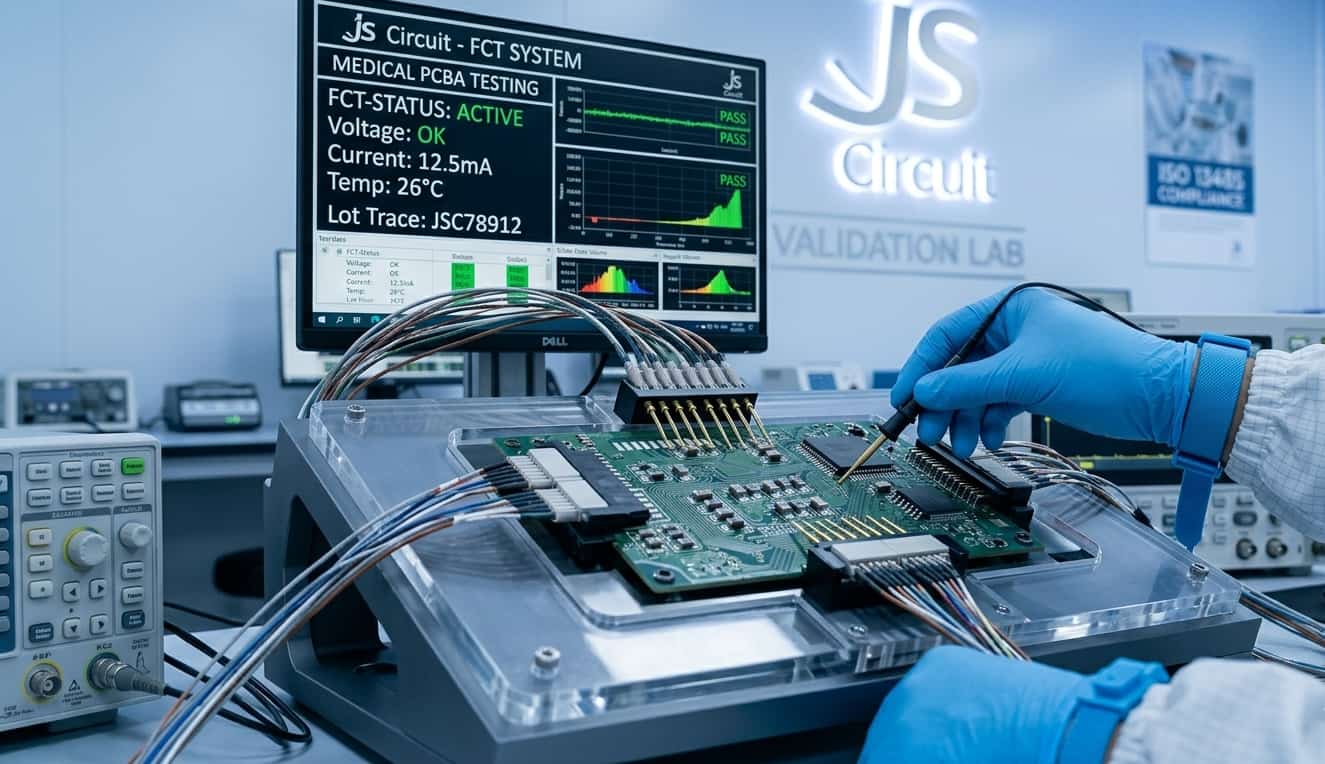
Medical devices are often used in challenging environments where electrical reliability is paramount. Beyond standard ICT (In-Circuit Testing) for component-level verification, we perform Ionic Contamination Testing per IPC-TM-650 standards. This test quantifies residual flux and surface contaminants to ensure they fall within ultra-low thresholds, preventing long-term electrochemical migration (dendrite growth) and signal leakage currents. We also conduct comprehensive Functional Testing (FCT) using custom-designed fixtures that simulate real-world operational scenarios, power-up sequences, and signal response times to ensure the board behaves exactly as specified by the design intent.
5. Environmental Stress Screening (ESS)
For mission-critical medical hardware, static testing alone cannot predict reliability. We employ Environmental Stress Screening (ESS), including thermal cycling profiles (e.g., -40°C to +85°C) and vibration screening. By subjecting the completed PCBA to controlled operational stress, we can precipitate latent “infant mortality” failures in the laboratory environment. This ensures that only the most robust assemblies—those verified to survive harsh real-world temperature fluctuations and mechanical stresses—reach the final integration stage of the medical device, significantly reducing field return rates.
6. CAPA & Risk Management (ISO 14971)
Our quality system is underpinned by a robust, closed-loop Corrective and Preventive Action (CAPA) framework. When any non-conformance is identified, it immediately triggers a formal Root Cause Analysis (RCA) process. We utilize structured problem-solving tools, such as the 8D report method, to not only fix the immediate issue but to identify the systemic origin. Every testing protocol and modification is mapped directly to ISO 14971 risk management principles, ensuring that quality management is not merely a box-ticking exercise, but a continuous, evidence-based improvement system that protects the end-user and supports our clients’ regulatory audits.
Validation Capability Summary
| Phase | Validation Goal & Methodology |
|---|---|
| IQC / MSL | JEDEC standards, humidity control, and component integrity. |
| SPC / AOI | Cpk > 1.33 monitoring and 3D volumetric component inspection. |
| Ionic Test | IPC-TM-650 ionic cleanliness and SIR leakage prevention. |
| ESS | Thermal cycling and burn-in for infant mortality precipitation. |
Technical FAQ
1. Why is X-Ray necessary for medical PCBA?
It detects internal defects in BGA and fine-pitch components (voiding, bridging, open circuits) that are physically hidden from optical sight, a critical requirement for IPC Class 3 medical reliability.
2. What is the difference between ICT and FCT?
ICT (In-Circuit Testing) focuses on individual component values and nodal continuity. FCT (Functional Testing) simulates the board’s final operating environment to verify complete system functionality and firmware interaction.
3. How does this align with ISO 13485?
Our testing protocols maintain strict document control, full serialized traceability, and evidence-based validation, directly supporting the risk management documentation required for ISO 13485 certification audits.
4. Can JS Circuit perform custom FCT testing?
Yes. We maintain an in-house engineering team that collaborates with our clients to design, manufacture, and program custom FCT test fixtures, including Bed-of-Nails or boundary scan systems specific to your medical device requirements.
5. Is inspection data saved for audit purposes?
Yes, absolutely. All test results, logs, and failure data are automatically logged into our Manufacturing Execution System (MES). This provides a permanent, searchable, and fully traceable digital history for every serial number, ready for immediate client audit access.
Medical PCBA Engineering Series:
- Part 1: Engineering Precision: 6-Layer HDI PCB Fabrication
- Part 2: 0201 SMT Assembly & Reflow Optimization
- Part 3: Medical PCBA Quality Validation & Testing (Current)