The product manager pointed at the crowded prototype on the lab bench. “We need a design that fits this ultra-compact housing but still survives mechanical stress and maintains high-speed signal integrity.”
The hardware engineer tapped the schematic. “If we switch to Single-Layer Flexible Circuits, we can reduce thickness, eliminate connectors, and improve reliability in one integrated solution.”
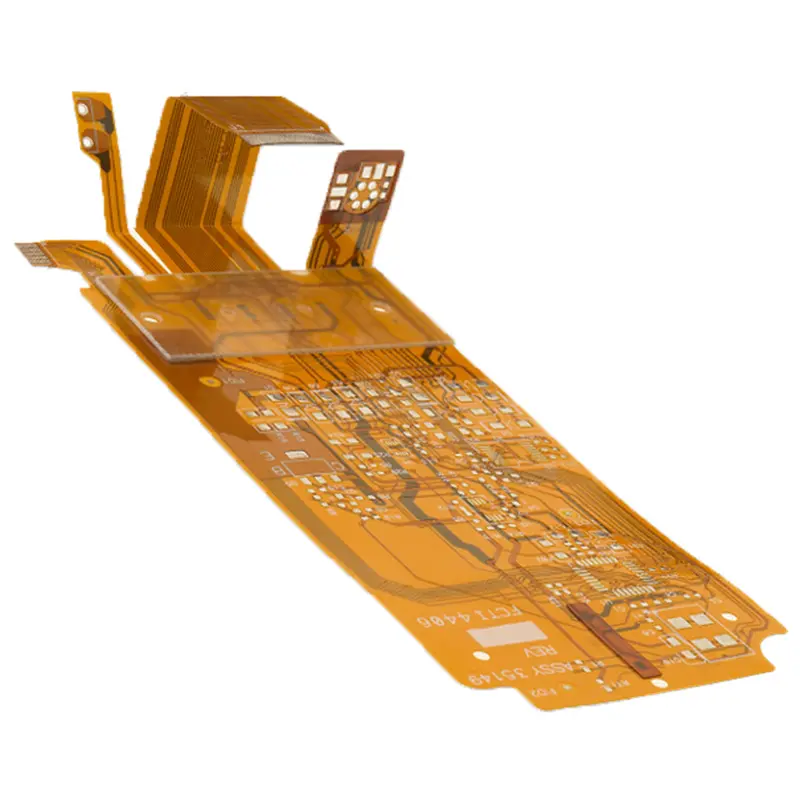
This conversation reflects the daily challenges faced by engineers designing wearables, medical devices, IoT modules, and automotive sensors. Traditional rigid boards often fail to meet the spatial and mechanical demands of modern electronics.
This article explores the top 10 applications of Single-Layer Flexible Circuits, combining engineering principles, industry research, and case studies from JSCircuit, a trusted global manufacturer. We also examine practical strategies, scientific data, and design insights that help engineers maximize performance and reliability.

1. Wearable Electronics
Wearables like smartwatches, fitness trackers, and smart glasses demand ultra-thin, flexible interconnects. Single-Layer Flexible Circuits allow:
-
Conforming to curved surfaces
-
Reducing total device thickness
-
Minimizing connector points
Field data indicates that reducing connectors by one per device can decrease failure rates by over 15%. In a study of wearable heart-rate monitors, flex circuits reduced assembly defects by 20% compared to traditional PCBs. Early design collaboration with manufacturers, as emphasized on About Us, ensures that mechanical tolerances and bend radii are maintained throughout production.
2. Medical Devices
Portable diagnostic devices and implantable electronics require compact, reliable circuitry. The ability to flex without failure enables:
-
Miniaturized sensor arrays
-
Compact ECG or pulse monitors
-
Portable infusion pumps
Single-Layer Flexible Circuits support thousands of flex cycles while maintaining signal integrity. Designers can refer to the Ultimate Guide to Single-Layer Flexible Circuits for Modern Electronics for detailed engineering insights on material selection and impedance control.
Medical applications also demand biocompatible materials and sterilization resistance. Polyimide substrates used in single-layer flex circuits can endure repeated autoclave cycles without compromising conductivity, a key factor in hospital-grade devices.
3. Compact Consumer Electronics
Smartphones, cameras, and handheld gaming devices benefit from flexible circuits by:
-
Reducing board thickness
-
Eliminating wire harnesses
-
Allowing foldable or sliding mechanisms
The streamlined architecture also improves assembly efficiency, minimizing points of failure. Consultation with the Contact Us team at JSCircuit ensures that miniaturized layouts are manufacturable and yield-stable.
Advanced consumer devices often integrate multiple high-speed interfaces (USB, HDMI, Wi-Fi). Single-Layer Flexible Circuits allow precise impedance matching, ensuring signal fidelity in high-frequency applications without adding bulk.
4. Automotive Sensors
Modern vehicles integrate numerous sensors for safety, navigation, and environmental monitoring. Flexible circuits provide:
-
Vibration resistance
-
Thermal stability
-
Compact routing in tight chassis spaces
Single-Layer Flexible Circuits reduce connector usage, lowering maintenance needs and enhancing reliability. The design strategies outlined in How to Design Single-Layer Flexible Circuits for Compact Devices help engineers ensure durability under extreme operating conditions.
For instance, LiDAR sensor modules often incorporate flex circuits to connect scanning arrays in compact, vibration-prone housings. JSCircuit case studies show that integrating single-layer flex reduces mechanical failures by up to 25% in automotive prototypes.
5. IoT Modules
Small, connected devices demand flexible circuits to:
-
Optimize internal space
-
Enable dynamic antenna placement
-
Reduce wiring complexity
According to a 2025 IoT survey, 67% of developers reported that flexible interconnects directly improved device compactness and reduced assembly errors.
IoT modules such as smart thermostats or environmental sensors often incorporate single-layer flex circuits to route multiple signals in a confined volume, maintaining both mechanical robustness and electromagnetic compatibility.

6. Aerospace and Defense Electronics
Flexible circuits support:
-
Compact avionics modules
-
Satellite communication hardware
-
Lightweight sensor arrays
Reliability under thermal cycling and vibration is critical. JSCircuit case studies, such as those detailed in Case Study, highlight the use of single-layer flex designs in aerospace sensor systems, showing measurable improvements in durability and weight reduction.
In satellites, the ability to fold and deploy circuits within limited payload space enables higher system density and reduced launch costs.
7. LED Lighting Solutions
Flexible circuits allow:
-
Dynamic LED layouts
-
Curved or modular panels
-
Integration with small driver boards
By carefully designing copper traces and bend regions, manufacturers achieve long-lasting LED arrays with consistent illumination. In architectural lighting, flex circuits simplify installation in curved surfaces and reduce electrical failure points caused by wire strain.
8. Robotics and Wearable Exoskeletons
Robots, prosthetics, and exoskeletons rely on compact, bendable circuitry for:
-
Sensor integration
-
Actuator control
-
Lightweight mechanical compliance
Single-Layer Flexible Circuits reduce assembly weight, simplify wiring, and improve mechanical resilience, crucial for repeated motion cycles. For example, wearable exoskeletons incorporate flex circuits to transmit sensor data and control signals through joints with continuous movement.
9. Portable Audio Devices
Headphones, hearing aids, and smart earbuds benefit from flexible circuits to:
-
Fit inside curved, miniature enclosures
-
Eliminate fragile connectors
-
Maintain audio signal integrity
Controlled impedance design ensures clear signal transmission despite small form factors. Users experience fewer dropouts, improved signal-to-noise ratios, and more consistent performance over the device lifespan.
10. Industrial Equipment Sensors
Flexible circuits in industrial modules allow:
-
Vibration-resistant interconnects
-
Compact integration into sensor nodes
-
Reduced wiring and assembly complexity
The application insights outlined in Application show how JSCircuit supports diverse industrial deployments, enhancing sensor longevity and reliability. Devices in assembly lines, mining, or high-vibration machinery benefit from the inherent durability and reduced connector count.
Advantages of Single-Layer Flexible Circuits
-
Reduced thickness and weight
-
Lower assembly complexity
-
Higher mechanical reliability
-
Improved signal integrity
-
Faster time-to-market
Engineering studies demonstrate that integrating flex circuits can reduce interconnect failures by 20–30%, while simplifying assembly and enabling more compact designs.
Design Tips for Maximum Reliability
-
Determine static vs. dynamic flex requirements
-
Calculate minimum bend radius (6–10× thickness)
-
Avoid 90° trace angles and use curved transitions
-
Maintain consistent copper thickness
-
Control impedance for high-speed signals
-
Collaborate with manufacturers early (JSCircuit Contact)
Following these best practices helps engineers minimize fatigue failures and improves long-term device reliability.
Frequently Asked Questions
1. What are Single-Layer Flexible Circuits used for?
They are used in wearables, medical devices, IoT, automotive sensors, and compact consumer electronics.
2. How many flex cycles can they withstand?
Thousands of bending cycles without electrical failure when designed correctly.
3. Can they handle high-speed signals?
Yes, with impedance-controlled layouts and optimized grounding.
4. Do they reduce assembly complexity?
Yes. Fewer connectors and simplified routing improve manufacturability.
5. When should a manufacturer be involved in design?
Early in layout planning to ensure material compatibility and manufacturability.
From wearables to aerospace modules, Single-Layer Flexible Circuits provide compact, reliable solutions for modern electronics. They reduce weight, eliminate connectors, simplify assembly, and maintain high-speed signal performance. By following proven engineering principles and collaborating closely with manufacturers like JSCircuit, designers can deliver thinner, smarter, and more reliable devices across industries.